Engelbrektson Anna L, Cheng Yiwei, Hubbard Christopher G, Jin Yong T, Arora Bhavna, Tom Lauren M, Hu Ping, Grauel Anna-Lena, Conrad Mark E, Andersen Gary L, Ajo-Franklin Jonathan B, Coates John D
Energy Biosciences Institute, University of California, Berkeley, Berkeley, CA, United States.
Department of Plant and Microbial Biology, University of California, Berkeley, Berkeley, CA, United States.
Front Microbiol. 2018 Jul 26;9:1575. doi: 10.3389/fmicb.2018.01575. eCollection 2018.
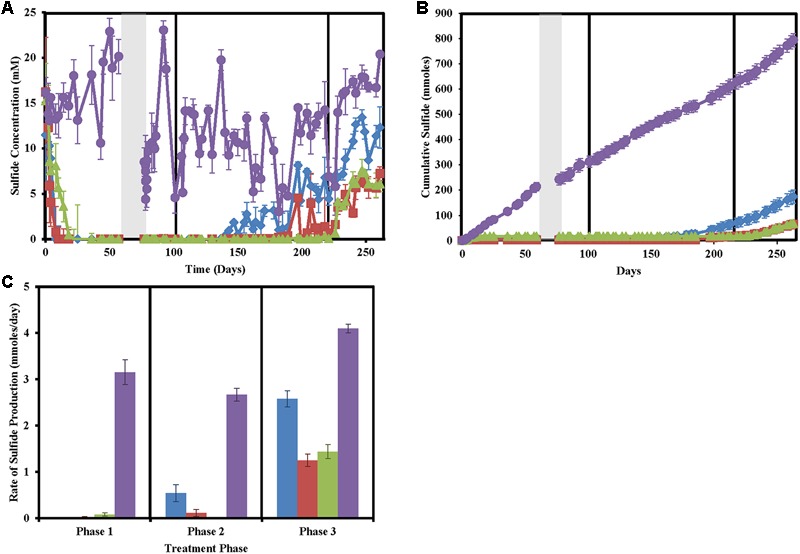
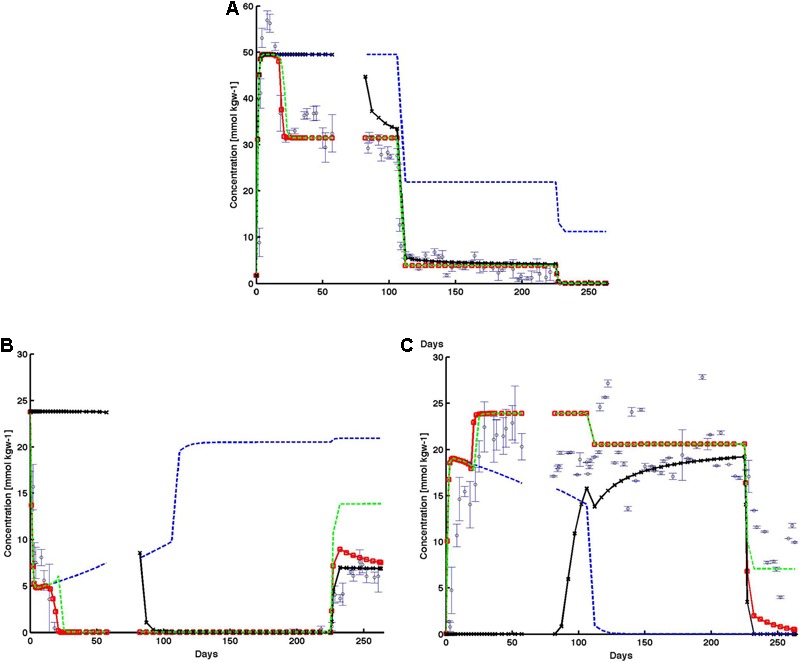
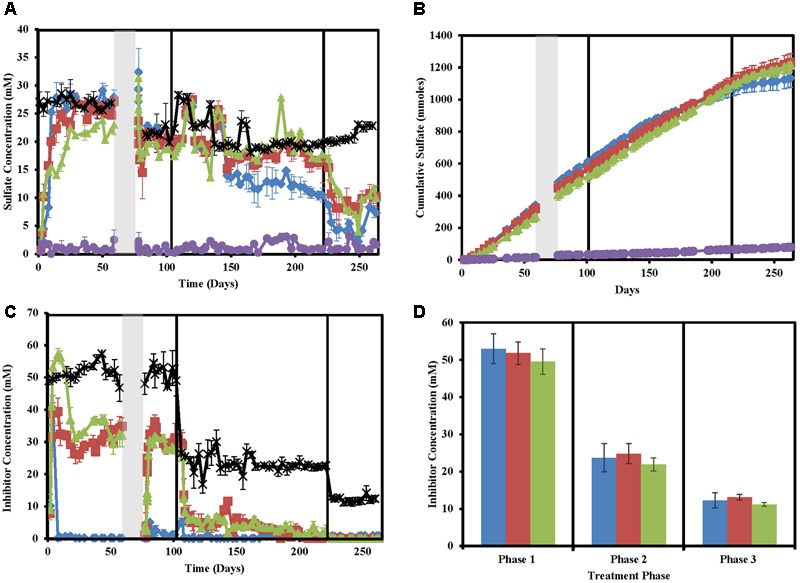
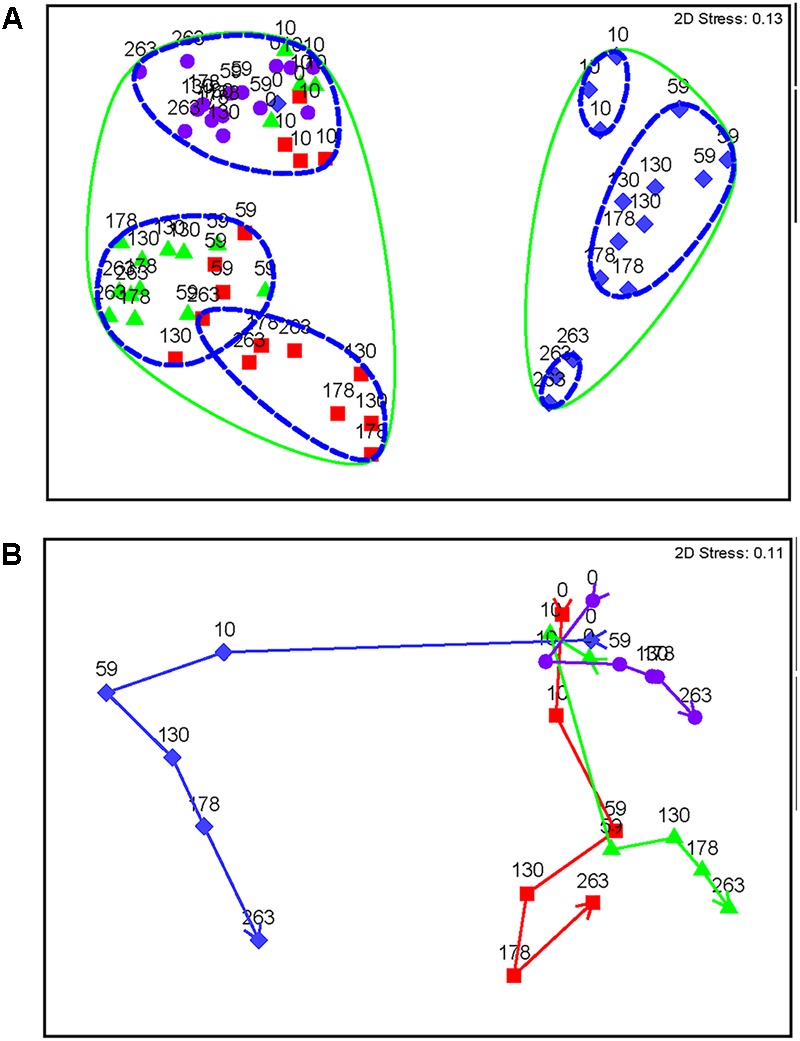
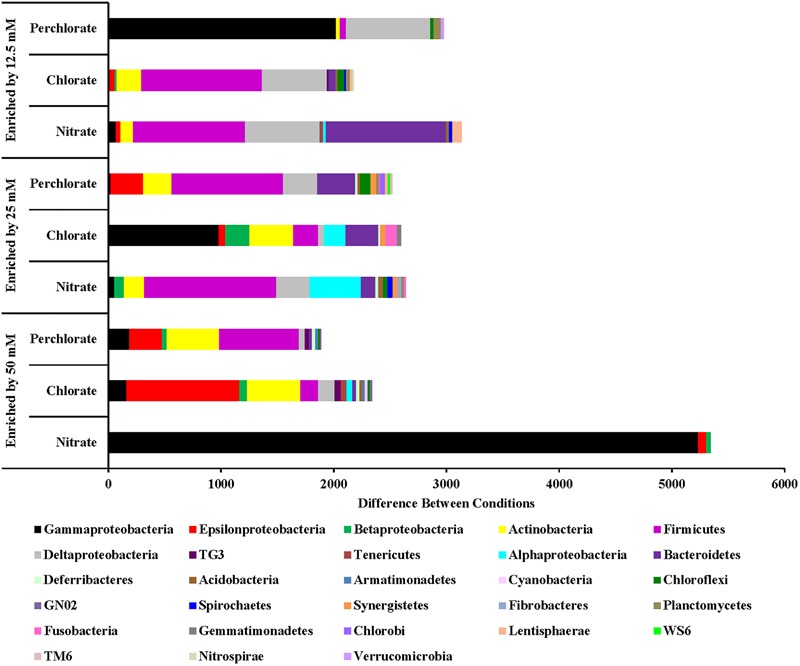
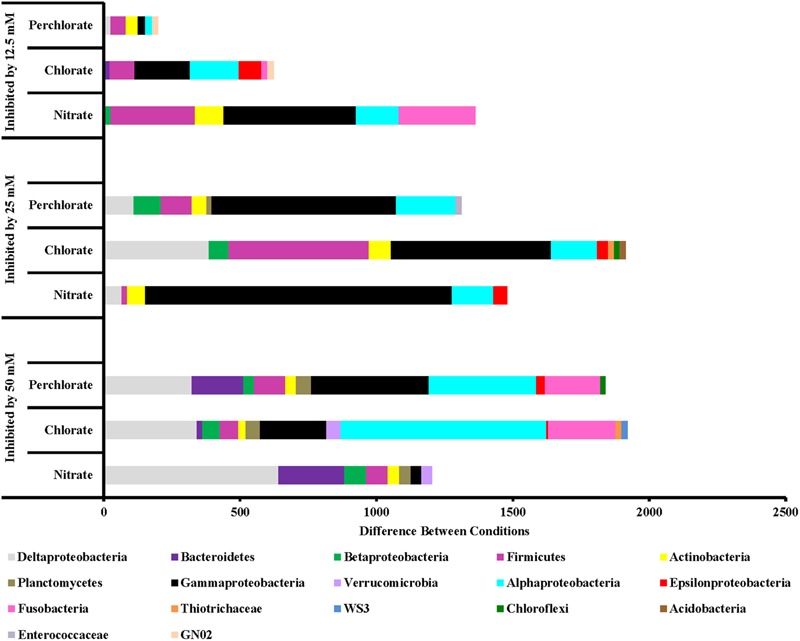
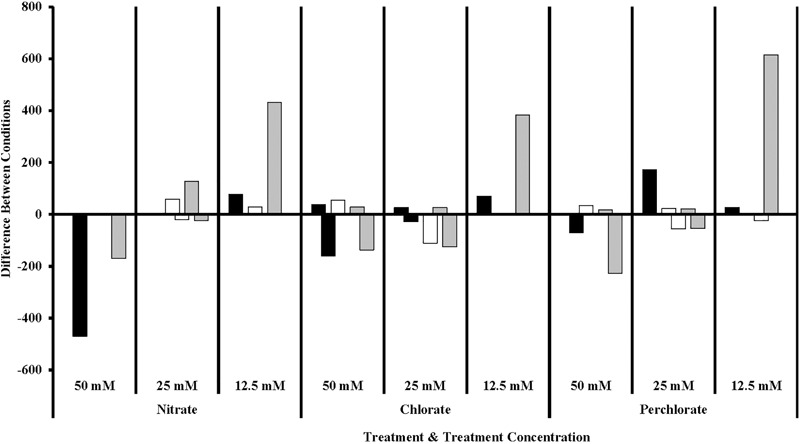
Hydrogen sulfide production by sulfate reducing bacteria (SRB) is the primary cause of oil reservoir souring. Amending environments with chlorate or perchlorate [collectively denoted (per)chlorate] represents an emerging technology to prevent the onset of souring. Recent studies with perchlorate reducing bacteria (PRB) monocultures demonstrated that they have the innate capability to enzymatically oxidize sulfide, thus PRB may offer an effective means of reversing souring. (Per)chlorate may be effective by (i) direct toxicity to SRB; (ii) competitive exclusion of SRB by PRB; or (iii) reversal of souring through re-oxidation of sulfide by PRB. To determine if (per)chlorate could sweeten a soured column system and assign a quantitative value to each of the mechanisms we treated columns flooded with San Francisco bay water with temporally decreasing amounts (50, 25, and 12.5 mM) of (per)chlorate. Geochemistry and the microbial community structure were monitored and a reactive transport model was developed, Results were compared to columns treated with nitrate or untreated. Souring was reversed by all treatments at 50 mM but nitrate-treated columns began to re-sour when treatment concentrations decreased (25 mM). Re-souring was only observed in (per)chlorate-treated columns when concentrations were decreased to 12.5 mM and the extent of re-souring was less than the control columns. Microbial community analyses indicated treatment-specific community shifts. Nitrate treatment resulted in a distinct community enriched in genera known to perform sulfur cycling metabolisms and genera capable of nitrate reduction. (Per)chlorate treatment enriched for (per)chlorate reducing bacteria. (Per)chlorate treatments only enriched for sulfate reducing organisms when treatment levels were decreased. A reactive transport model of perchlorate treatment was developed and a baseline case simulation demonstrated that the model provided a good fit to the effluent geochemical data. Subsequent simulations teased out the relative role that each of the three perchlorate inhibition mechanisms played during different phases of the experiment. These results indicate that perchlorate addition is an effective strategy for both souring prevention and souring reversal. It provides insight into which organisms are involved, and illuminates the interactive effects of the inhibition mechanisms, further highlighting the versatility of perchlorate as a sweetening agent.
硫酸盐还原菌(SRB)产生硫化氢是油藏酸化的主要原因。用氯酸盐或高氯酸盐(统称为(高)氯酸盐)改良环境是一种新兴的防止酸化的技术。最近对高氯酸盐还原菌(PRB)纯培养物的研究表明,它们具有酶促氧化硫化物的内在能力,因此PRB可能提供一种有效的逆转酸化的方法。(高)氯酸盐可能通过以下方式发挥作用:(i)对SRB的直接毒性;(ii)PRB对SRB的竞争性排斥;或(iii)PRB通过硫化物的再氧化逆转酸化。为了确定(高)氯酸盐是否能使酸化的柱系统变甜,并为每种机制赋予定量值,我们用随时间减少量(50、25和12.5 mM)的(高)氯酸盐处理充满旧金山湾水的柱。监测地球化学和微生物群落结构,并建立反应传输模型,将结果与用硝酸盐处理或未处理的柱进行比较。所有50 mM的处理都能逆转酸化,但当处理浓度降低(25 mM)时,硝酸盐处理的柱开始再次酸化。只有当(高)氯酸盐处理的柱浓度降至12.5 mM时才观察到再次酸化,且再次酸化的程度小于对照柱。微生物群落分析表明存在特定处理的群落变化。硝酸盐处理导致一个独特的群落,其中富含已知进行硫循环代谢的属和能够进行硝酸盐还原的属。(高)氯酸盐处理富集了高氯酸盐还原菌。当处理水平降低时,(高)氯酸盐处理仅富集了硫酸盐还原菌。建立了高氯酸盐处理的反应传输模型,基线案例模拟表明该模型与流出物地球化学数据拟合良好。随后的模拟梳理出了三种高氯酸盐抑制机制在实验不同阶段所起的相对作用。这些结果表明,添加高氯酸盐是预防和逆转酸化的有效策略。它深入了解了涉及哪些生物体,并阐明了抑制机制的相互作用,进一步突出了高氯酸盐作为一种脱硫剂的多功能性。