Mehta-Kolte Misha G, Loutey Dana, Wang Ouwei, Youngblut Matthew D, Hubbard Christopher G, Wetmore Kelly M, Conrad Mark E, Coates John D
Energy Biosciences Institute, University of California Berkeley, Berkeley, California, USA.
Plant and Microbial Biology Department, University of California Berkeley, Berkeley, California, USA.
mBio. 2017 Feb 21;8(1):e02023-16. doi: 10.1128/mBio.02023-16.
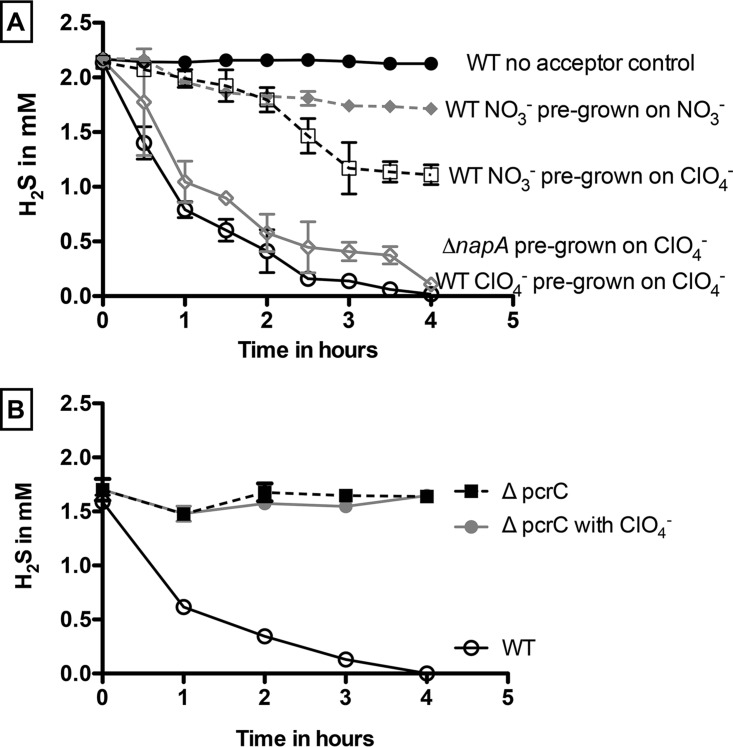
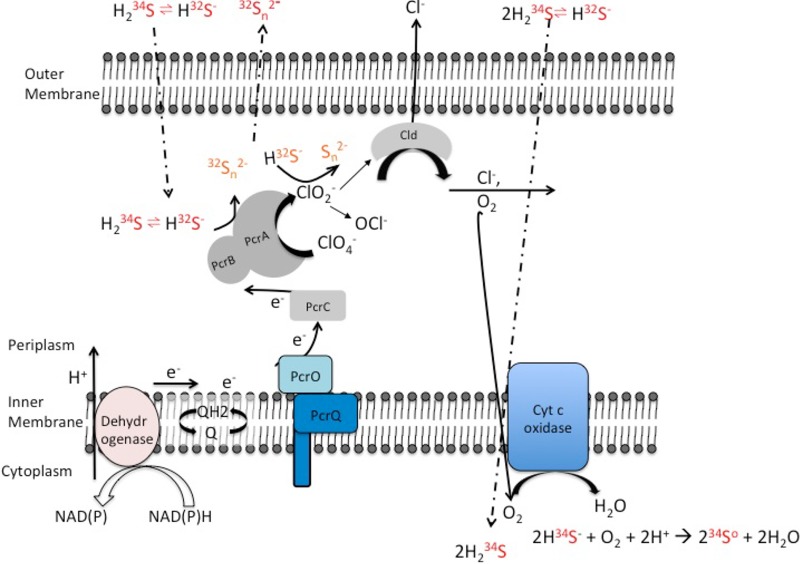
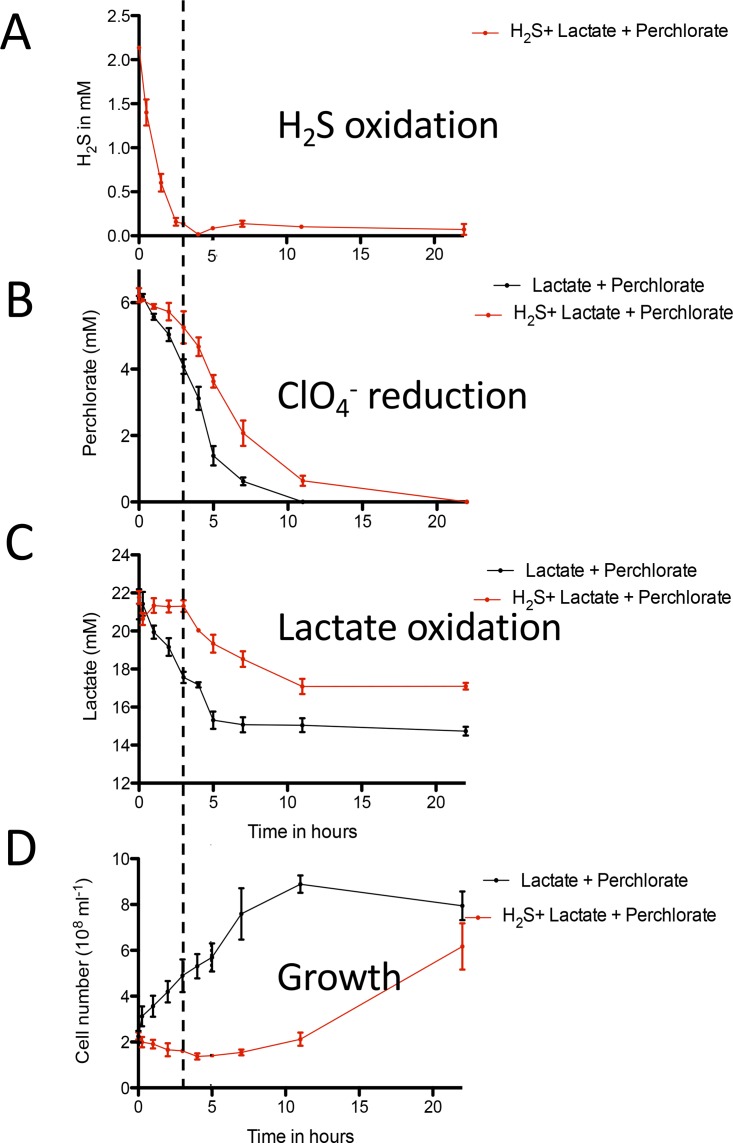
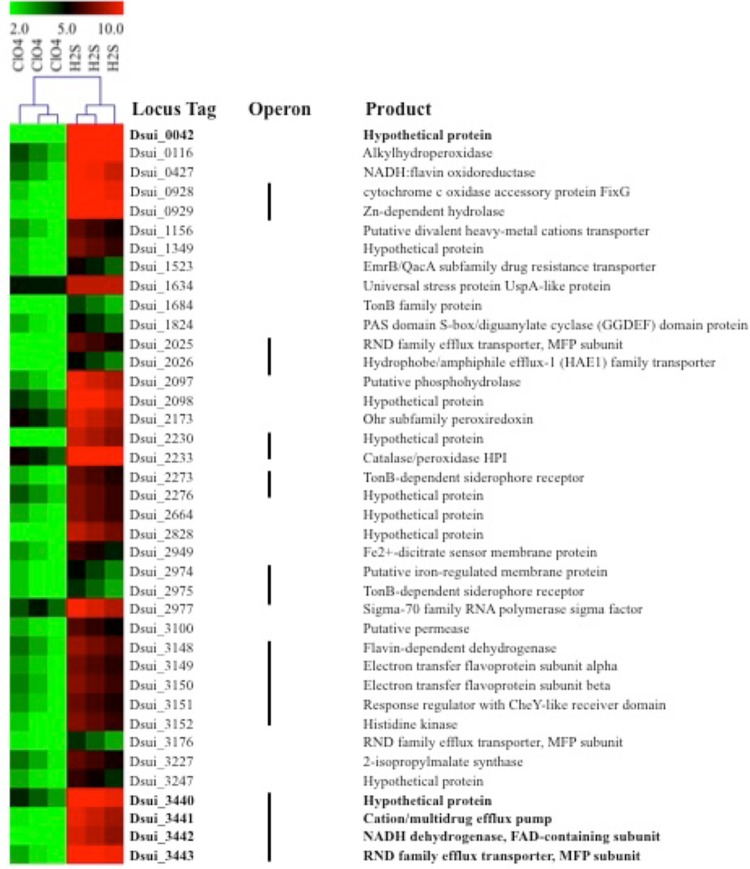
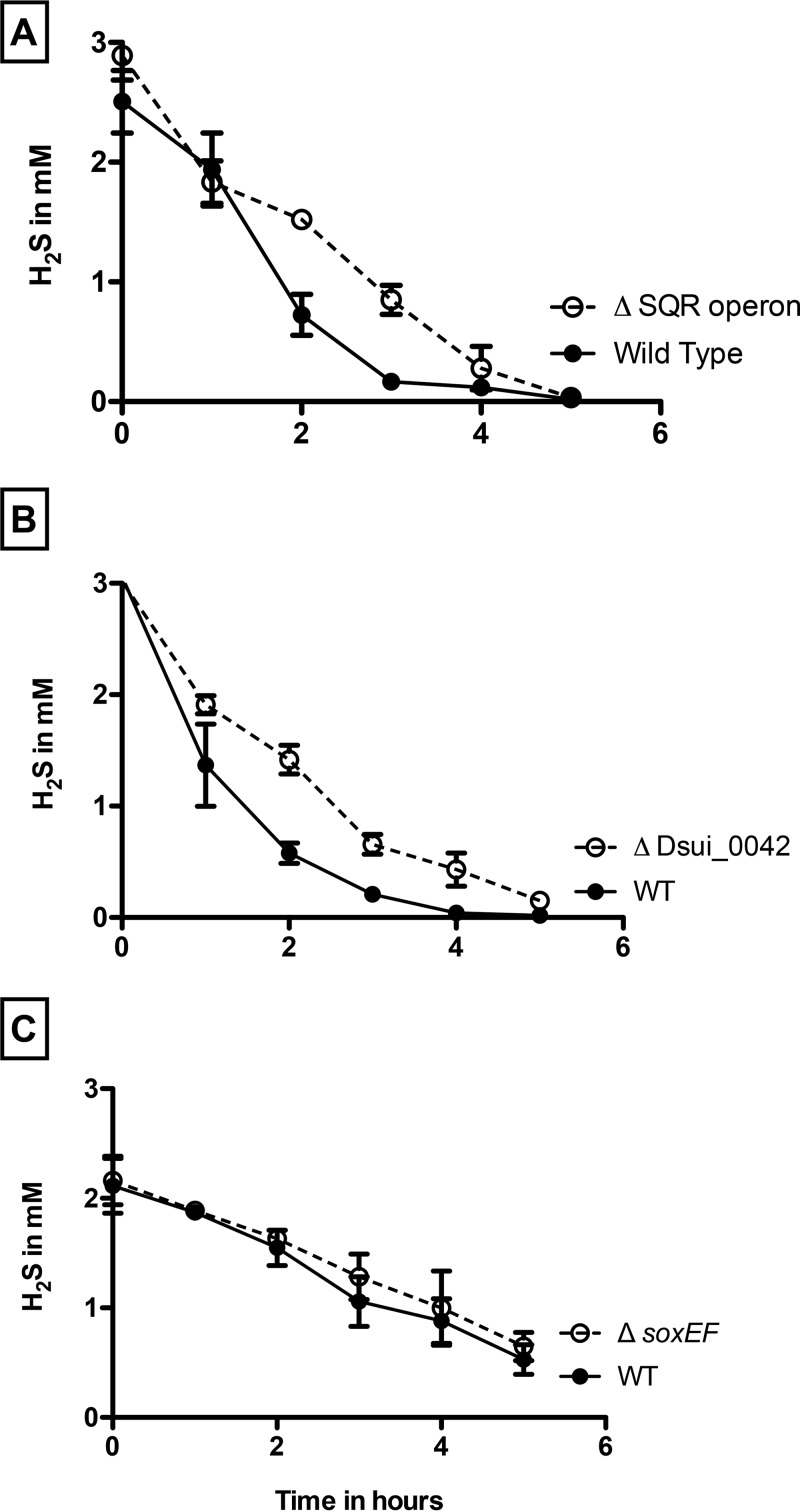
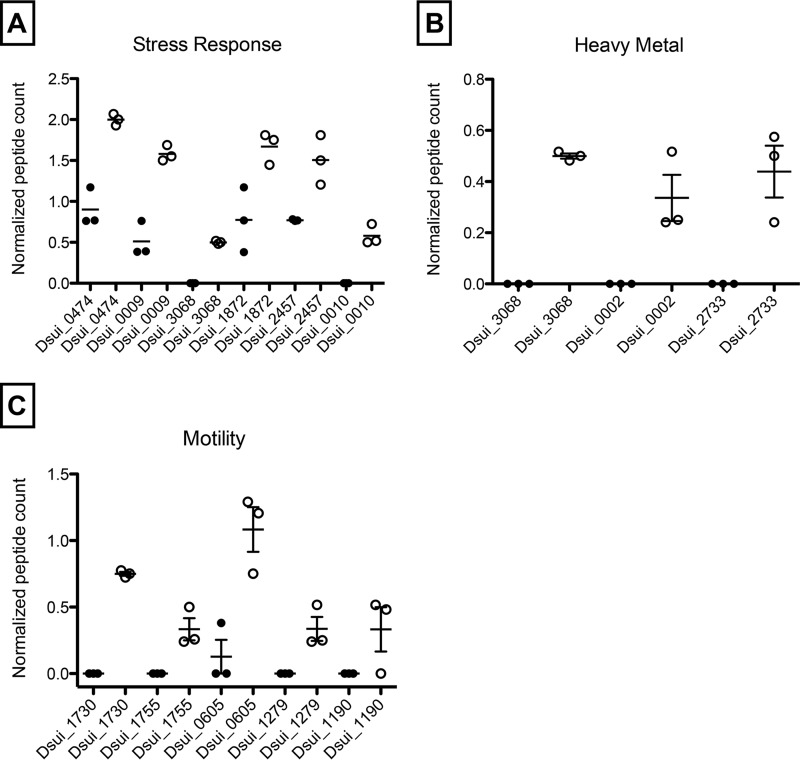
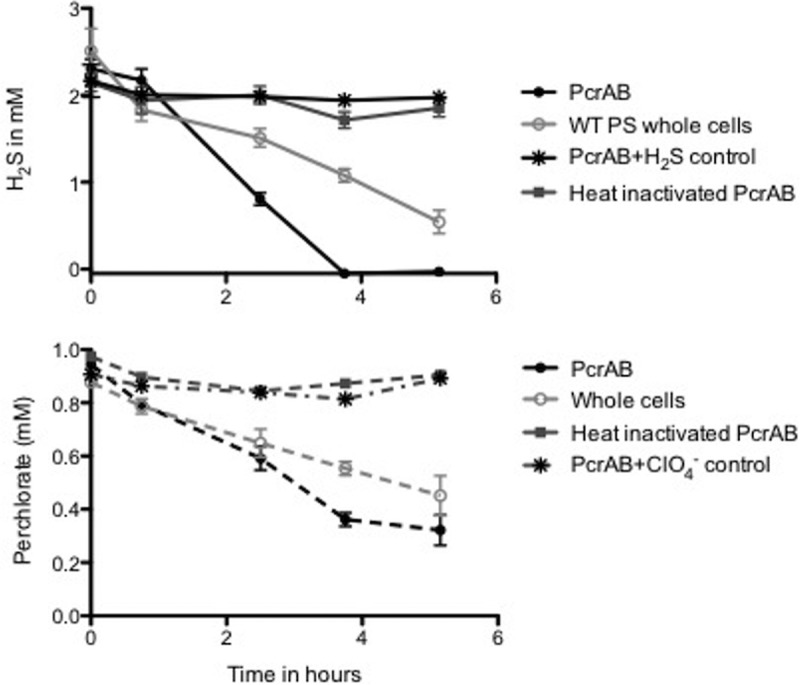
The genetic and biochemical basis of perchlorate-dependent HS oxidation (PSOX) was investigated in the dissimilatory perchlorate-reducing microorganism (DPRM) PS (PS). Previously, it was shown that all known DPRMs innately oxidize HS, producing elemental sulfur (S). Although the process involving PSOX is thermodynamically favorable (°' = -206 kJ ⋅ mol HS), the underlying biochemical and genetic mechanisms are currently unknown. Interestingly, HS is preferentially utilized over physiological electron donors such as lactate or acetate although no growth benefit is obtained from the metabolism. Here, we determined that PSOX is due to a combination of enzymatic and abiotic interactions involving reactive intermediates of perchlorate respiration. Using various approaches, including barcode analysis by sequencing (Bar-seq), transcriptome sequencing (RNA-seq), and proteomics, along with targeted mutagenesis and biochemical characterization, we identified all facets of PSOX in PS. In support of our proposed model, deletion of identified upregulated PS genes traditionally known to be involved in sulfur redox cycling (e.g., Sox, sulfide:quinone reductase [SQR]) showed no defect in PSOX activity. Proteomic analysis revealed differential abundances of a variety of stress response metal efflux pumps and divalent heavy-metal transporter proteins, suggesting a general toxicity response. Furthermore, biochemical studies demonstrated direct PSOX mediated by purified perchlorate reductase (PcrAB) in the absence of other electron transfer proteins. The results of these studies support a model in which HS oxidation is mediated by electron transport chain short-circuiting in the periplasmic space where the PcrAB directly oxidizes HS to S The biogenically formed reactive intermediates (ClO and O) subsequently react with additional HS, producing polysulfide and S as end products. Inorganic sulfur compounds are widespread in nature, and microorganisms are central to their transformation, thereby playing a key role in the global sulfur cycle. Sulfur oxidation is mediated by a broad phylogenetic diversity of microorganisms, including anoxygenic phototrophs and either aerobic or anaerobic chemotrophs coupled to oxygen or nitrate respiration, respectively. Recently, perchlorate-respiring microorganisms were demonstrated to be innately capable of sulfur oxidation regardless of their phylogenetic affiliation. As recognition of the prevalence of these organisms intensifies, their role in global geochemical cycles is being queried. This is further highlighted by the recently recognized environmental pervasiveness of perchlorate not only across Earth but also throughout our solar system. The inferred importance of this metabolism not only is that it is a novel and previously unrecognized component of the global sulfur redox cycle but also is because of the recently demonstrated applicability of perchlorate respiration in the control of biogenic sulfide production in engineered environments such as oil reservoirs and wastewater treatment facilities, where excess HS represents a significant environmental, process, and health risk, with associated costs approximating $90 billion annually.
在异化型高氯酸盐还原微生物(DPRM)PS中研究了高氯酸盐依赖的硫化氢氧化(PSOX)的遗传和生化基础。此前研究表明,所有已知的DPRM都能天然氧化硫化氢,生成元素硫(S)。尽管涉及PSOX的过程在热力学上是有利的(°' = -206 kJ·mol硫化氢),但其潜在的生化和遗传机制目前尚不清楚。有趣的是,尽管从这种代谢中未获得生长益处,但与乳酸或乙酸盐等生理电子供体相比,硫化氢被优先利用。在这里,我们确定PSOX是由于涉及高氯酸盐呼吸反应中间体的酶促和非生物相互作用的组合。通过各种方法,包括测序条形码分析(Bar-seq)、转录组测序(RNA-seq)和蛋白质组学,以及靶向诱变和生化表征,我们确定了PS中PSOX的所有方面。支持我们提出的模型的是,删除传统上已知参与硫氧化还原循环的上调PS基因(例如,Sox、硫化物:醌还原酶[SQR])在PSOX活性方面没有缺陷。蛋白质组学分析揭示了多种应激反应金属外排泵和二价重金属转运蛋白的丰度差异,表明存在一般毒性反应。此外,生化研究表明,在没有其他电子传递蛋白的情况下,纯化的高氯酸盐还原酶(PcrAB)可直接介导PSOX。这些研究结果支持了一个模型,即硫化氢氧化是由周质空间中的电子传递链短路介导的,其中PcrAB直接将硫化氢氧化为硫。生物生成的反应中间体(ClO和O)随后与额外的硫化氢反应,产生多硫化物和硫作为终产物。无机硫化合物在自然界中广泛存在,微生物是其转化的核心,从而在全球硫循环中发挥关键作用。硫氧化由多种系统发育多样性的微生物介导,包括无氧光合生物以及分别与氧气或硝酸盐呼吸耦合的需氧或厌氧化学营养生物。最近,已证明高氯酸盐呼吸微生物无论其系统发育归属如何,都天生具有硫氧化能力。随着对这些生物体普遍性的认识不断加深,它们在全球地球化学循环中的作用受到了质疑。高氯酸盐最近在环境中的广泛存在不仅在地球上,而且在整个太阳系中都得到了认可,这进一步凸显了这一点。这种代谢的推断重要性不仅在于它是全球硫氧化还原循环中一个新的且以前未被认识的组成部分,还在于最近证明高氯酸盐呼吸在控制工程环境(如油藏和废水处理设施)中生物源硫化物产生方面的适用性,在这些环境中,过量的硫化氢代表着重大的环境、工艺和健康风险,相关成本每年约为900亿美元。