Division of Prison Health, Geneva University Hospitals and University of Geneva, Geneva, Switzerland.
Division of Tropical and Humanitarian Medicine, Geneva University Hospitals and University of Geneva, Geneva, Switzerland.
J Glob Health. 2018 Dec;8(2):020407. doi: 10.7189/jogh.08.020407.
Hepatitis B virus (HBV) is a major health concern in prison, but data are scarce in European prisons. This study aims to measure the prevalence of HBV infection, risk factors, awareness about infection, and HBV knowledge among inmates in Switzerland's largest pre-trial prison.
Serological blood tests (HBsAg, anti-HBs, and anti-HBc) and a standardized socio-demographic and sexual health survey were offered to consenting prisoners in 2009 and 2011. HBV knowledge was assessed using a standardized questionnaire among participants recruited in 2009.
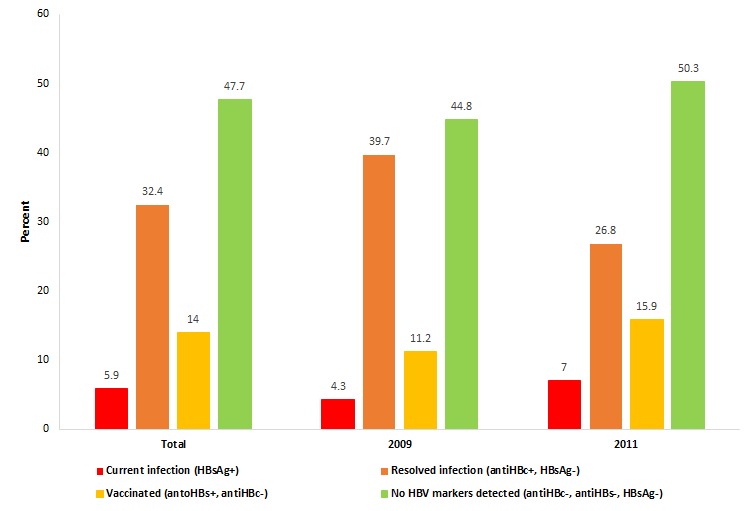
A total of 273 male participants were included in the study (116 participants answered the HBV knowledge survey), with 38.1% originating from Eastern Europe, 28.2% from sub-Saharan Africa, 14.3% from North Africa, and 9.5% from Latin America. The prevalence of anti-HBc (resolved/chronic infection) was 38.2% and the prevalence of HBsAg (chronic infection) was 5.9%; 14% of participants had vaccine-acquired immunity (anti-HBs positive/anti-HBc negative). We estimated that 15.5% of people living in Geneva having chronic infection go through the Geneva's prison. Region of origin was significantly associated with chronic/resolved HBV infection ( < 0.001): 72.2% of participants from sub-Saharan African, 34.6% from Eastern Europe and 13.2% from other regions. In terms of chronic infection, 15.6% of participants from sub-Saharan Africa were positive for HBsAg, vs 2% of those from other regions ( < 0.001). In stratified analyses, region of origin remained significantly associated with HBV infection. Among those with chronic infection, only 12.5% were aware of their status. A minority of inmates knew how HBV could be transmitted.
The primary factor associated with HBV infection in this study was the geographical region of origin of participants. Given the high HBV prevalence found in this prison population, a targeted testing and vaccination approach based on prisoners' region of origin would be a cost-effective strategy when resources are limited. Additionally, identification of at-risk people should not rely on sensitive questions nor self-reported history of HBV. An inclusive approach to global health needs to incorporate prison population, as incarcerated people have a disproportionate burden of HBV infection and because an important proportion of hard-to-reach chronic HBV infected people go through the incarceration system.
乙型肝炎病毒(HBV)是监狱中的一个主要健康问题,但欧洲监狱的数据却很少。本研究旨在衡量瑞士最大审前监狱中囚犯的 HBV 感染率、风险因素、对感染的认识以及 HBV 知识。
2009 年和 2011 年,向同意的囚犯提供血清学血液检测(HBsAg、抗-HBs 和抗-HBc)和标准化的社会人口学和性健康调查。在 2009 年招募的参与者中使用标准化问卷评估 HBV 知识。
共有 273 名男性参与者参与了研究(116 名参与者回答了 HBV 知识调查),其中 38.1%来自东欧,28.2%来自撒哈拉以南非洲,14.3%来自北非,9.5%来自拉丁美洲。抗-HBc(已解决/慢性感染)的患病率为 38.2%,HBsAg(慢性感染)的患病率为 5.9%;14%的参与者具有疫苗获得的免疫力(抗-HBs 阳性/抗-HBc 阴性)。我们估计,日内瓦有 15.5%的慢性感染者会通过日内瓦监狱。原籍国与慢性/已解决的 HBV 感染显著相关(<0.001):撒哈拉以南非洲的参与者中有 72.2%,东欧有 34.6%,其他地区有 13.2%。就慢性感染而言,来自撒哈拉以南非洲的参与者中有 15.6%的 HBsAg 阳性,而来自其他地区的参与者中只有 2%(<0.001)。在分层分析中,原籍国与 HBV 感染仍显著相关。在慢性感染者中,只有 12.5%的人意识到自己的病情。少数囚犯知道 HBV 是如何传播的。
在这项研究中,与 HBV 感染相关的主要因素是参与者的原籍国地区。鉴于在该监狱人群中发现的高 HBV 流行率,在资源有限的情况下,基于囚犯原籍国的针对性检测和疫苗接种方法将是一种具有成本效益的策略。此外,识别高危人群不应依赖敏感问题或自我报告的 HBV 病史。全球卫生需要采取包容的方法,将监狱人口纳入其中,因为被监禁的人感染乙型肝炎病毒的负担不成比例,而且很大一部分难以接触到的慢性乙型肝炎病毒感染者都要经过监禁系统。