Jiangsu Key Laboratory of Neuropsychiatric Diseases and College of Pharmaceutical Sciences, Soochow University, Suzhou, Jiangsu, China.
W. Harry Feinstone Department of Molecular Microbiology and Immunology, Johns Hopkins University Bloomberg School of Public Health, Baltimore, MD, United States of America.
PLoS Genet. 2018 Aug 24;14(8):e1007592. doi: 10.1371/journal.pgen.1007592. eCollection 2018 Aug.
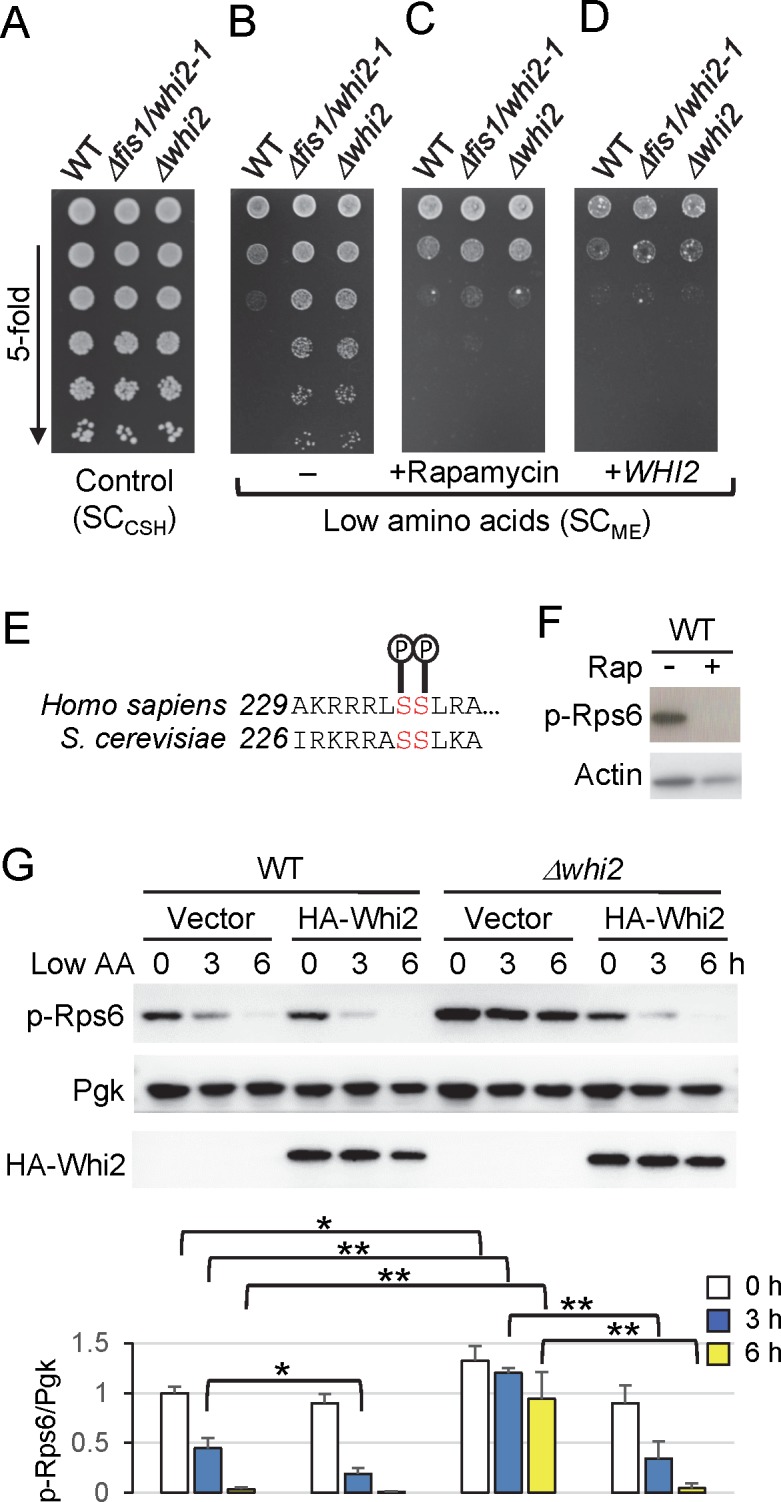
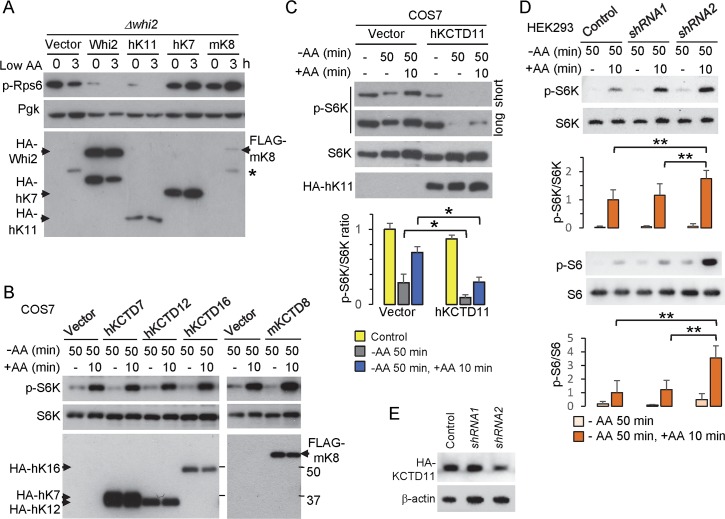
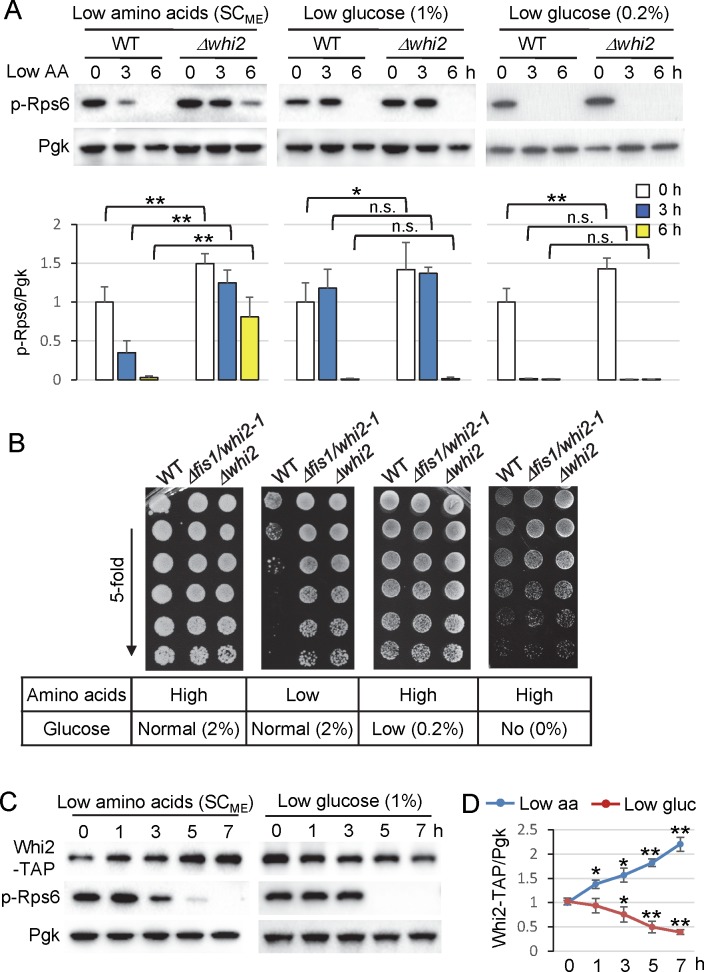
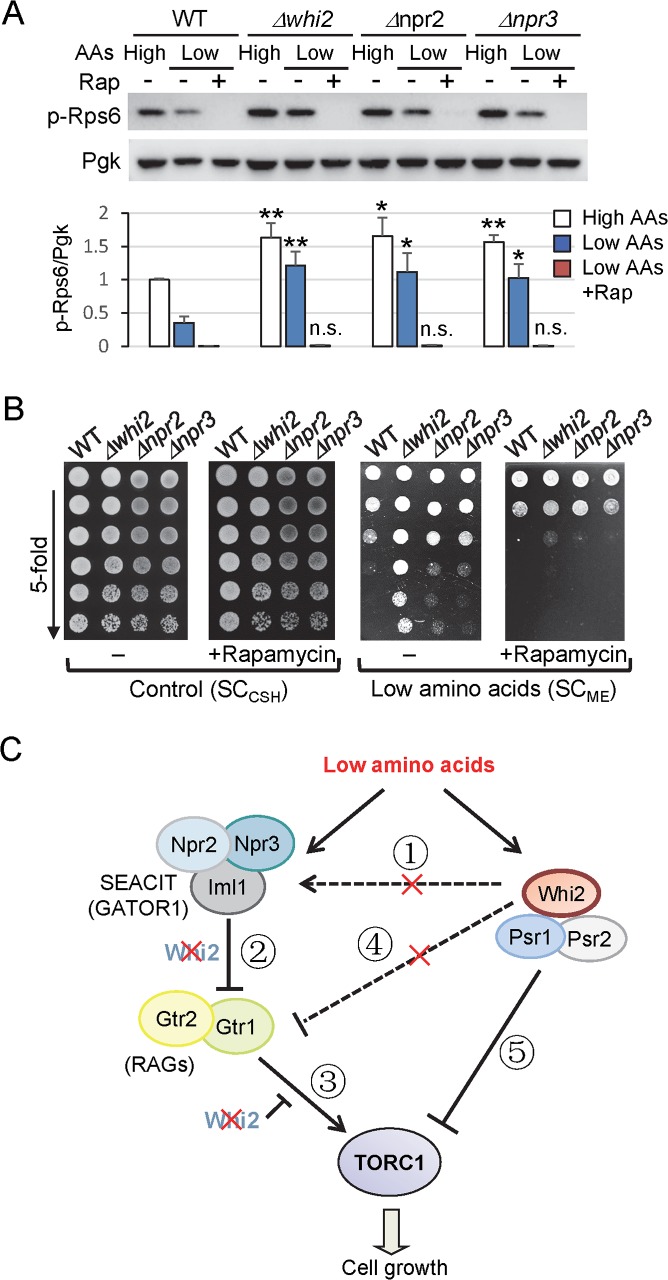
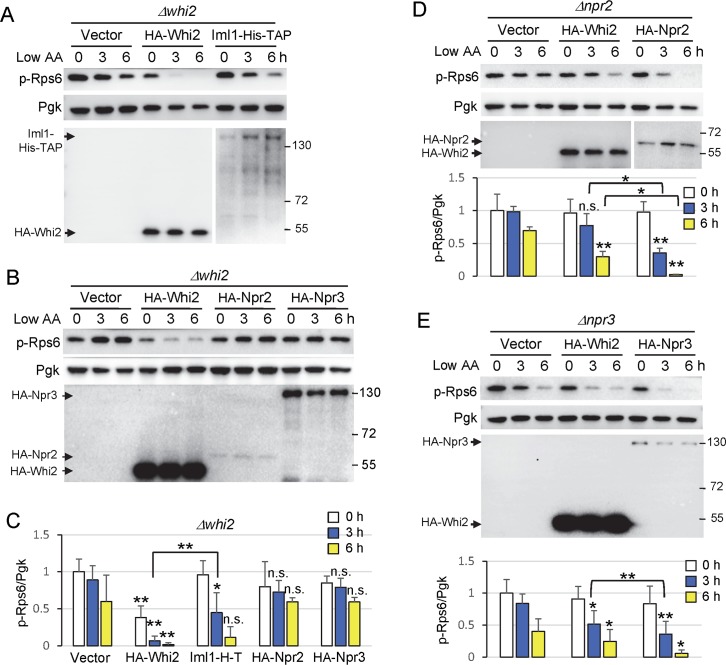
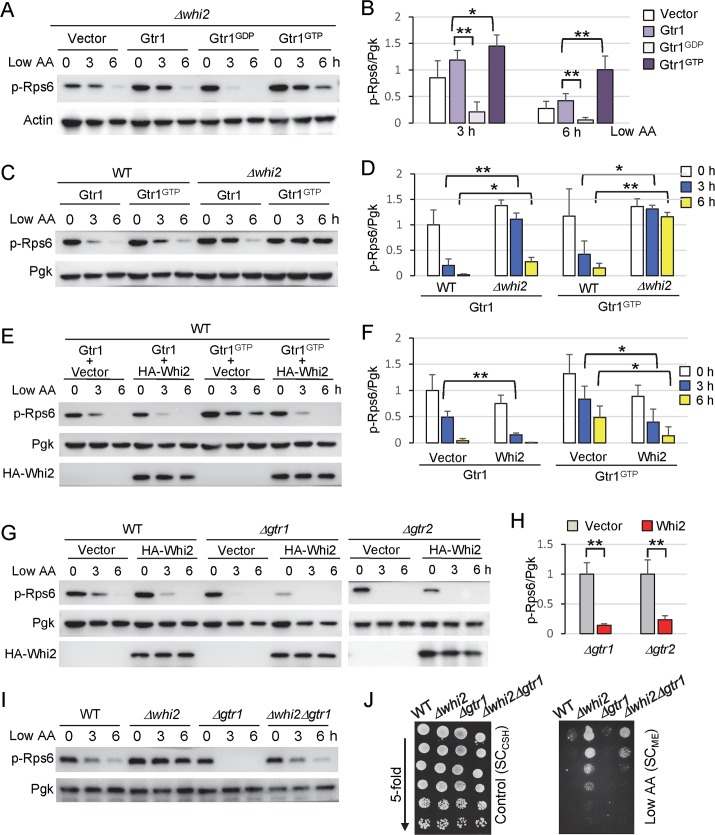
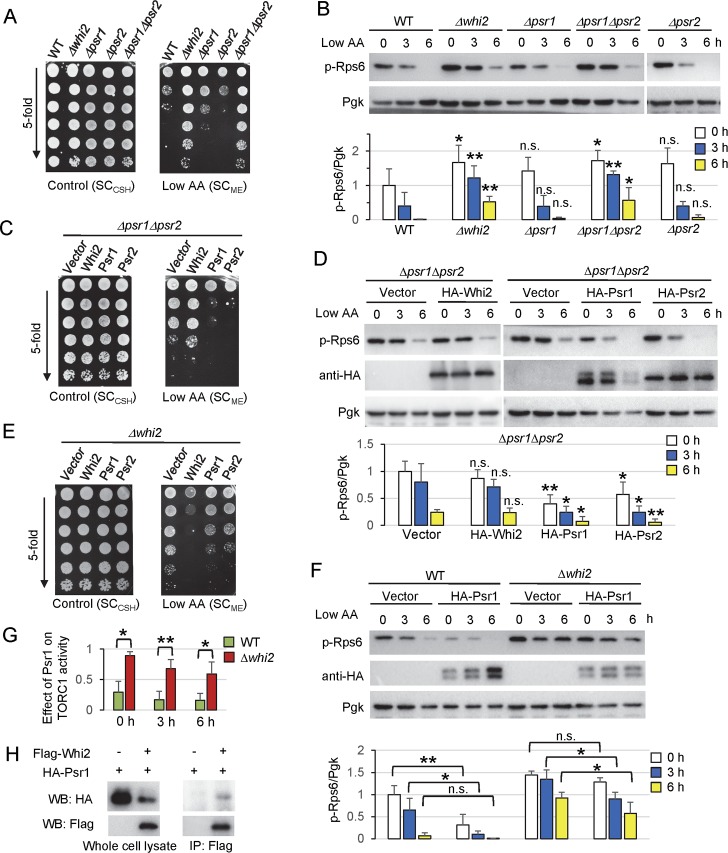
Yeast WHI2 was originally identified in a genetic screen for regulators of cell cycle arrest and later suggested to function in general stress responses. However, the function of Whi2 is unknown. Whi2 has predicted structure and sequence similarity to human KCTD family proteins, which have been implicated in several cancers and are causally associated with neurological disorders but are largely uncharacterized. The identification of conserved functions between these yeast and human proteins may provide insight into disease mechanisms. We report that yeast WHI2 is a new negative regulator of TORC1 required to suppress TORC1 activity and cell growth specifically in response to low amino acids. In contrast to current opinion, WHI2 is dispensable for TORC1 inhibition in low glucose. The only widely conserved mechanism that actively suppresses both yeast and mammalian TORC1 specifically in response to low amino acids is the conserved SEACIT/GATOR1 complex that inactivates the TORC1-activating RAG-like GTPases. Unexpectedly, Whi2 acts independently and simultaneously with these established GATOR1-like Npr2-Npr3-Iml1 and RAG-like Gtr1-Gtr2 complexes, and also acts independently of the PKA pathway. Instead, Whi2 inhibits TORC1 activity through its binding partners, protein phosphatases Psr1 and Psr2, which were previously thought to only regulate amino acid levels downstream of TORC1. Furthermore, the ability to suppress TORC1 is conserved in the SKP1/BTB/POZ domain-containing, Whi2-like human protein KCTD11 but not other KCTD family members tested.
酵母 WHI2 最初是在细胞周期阻滞调节剂的遗传筛选中被鉴定出来的,后来被认为在一般应激反应中发挥作用。然而,Whi2 的功能尚不清楚。Whi2 具有预测的结构和序列与人类 KCTD 家族蛋白相似,这些蛋白已被牵涉到多种癌症中,与神经紊乱疾病有因果关系,但尚未得到充分的描述。这些酵母和人类蛋白之间保守功能的鉴定可能为疾病机制提供深入了解。我们报告说,酵母 WHI2 是 TORC1 的新的负调控因子,需要抑制 TORC1 活性和细胞生长,特别是在低氨基酸条件下。与目前的观点相反,Whi2 在低糖条件下对 TORC1 抑制是可有可无的。唯一广泛保守的机制是活性抑制酵母和哺乳动物 TORC1 ,专门响应低氨基酸,即保守的 SEACIT/GATOR1 复合物,它使 TORC1 激活的 RAG 样 GTPases失活。出乎意料的是,Whi2 独立于这些已建立的 GATOR1 样 Npr2-Npr3-Iml1 和 RAG 样 Gtr1-Gtr2 复合物,同时也独立于 PKA 途径起作用。相反,Whi2 通过其结合伙伴蛋白磷酸酶 Psr1 和 Psr2 抑制 TORC1 活性,而之前认为这些蛋白仅在 TORC1 下游调节氨基酸水平。此外,抑制 TORC1 的能力在 SKP1/BTB/POZ 结构域包含的 Whi2 样人类蛋白 KCTD11 中被保留,但在其他测试的 KCTD 家族成员中没有被保留。