Innovative Genomics Institute, University of California, Berkeley, Berkeley, CA.
Department of Molecular and Cell Biology, University of California, Berkeley, Berkeley, CA.
J Cell Biol. 2018 Oct 1;217(10):3354-3367. doi: 10.1083/jcb.201804185. Epub 2018 Aug 24.
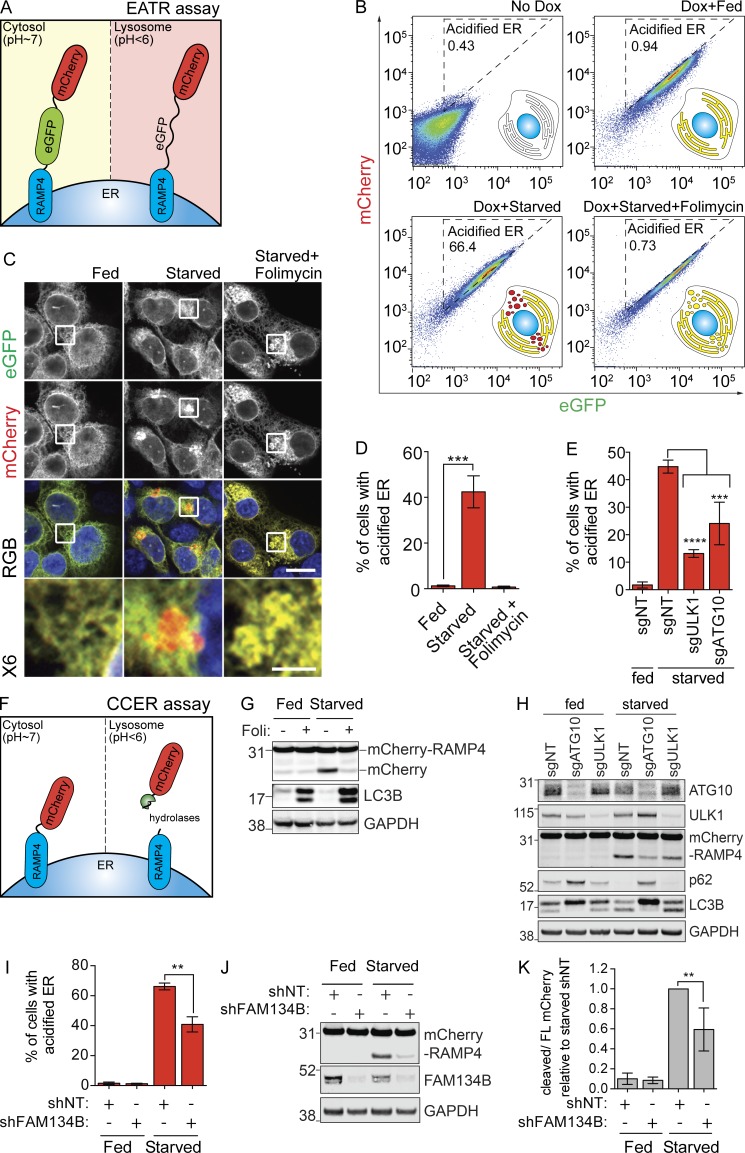
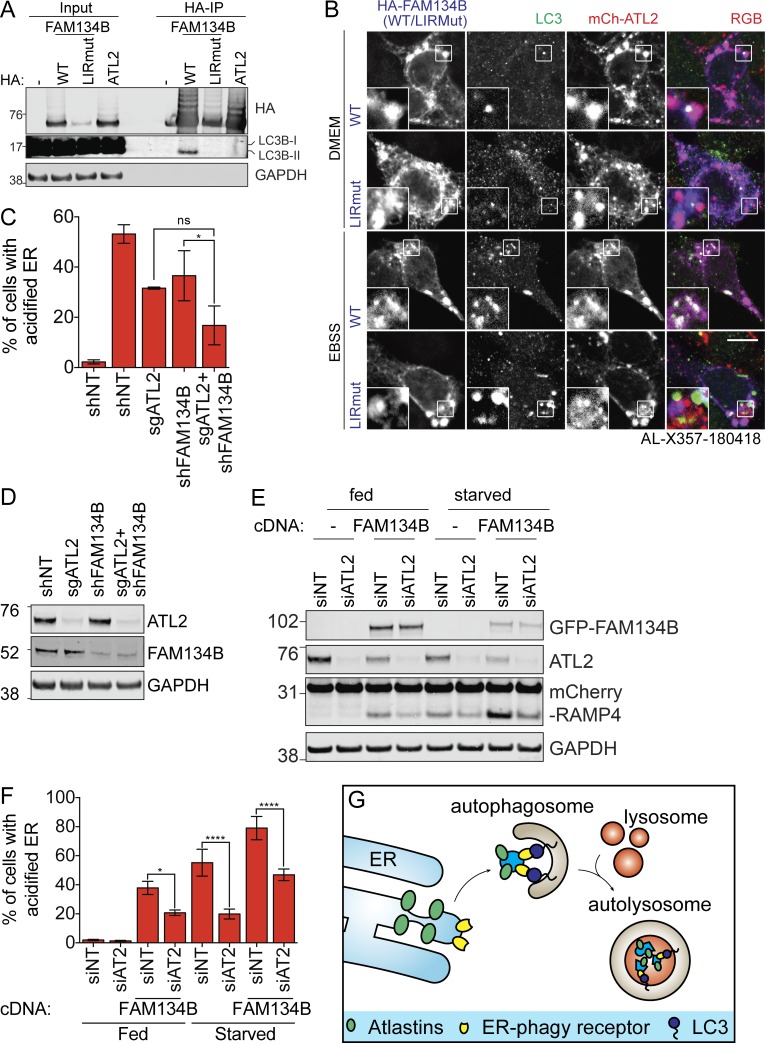
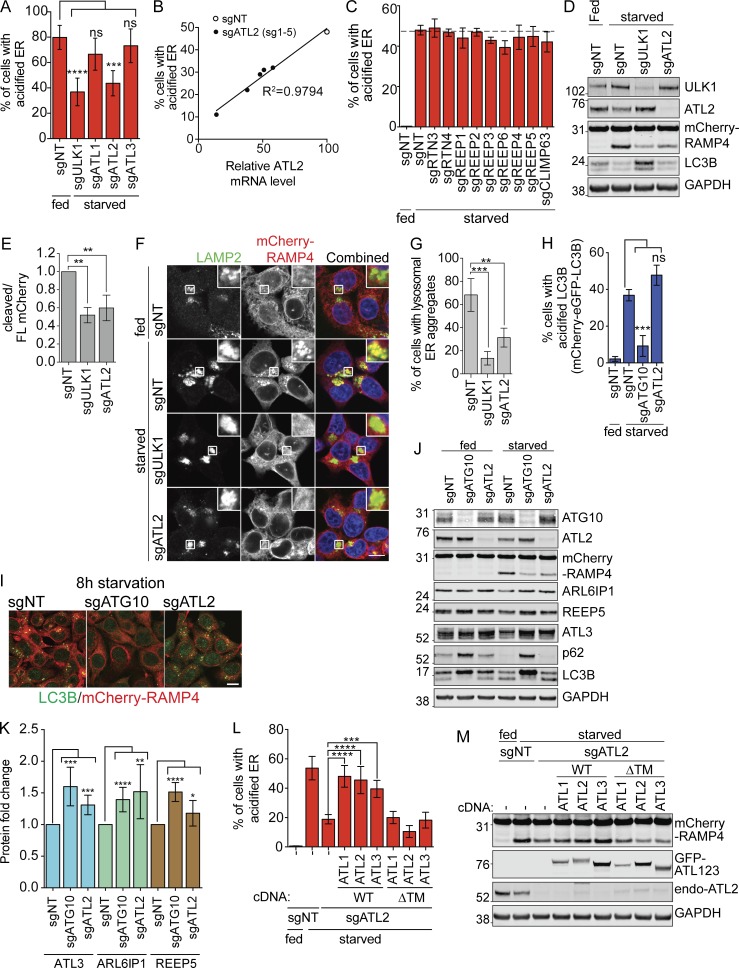
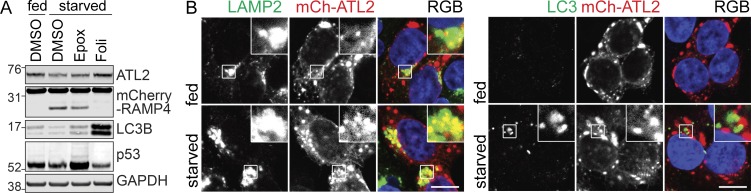
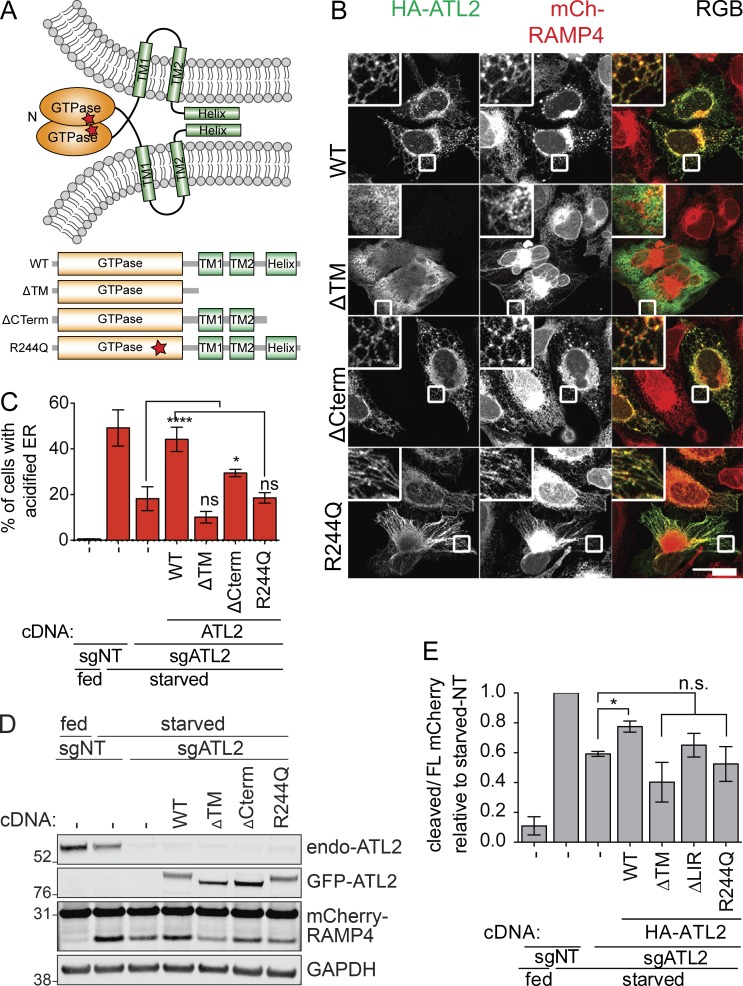
Specific receptors are required for the autophagic degradation of endoplasmic reticulum (ER), known as ER-phagy. However, little is known about how the ER is remodeled and separated for packaging into autophagosomes. We developed two ER-phagy-specific reporter systems and found that Atlastins are key positive effectors and also targets of ER-phagy. Atlastins are ER-resident GTPases involved in ER membrane morphology, and Atlastin-depleted cells have decreased ER-phagy under starvation conditions. Atlastin's role in ER-phagy requires a functional GTPase domain and proper ER localization, both of which are also involved in ER architecture. The three Atlastin family members functionally compensate for one another during ER-phagy and may form heteromeric complexes with one another. We further find that Atlastins act downstream of the FAM134B ER-phagy receptor, such that depletion of Atlastins represses ER-autophagy induced by the overexpression of FAM134B. We propose that during ER-phagy, Atlastins remodel ER membrane to separate pieces of FAM134B-marked ER for efficient autophagosomal engulfment.
特定的受体是内质网(ER)自噬降解所必需的,称为 ER 自噬。然而,对于 ER 如何重塑和分离以包装到自噬体中,人们知之甚少。我们开发了两种 ER 自噬特异性报告系统,发现 Atlastins 是 ER 自噬的关键正向效应因子,也是其作用靶点。Atlastins 是驻留在内质网上的 GTPase,参与内质网膜形态,在饥饿条件下,Atlastin 耗尽的细胞中 ER 自噬减少。Atlastin 在 ER 自噬中的作用需要一个功能齐全的 GTP 酶结构域和正确的内质网定位,这两者都参与内质网的结构。Atlastin 家族的三个成员在 ER 自噬过程中相互补偿,并且可能彼此形成异源寡聚体复合物。我们进一步发现,Atlastins 在 FAM134B ER 自噬受体的下游发挥作用,因此,Atlastin 的耗竭会抑制 FAM134B 过表达诱导的 ER 自噬。我们提出,在 ER 自噬过程中,Atlastins 重塑内质网膜,将 FAM134B 标记的内质网片段分离,以有效进行自噬体吞噬。