Piastra M, Pizza A, Gaddi S, Luca E, Genovese O, Picconi E, De Luca D, Conti G
Pediatric Intensive Care Unit, Fondazione Policlinico A. Gemelli IRCCS and Catholic University of Rome, L.go A.Gemelli, 8, Rome, Italy.
Division of Pediatrics and Neonatal Critical Care, Medical Center "A.Béclère", South Paris University Hospitals, Paris, France.
BMC Pediatr. 2018 Aug 25;18(1):282. doi: 10.1186/s12887-018-1256-y.
Noninvasive ventilation (NIV) is increasingly utilized in infants and young children, though associated with high failure rates due to agitation and poor compliance, mostly if patient-ventilator synchronization is required.
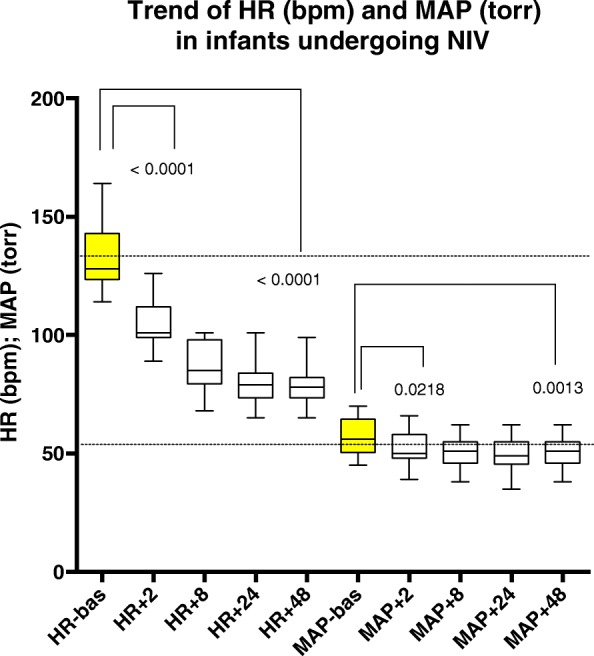
A retrospective cohort study was carried out in an academic pediatric intensive care unit (PICU). Dexmedetomidine (DEX) was infused as unique sedative in 40 consecutive pediatric patients (median age 16 months) previously showing intolerance and agitation during NIV application.
During NIV clinical application both COMFORT-B Score and Richmond Agitation-Sedation Scale (RASS) were serially evaluated. Four patients experiencing NIV failure, all due to pulmonary condition worsening, required intubation and invasive ventilation. 36 patients were successfully weaned from NIV under DEX sedation and discharged from PICU. All patients survived until home discharge.
Our data suggest that DEX may represent an effective sedative agent in infants and children showing agitation during NIV. Early use of DEX in infants/children receiving NIV for acute respiratory failure (ARF) should be considered safe and capable of improving NIV, thus permitting both lung recruitment and patient-ventilator synchronization.
无创通气(NIV)在婴幼儿中的应用越来越广泛,不过由于躁动和依从性差,其失败率较高,尤其是在需要患者-呼吸机同步的情况下。
在一家学术性儿科重症监护病房(PICU)进行了一项回顾性队列研究。对40例连续的儿科患者(中位年龄16个月)输注右美托咪定(DEX)作为唯一的镇静剂,这些患者此前在无创通气应用期间表现出不耐受和躁动。
在无创通气临床应用期间,连续评估了舒适- B评分和里士满躁动-镇静量表(RASS)。4例无创通气失败的患者均因肺部病情恶化而需要插管和有创通气。36例患者在右美托咪定镇静下成功撤机并从儿科重症监护病房出院。所有患者均存活至出院回家。
我们的数据表明,右美托咪定可能是无创通气期间出现躁动的婴幼儿的一种有效镇静剂。对于因急性呼吸衰竭(ARF)接受无创通气的婴幼儿,早期使用右美托咪定应被视为安全的,并且能够改善无创通气,从而实现肺复张和患者-呼吸机同步。