Kanat Ozkan, Ertas Hulya
Department of Medical Oncology, Faculty of Medicine, Uludag University, Bursa 16059, Turkey.
World J Gastrointest Oncol. 2018 Aug 15;10(8):202-210. doi: 10.4251/wjgo.v10.i8.202.
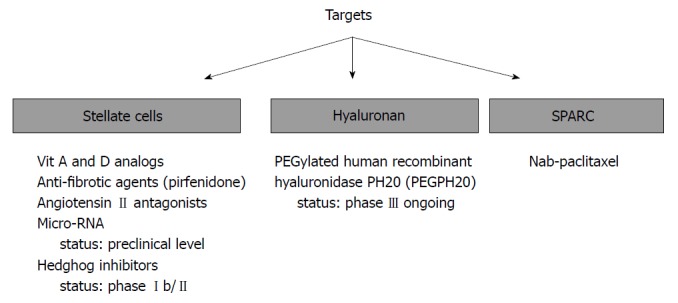
Despite the availability of potent chemotherapy regimens, such as 5-fluorouracil, folinic acid, irinotecan, and oxaliplatin (FOLFIRINOX) and nab-paclitaxel plus gemcitabine, treatment outcomes in metastatic pancreatic cancer (PC) remain unsatisfactory. The presence of an abundant fibrous stroma in PC is considered a crucial factor for its unfavorable condition. Apparently, stroma acts as a physical barrier to restrict intratumoral cytotoxic drug penetration and creates a hypoxic environment that reduces the efficacy of radiotherapy. In addition, stroma plays a vital supportive role in the development and progression of PC, which has prompted researchers to assess the potential benefits of agents targeting several cellular (., stellate cells) and acellular (., hyaluronan) elements of the stroma. This study aims to briefly review the primary structural properties of PC stroma and its interaction with cancer cells and summarize the current status of anti-stromal therapies in the management of metastatic PC.
尽管有强效化疗方案,如5-氟尿嘧啶、亚叶酸、伊立替康和奥沙利铂(FOLFIRINOX)以及纳米白蛋白结合型紫杉醇加吉西他滨,但转移性胰腺癌(PC)的治疗效果仍不尽人意。PC中存在丰富的纤维性基质被认为是其病情不佳的关键因素。显然,基质作为一种物理屏障,限制肿瘤内细胞毒性药物的渗透,并创造一个低氧环境,从而降低放疗效果。此外,基质在PC的发生和发展中起着至关重要的支持作用,这促使研究人员评估针对基质的几种细胞成分(如星状细胞)和无细胞成分(如透明质酸)的药物的潜在益处。本研究旨在简要回顾PC基质的主要结构特性及其与癌细胞的相互作用,并总结抗基质疗法在转移性PC治疗中的现状。