Arteagoitia I, Rodríguez-Andrés C, Rodríguez-Sánchez F
Prinsen Hoven 80, 8331JS Steenwijk, Netherlands,
Med Oral Patol Oral Cir Bucal. 2018 Sep 1;23(5):e608-e618. doi: 10.4317/medoral.22626.
The use of antibiotics to prevent dental implant failures and postoperative infections remains a controversial issue. The objectives of this study were to assess the current antibiotic prescribing patterns and antibiotic prescribing frequency of dentists in Biscay (Spain) in conjunction with routine dental implant surgery among healthy patients and to determine whether any consensus has been reached by such practitioners and last published evidence was being followed.
Observational cross-sectional study: electronic survey. This study was reported according to the STROBE guidelines. This anonymous questionnaire contained open-ended and close-ended questions. An email was sent 26 October 2017 to all the registered members of the Biscay dentists' College (n=989). The collected data were analyzed using STATA® 14 software, and 95% confidence intervals (CI) were used to assess the frequency of prescription for each antibiotic regimen.
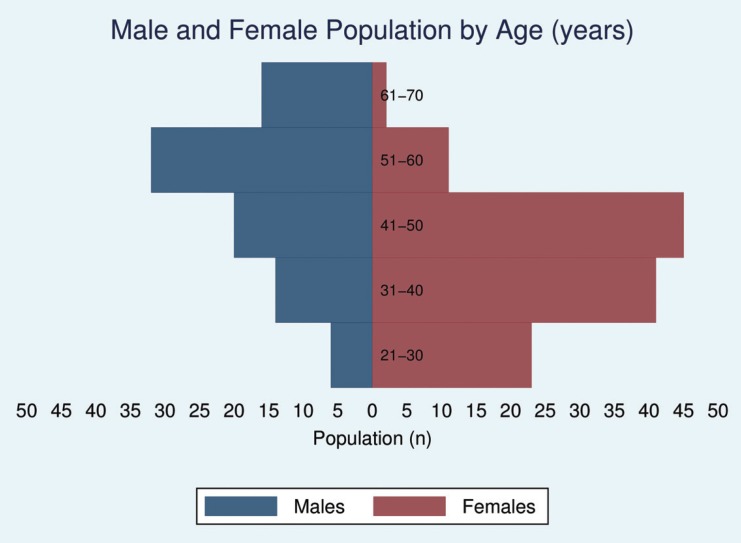
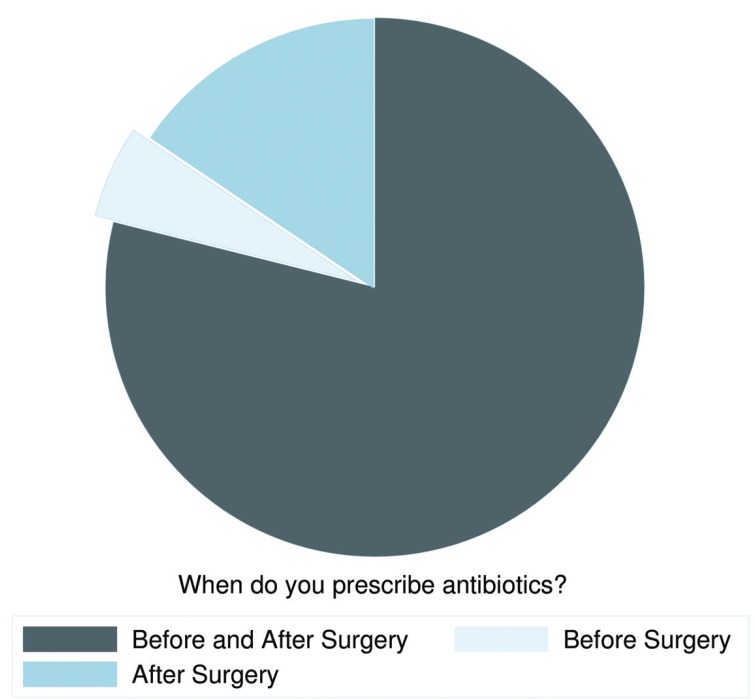
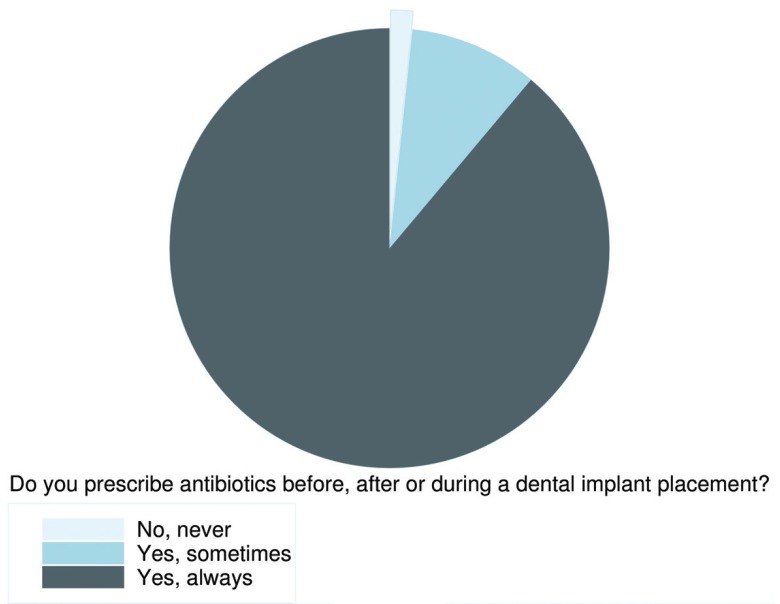
The survey was responded to by a total of 233 participants (response rate=23.56%). Overall, 210 participants finished the survey completely, and 23 surveys were answered partially. The questionnaire was responded to by 122 females (58.1%) and 88 males (41.9%). Of the participants, 88% (n=207) always routinely prescribed prophylactic antibiotics in conjunction with dental implant surgery (95% CI: 84.79-92.88%). Approximately 9% (n=22) prescribed antibiotics sometimes (95% CI: 5.68-13.19%), and only 4 dentists (1.72%) never prescribed antibiotics (95% CI: 0.04-3.38%). Overall, 179 of 233 respondents prescribed both pre- and postoperative antibiotics (78.85%, 95% CI: 72.96-83.97%), 13 prescribed antibiotics only preoperatively (5.73%, 95% CI: 3.08-9.59%), and 35 prescribed antibiotics exclusively after routine dental implant surgery (15.42%, 95% CI: 10.98-20.78%).
Most of the dentists working in Biscay routinely prescribe prophylactic antibiotics in conjunction with dental implant surgery among healthy patients. A large range of prophylactic regimens are prescribed and the most recently published evidence is not being followed.
使用抗生素预防牙种植失败和术后感染仍是一个有争议的问题。本研究的目的是评估西班牙比斯开湾地区牙医在健康患者常规牙种植手术中目前的抗生素处方模式和抗生素处方频率,并确定这些从业者是否已达成共识以及是否遵循了最新发表的证据。
观察性横断面研究:电子调查。本研究按照STROBE指南报告。这份匿名问卷包含开放式和封闭式问题。2017年10月26日向比斯开湾牙医协会的所有注册会员(n = 989)发送了电子邮件。使用STATA® 14软件对收集的数据进行分析,并使用95%置信区间(CI)评估每种抗生素治疗方案的处方频率。
共有233名参与者回复了调查(回复率 = 23.56%)。总体而言,210名参与者完整完成了调查,23份问卷为部分回复。回复问卷的有122名女性(58.1%)和88名男性(41.9%)。在参与者中,88%(n = 207)在牙种植手术时总是常规开具预防性抗生素(95% CI:84.79 - 92.88%)。约9%(n = 22)有时开具抗生素(95% CI:5.68 - 13.19%),只有4名牙医(1.72%)从未开具抗生素(95% CI:0.04 - 3.38%)。总体而言,233名受访者中有179人术前和术后都开具抗生素(78.85%,95% CI:72.96 - 83.97%),13人仅在术前开具抗生素(5.73%,95% CI:3.08 - 9.59%),35人仅在常规牙种植手术后开具抗生素(15.42%,95% CI:10.98 - 20.78%)。
在比斯开湾工作的大多数牙医在健康患者牙种植手术时常规开具预防性抗生素。所开具的预防性治疗方案范围广泛,且未遵循最新发表的证据。