Wang Xinmei, Ali Mir S, Lacerda Carla M R
Department of Chemical Engineering, Texas Tech University, Lubbock, TX 79409, USA.
Bioengineering (Basel). 2018 Aug 28;5(3):69. doi: 10.3390/bioengineering5030069.
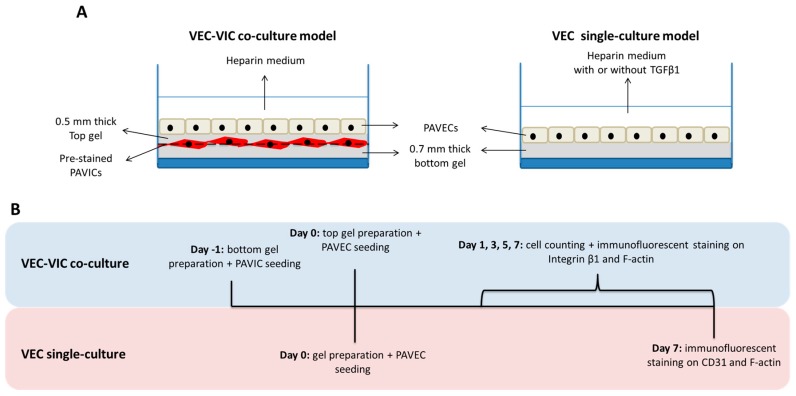
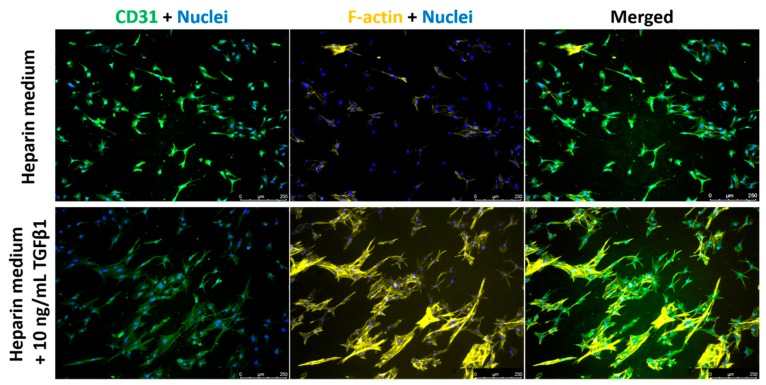
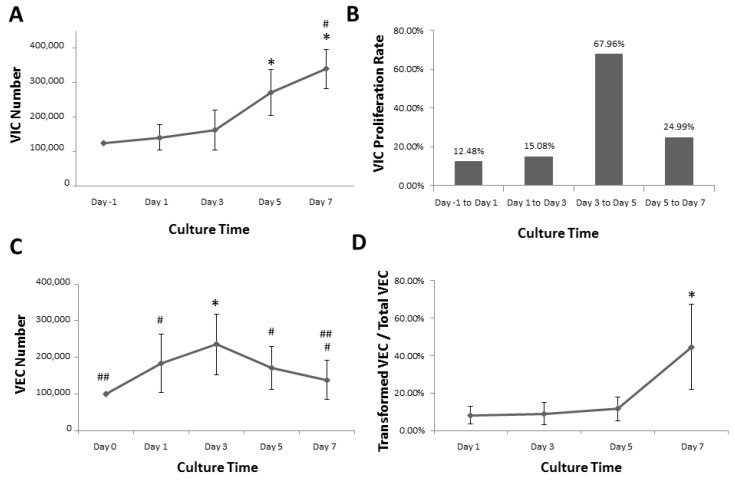
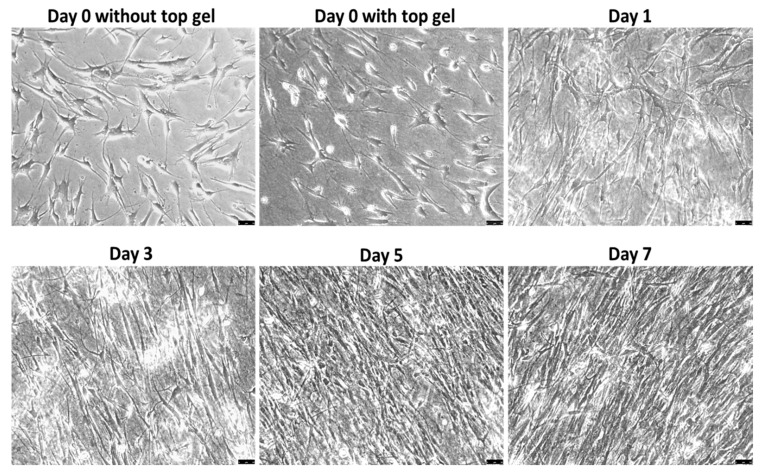
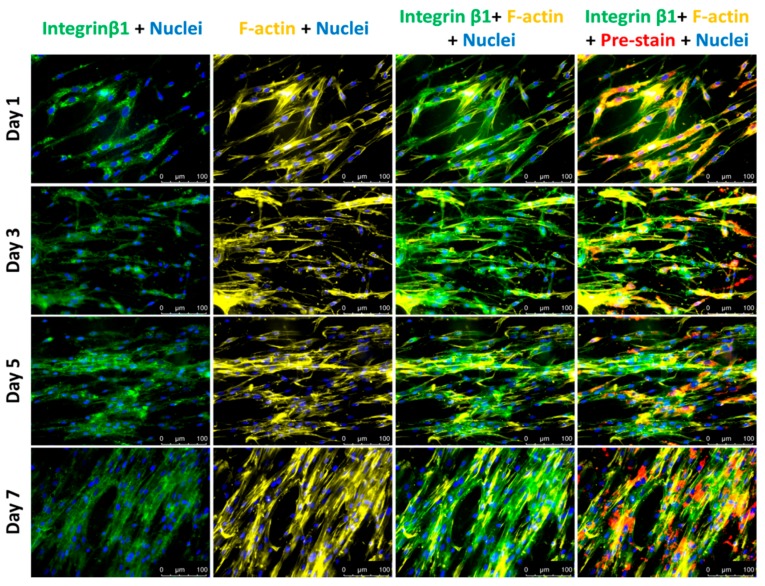
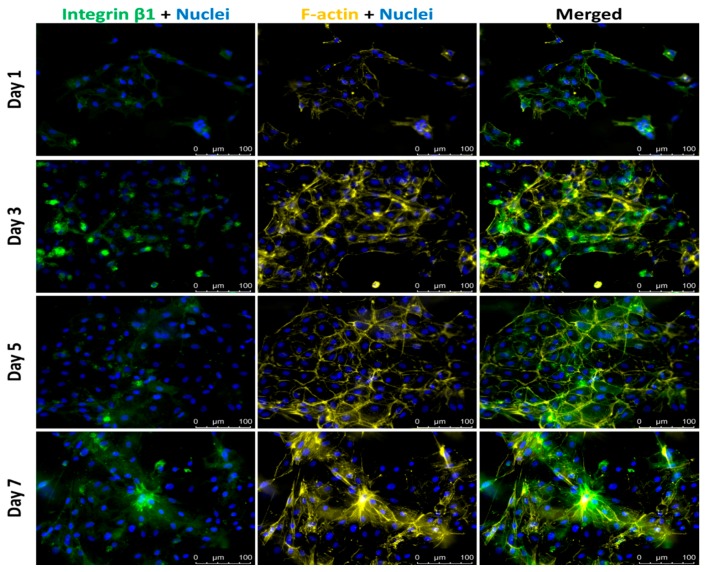
Since most of the body's extracellular matrix (ECM) is composed of collagen and elastin, we believe the choice of these materials is key for the future and promise of tissue engineering. Once it is known how elastin content of ECM guides cellular behavior (in 2D or 3D), one will be able to harness the power of collagen-elastin microenvironments to design and engineer stimuli-responsive tissues. Moreover, the implementation of such matrices to promote endothelial-mesenchymal transition of primary endothelial cells constitutes a powerful tool to engineer 3D tissues. Here, we design a 3D collagen-elastin scaffold to mimic the native ECM of heart valves, by providing the strength of collagen layers, as well as elasticity. Valve interstitial cells (VICs) were encapsulated in the collagen-elastin hydrogels and valve endothelial cells (VECs) cultured onto the surface to create an in vitro 3D VEC-VIC co-culture. Over a seven-day period, VICs had stable expression levels of integrin β1 and F-actin and continuously proliferated, while cell morphology changed to more elongated. VECs maintained endothelial phenotype up to day five, as indicated by low expression of F-actin and integrin β1, while transformed VECs accounted for less than 7% of the total VECs in culture. On day seven, over 20% VECs were transformed to mesenchymal phenotype, indicated by increased actin filaments and higher expression of integrin β1. These findings demonstrate that our 3D collagen-elastin scaffolds provided a novel tool to study cell-cell or cell-matrix interactions in vitro, promoting advances in the current knowledge of valvular endothelial cell mesenchymal transition.
由于人体大部分细胞外基质(ECM)由胶原蛋白和弹性蛋白组成,我们认为这些材料的选择对组织工程的未来发展和前景至关重要。一旦了解了ECM中弹性蛋白含量如何引导细胞行为(二维或三维),人们将能够利用胶原蛋白 - 弹性蛋白微环境的力量来设计和构建对刺激有反应的组织。此外,利用这种基质促进原代内皮细胞的内皮 - 间充质转化,构成了一种构建三维组织的有力工具。在此,我们设计了一种三维胶原蛋白 - 弹性蛋白支架,通过提供胶原蛋白层的强度以及弹性,来模拟心脏瓣膜的天然ECM。将瓣膜间质细胞(VICs)封装在胶原蛋白 - 弹性蛋白水凝胶中,并将瓣膜内皮细胞(VECs)培养在其表面,以创建体外三维VEC - VIC共培养体系。在七天的时间里,VICs的整合素β1和F - 肌动蛋白表达水平稳定且持续增殖,而细胞形态变得更加细长。VECs在第五天之前保持内皮表型,表现为F - 肌动蛋白和整合素β1的低表达,而转化的VECs占培养物中总VECs的比例不到7%。在第七天,超过20%的VECs转化为间充质表型,表现为肌动蛋白丝增加和整合素β1表达升高。这些发现表明,我们的三维胶原蛋白 - 弹性蛋白支架为体外研究细胞 - 细胞或细胞 - 基质相互作用提供了一种新工具,推动了目前关于瓣膜内皮细胞间充质转化知识的进步。