Al-Maawi Sarah, Vorakulpipat Chakorn, Orlowska Anna, Zrnc Tomislav A, Sader Robert A, Kirkpatrick C James, Ghanaati Shahram
Department for Oral, Cranio-Maxillofacial and Facial Plastic Surgery, Frankfurt Orofacial Regenerative Medicine Lab, University Hospital Frankfurt Goethe University, Frankfurt am Main, Germany.
Department of Oral and Maxillofacial Surgery, Medical University of Graz, Graz, Austria.
Front Bioeng Biotechnol. 2018 Aug 14;6:104. doi: 10.3389/fbioe.2018.00104. eCollection 2018.
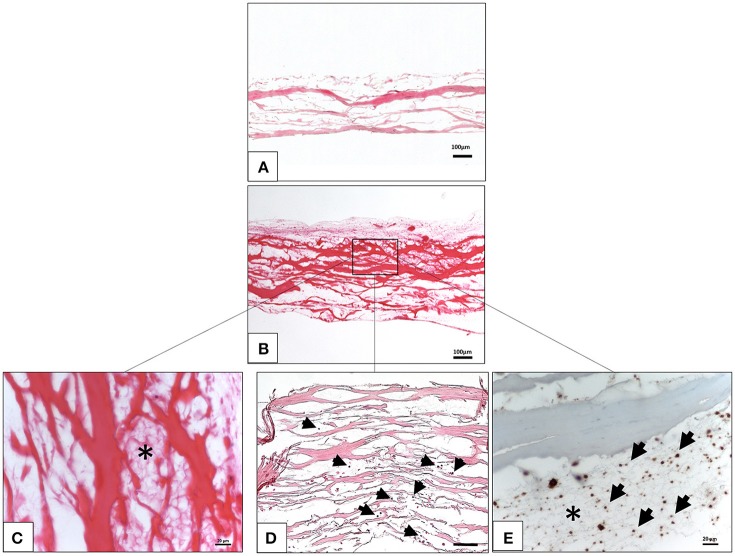
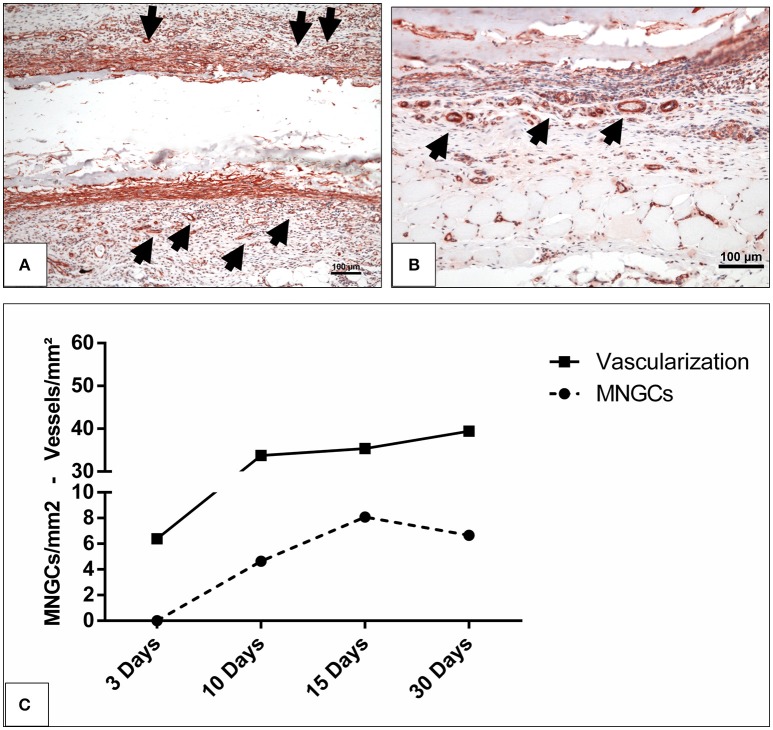
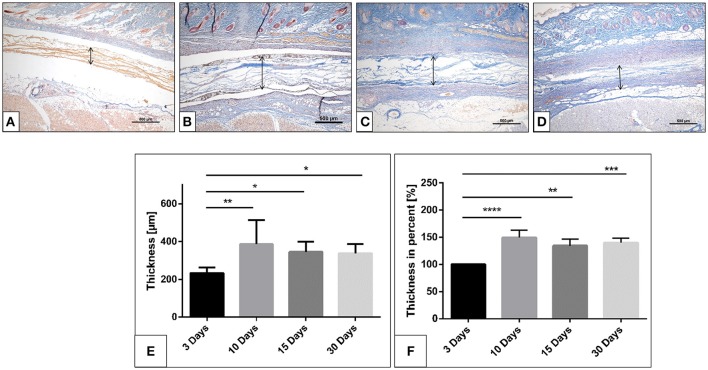
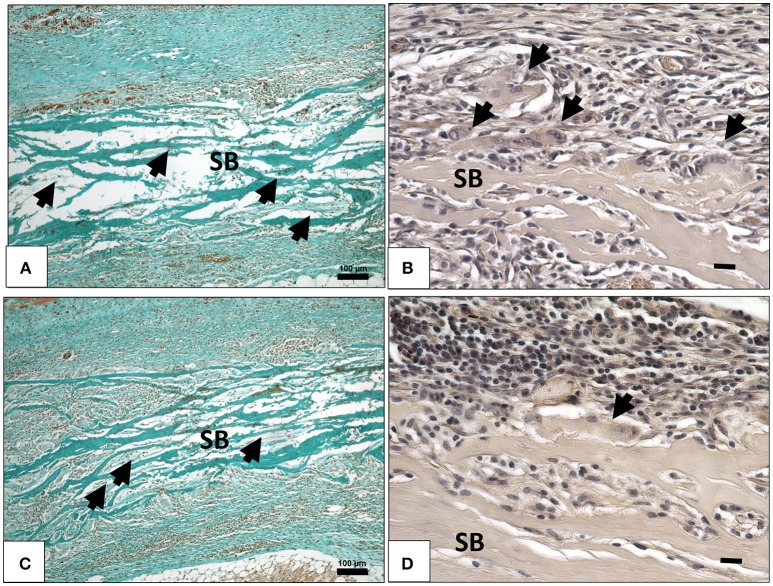
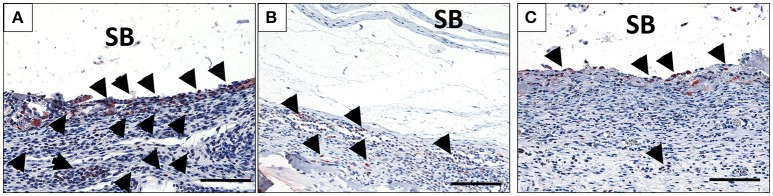
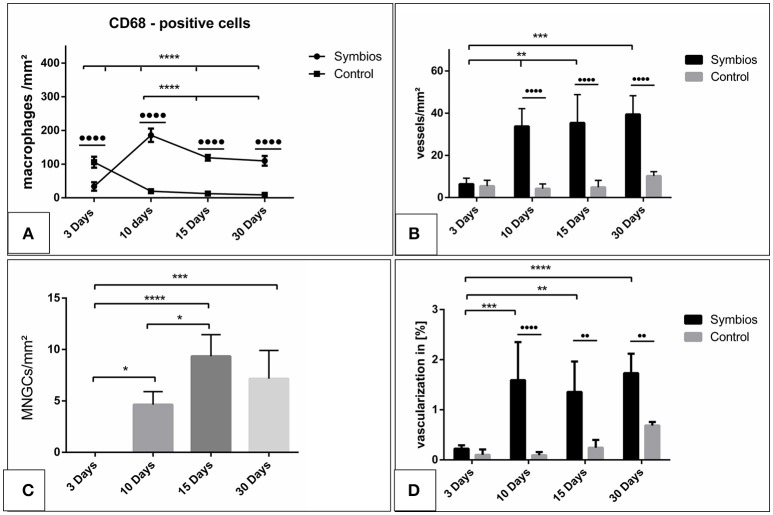
The present study evaluated the tissue response toward a resorbable collagen membrane derived from bovine achilles tendon (test group) in comparison to physiological wound healing (control group). After subcutaneous implantation in Wistar rats over 30 days, histochemical and immunohistochemical methods elucidated the cellular inflammatory response, vascularization pattern, membrane protein and cell absorbance capacity. After 30 days, the test-group induced two different inflammatory patterns. On the membrane surface, multinucleated giant cells (MNGCs) were formed after the accumulation of CD-68-positive cells (macrophages), whereas only mononuclear cells (MNCs) were found within the membrane central region. Peri-implant vascularization was significantly enhanced after the formation of MNGCs. No vessels were found within the central region of the membrane. Physiological wound healing revealed no MNGCs at any time point. These dynamic changes in the cellular reaction and vascularization within the test-group are related typical indications of a foreign body reaction. Due to the membrane-specific porosity, mononuclear cells migrated into the central region, and the membrane maintained its integrity over 30 days by showing no breakdown or disintegration. The investigation analyzed the interaction between the membrane and a blood concentrate system, liquid platelet-rich fibrin (liquid PRF), derived from human peripheral blood and consisting of platelets, leukocytes and fibrin. PRF penetrated the membrane after just 15 min. The data question the role of biomaterial-induced MNGCs as a pathological reaction and whether this is acceptable to trigger vascularization or should be considered as an adverse reaction. Therefore, further pre-clinical and clinical studies are needed to identify the types of MNGCs that are induced by clinically approved biomaterials.
本研究评估了与生理性伤口愈合(对照组)相比,牛跟腱来源的可吸收胶原膜(试验组)的组织反应。在Wistar大鼠皮下植入30天后,组织化学和免疫组织化学方法阐明了细胞炎症反应、血管化模式、膜蛋白和细胞吸收能力。30天后,试验组诱导出两种不同的炎症模式。在膜表面,CD-68阳性细胞(巨噬细胞)积聚后形成多核巨细胞(MNGC),而在膜中央区域仅发现单核细胞(MNC)。MNGC形成后,植入物周围的血管化显著增强。在膜的中央区域未发现血管。生理性伤口愈合在任何时间点均未发现MNGC。试验组细胞反应和血管化的这些动态变化是异物反应的典型指征。由于膜具有特定的孔隙率,单核细胞迁移到中央区域,并且膜在30天内保持其完整性,未出现破裂或崩解。该研究分析了该膜与一种血液浓缩系统——源自人外周血、由血小板、白细胞和纤维蛋白组成的富含液体血小板纤维蛋白(液体PRF)之间的相互作用。PRF在仅15分钟后就穿透了该膜。这些数据对生物材料诱导的MNGC作为一种病理反应的作用以及这是否可接受以触发血管化或应被视为一种不良反应提出了质疑。因此,需要进一步的临床前和临床研究来确定临床批准的生物材料所诱导的MNGC类型。