Faculty of Life and Environmental Sciences, University of Tsukuba, Tsukuba City, 305-8572, Japan.
Alliance for Research on the Mediterranean and North Africa (ARENA), University of Tsukuba, Tsukuba City, 305-8572, Japan.
BMC Cancer. 2018 Aug 29;18(1):856. doi: 10.1186/s12885-018-4693-y.
Melanoma is one of the most invasive and aggressive types of cancer with a very poor prognosis. Surgery remains the most efficient treatment prior melanoma invasion and metastasis formation. However, therapy becomes a challenge once the cancer cells colonized other tissues. At present, there are two main classes of therapies acting with a certain efficiency on metastatic melanoma: immune check point inhibitors (anti-PD1/PDL1) and targeted therapy such as Vemurafenib. Unfortunately, these therapies are not fully responsive, induce resistance and/or generate unwanted side effects. In this respect, it is important to continue to discover new cancer therapeutics. Here, we show that daphnane diterpenes type of compounds can prevent melanoma metastasis by inhibiting metastasis-associated matrix metalloproteinases expression without cytotoxicity.
Evaluation of the anti-metastasis effect of daphnane diterpenes-rich Thymelaea hirsuta extract (TH) and its bioactive component gnidilatidin was carried out in vitro using B16 murine melanoma cells and in vivo using male C57BL/6 J mice. Global gene expression in B16 cells was done using DNA microarray, validated using real-time PCR, to further understand the effect of daphnane diterpenes, specifically daphnane diterpenoid gnidilatidin.
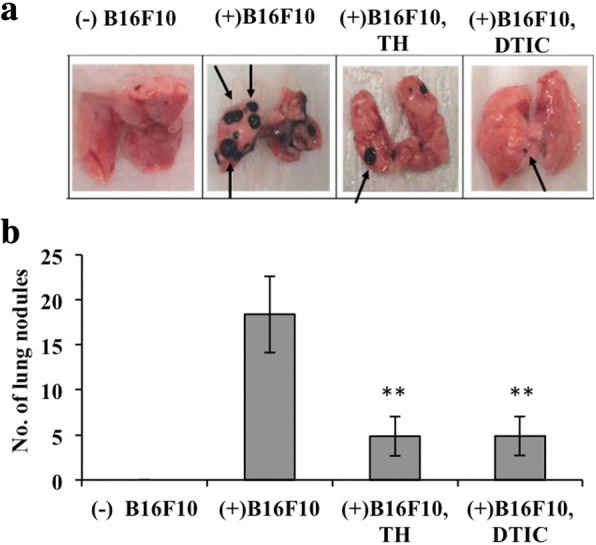
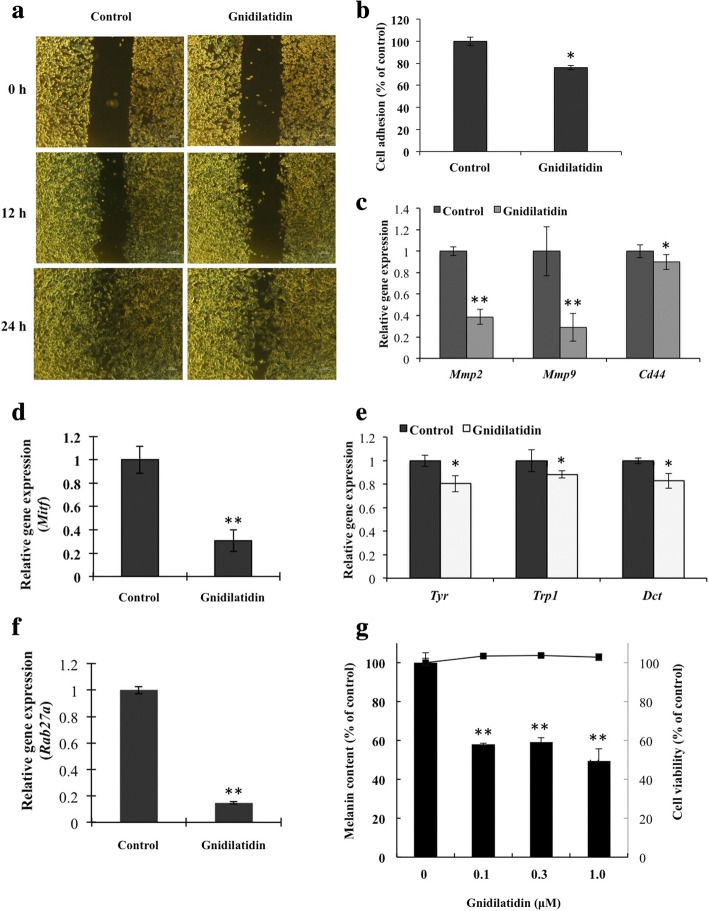
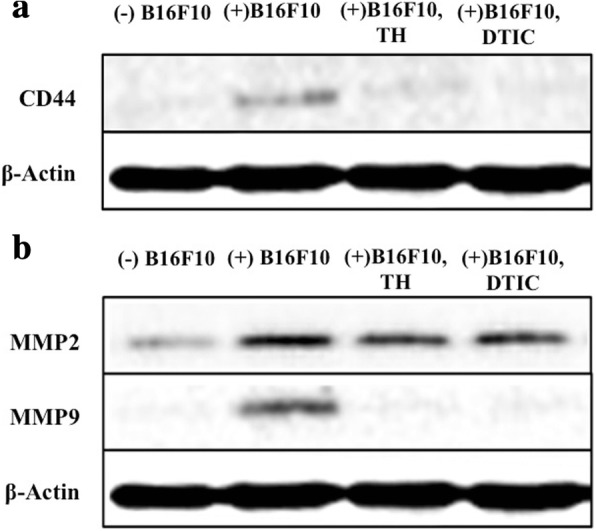
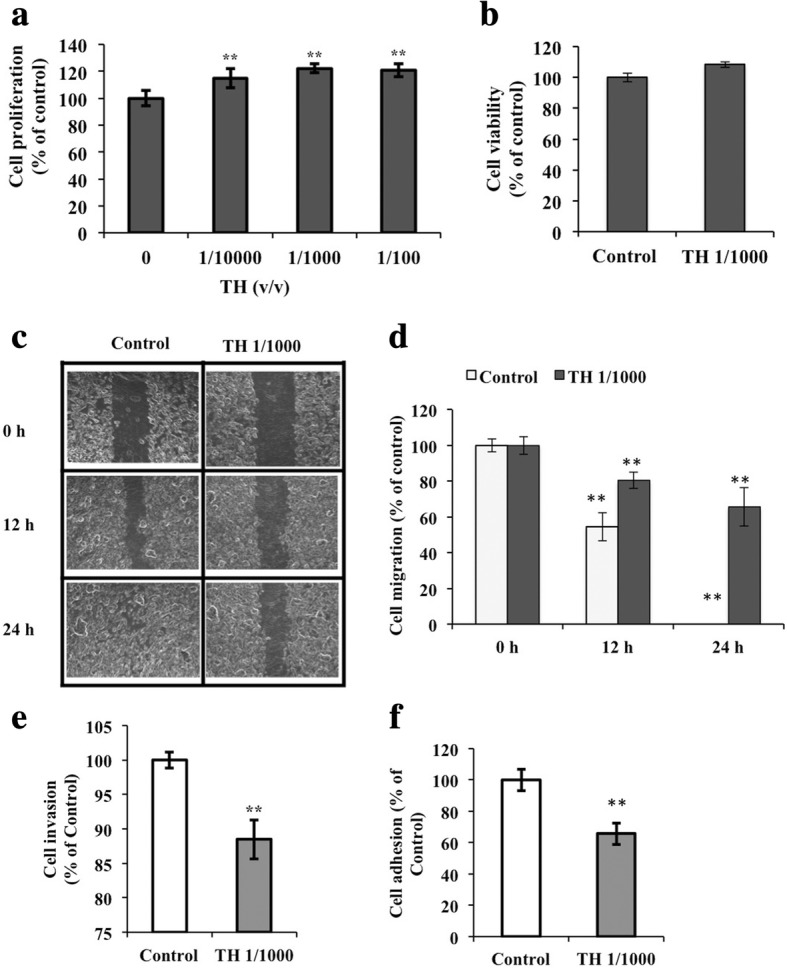
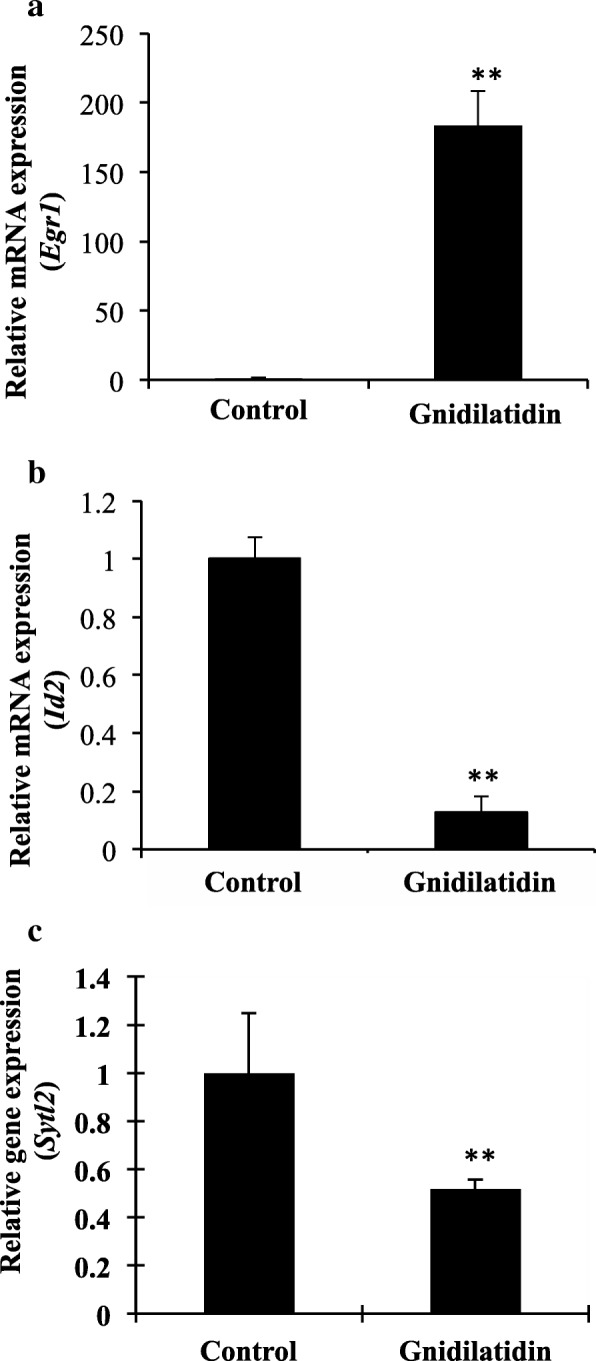
Oral administration of daphnane diterpenes-rich Thymelaea hirsuta extract (TH) suppressed MMP2 and MMP9 expression, decreasing lung tumor in mice injected with B16 murine melanoma cells. Validation of these observations in vitro showed reduced B16 cells migration, adhesion, and invasion. Results of microarray analysis of B16 cells treated with daphnane diterpenoid gnidilatidin from TH revealed an upregulation of tumor suppressor Egr1 while inhibiting metastasis-associated genes Id2 and Sytl2 expression. A downregulation of the melanoma oncogene microphthalmia-associated transcription factor (Mitf) was observed, and most likely caused by the inhibition of Id2, a gene that regulated HLH transcription factors such as MITF and also reported to promote tumor cell migration and invasion.
Daphnane diterpenes have inhibitory effect on the metastatic potential of B16 melanoma cells, and the results of this study provided evidence for their potential for use in the prevention and inhibition of melanoma metastasis.
黑色素瘤是最具侵袭性和侵略性的癌症之一,预后极差。在黑色素瘤侵袭和转移形成之前,手术仍然是最有效的治疗方法。然而,一旦癌细胞转移到其他组织,治疗就成为一个挑战。目前,有两种主要的治疗方法对转移性黑色素瘤有一定的疗效:免疫检查点抑制剂(抗 PD1/PDL1)和靶向治疗,如vemurafenib。不幸的是,这些治疗方法并非完全有效,会引起耐药性和/或产生不良副作用。在这方面,继续发现新的癌症治疗方法非常重要。在这里,我们表明,瑞香烷二萜类化合物可以通过抑制转移相关基质金属蛋白酶的表达来预防黑色素瘤转移,而没有细胞毒性。
使用 B16 小鼠黑色素瘤细胞在体外评估富含瑞香烷二萜的 Thymelaea hirsuta 提取物(TH)及其生物活性成分 gnidilatidin 的抗转移作用,并在雄性 C57BL/6 J 小鼠体内进行。使用 DNA 微阵列对 B16 细胞进行全基因表达分析,通过实时 PCR 进行验证,以进一步了解瑞香烷二萜,特别是瑞香烷二萜 gnidilatidin 的作用。
口服富含瑞香烷二萜的 Thymelaea hirsuta 提取物(TH)可抑制 MMP2 和 MMP9 的表达,减少注射 B16 小鼠黑色素瘤细胞的小鼠肺部肿瘤。体外验证这些观察结果显示,B16 细胞的迁移、粘附和侵袭减少。用来自 TH 的瑞香烷二萜 gnidilatidin 处理 B16 细胞的微阵列分析结果显示,肿瘤抑制因子 Egr1 的表达上调,同时抑制转移相关基因 Id2 和 Sytl2 的表达。观察到黑色素瘤致癌基因小眼畸形相关转录因子(Mitf)的下调,这很可能是由于 Id2 的抑制所致,Id2 是一种调节 HLH 转录因子(如 MITF)的基因,也被报道可促进肿瘤细胞迁移和侵袭。
瑞香烷二萜对 B16 黑色素瘤细胞的转移潜力有抑制作用,本研究结果为其在预防和抑制黑色素瘤转移中的应用提供了证据。