Repetto Daniele, Brockhaus Johannes, Rhee Hong J, Lee Chungku, Kilimann Manfred W, Rhee Jeongseop, Northoff Lisa M, Guo Wenjia, Reissner Carsten, Missler Markus
Institute of Anatomy and Molecular Neurobiology, Westfälische Wilhelms-University, Münster, Germany.
Synaptic Physiology Group, Max-Planck Institute for Experimental Medicine, Göttingen, Germany.
Front Synaptic Neurosci. 2018 Aug 15;10:28. doi: 10.3389/fnsyn.2018.00028. eCollection 2018.
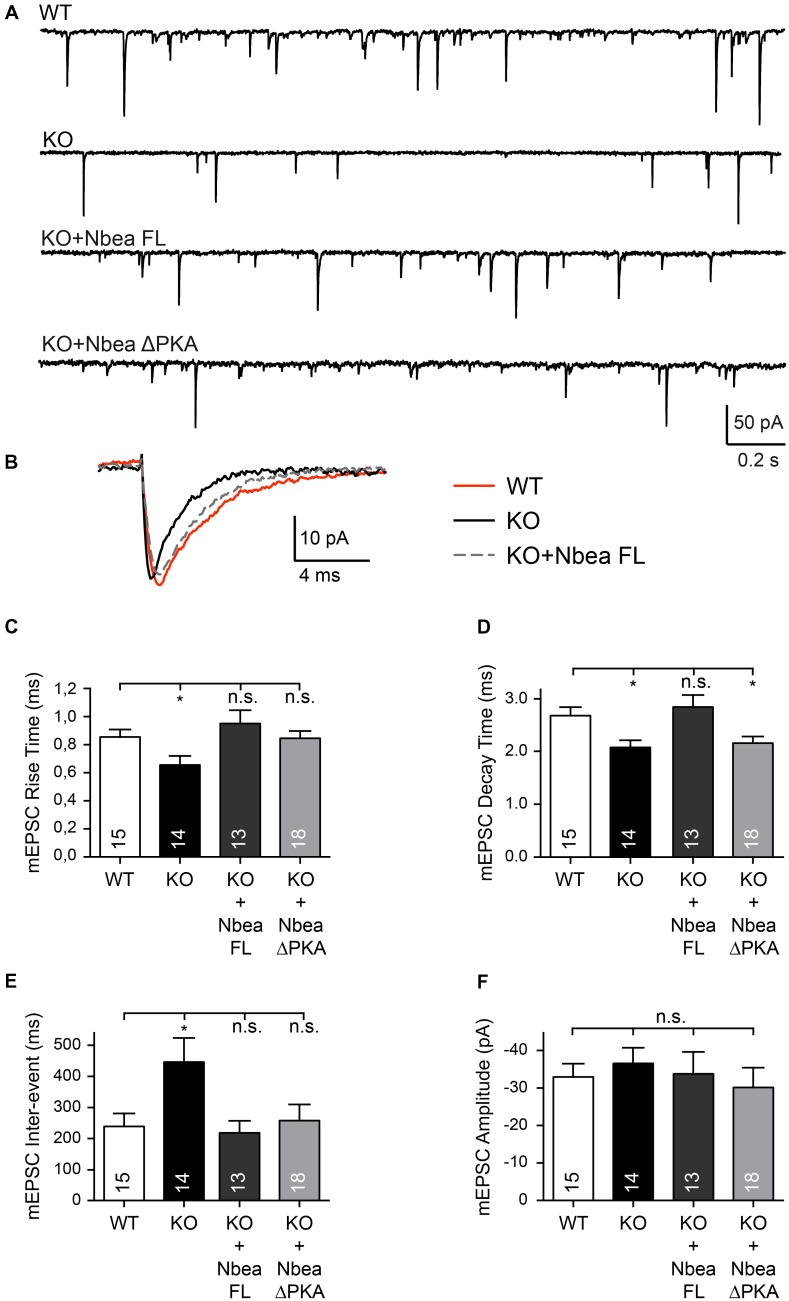
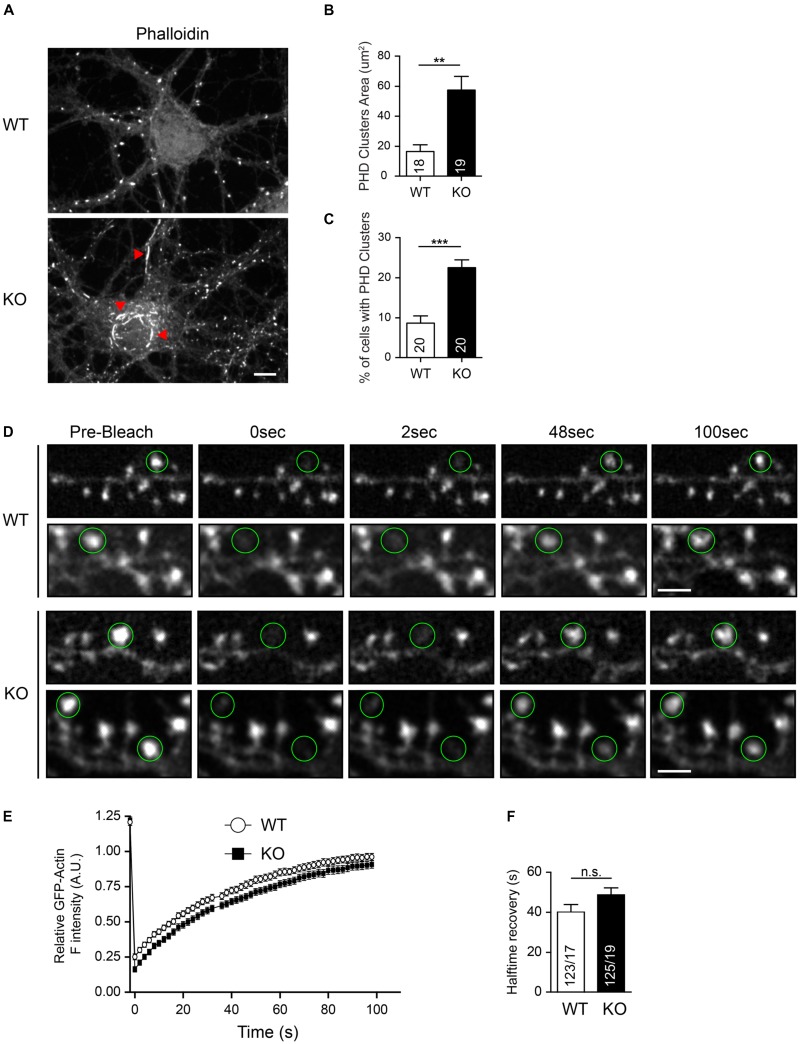
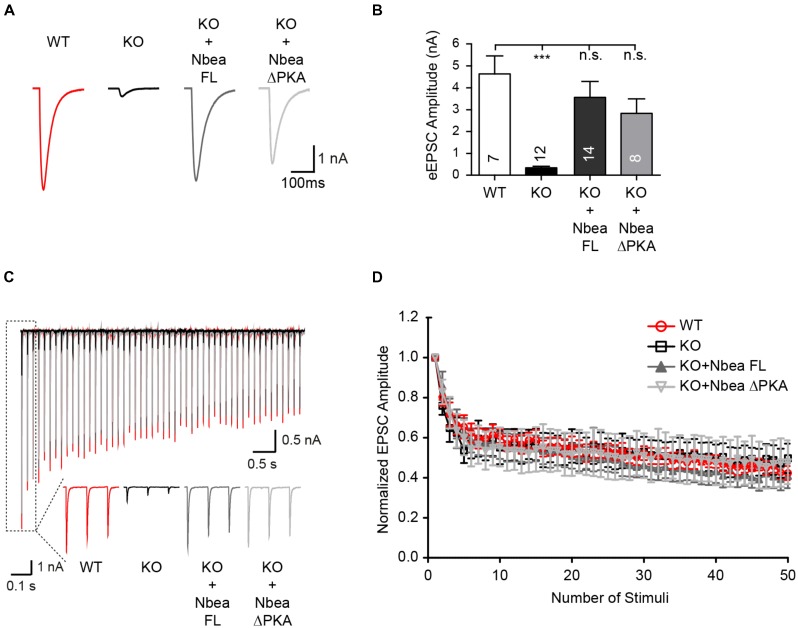
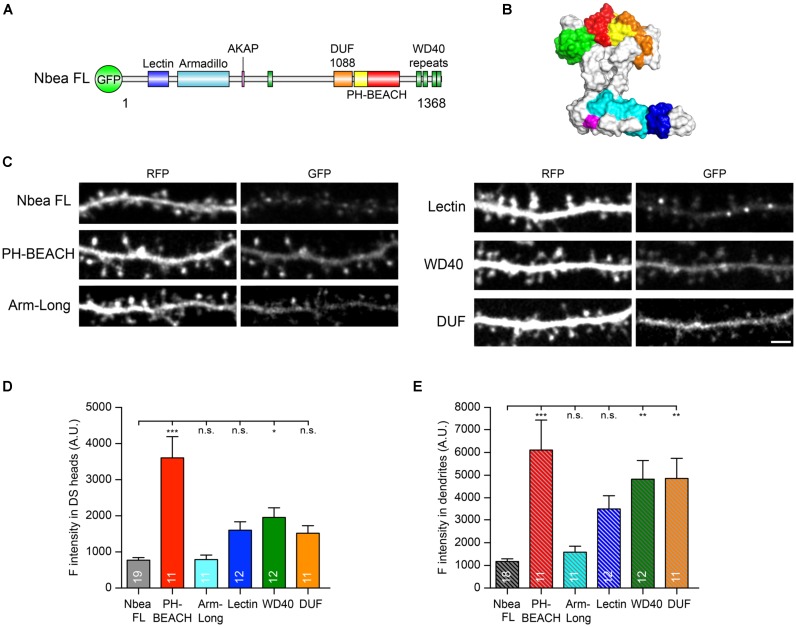
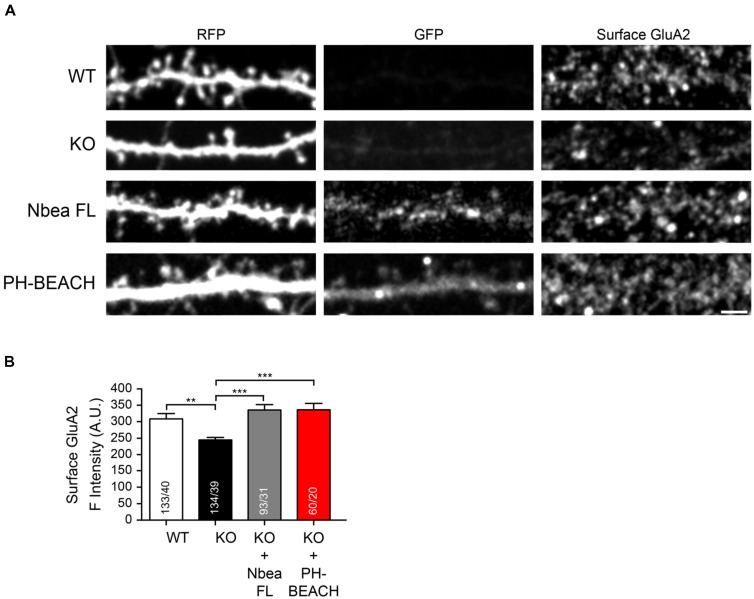
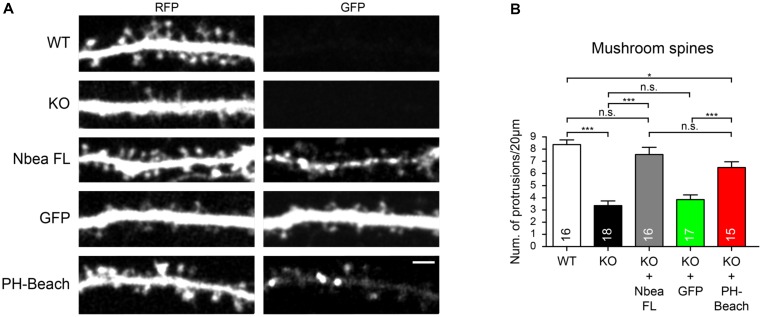
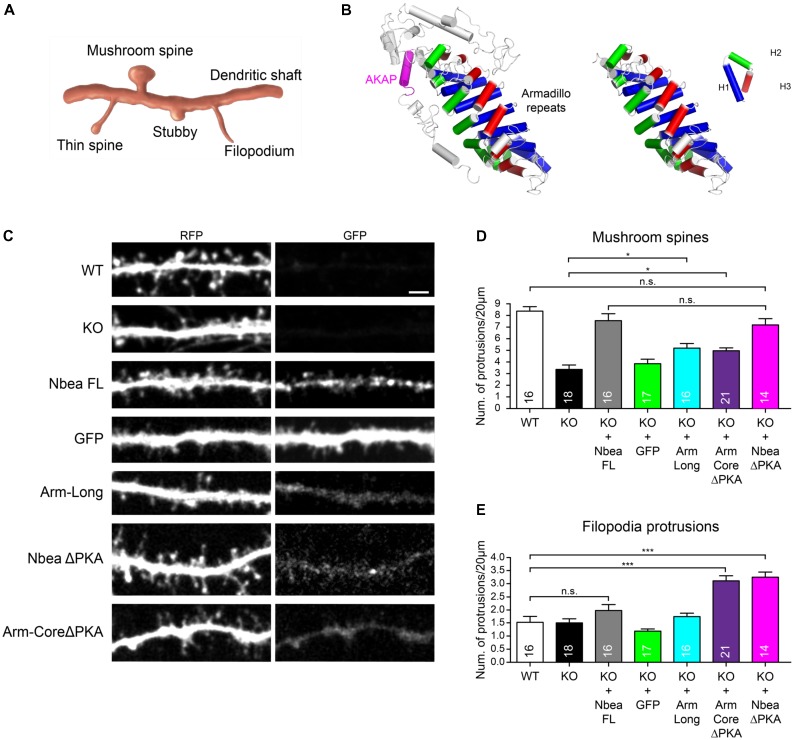
Spines are small protrusions from dendrites where most excitatory synapses reside. Changes in number, shape, and size of dendritic spines often reflect changes of neural activity in entire circuits or at individual synapses, making spines key structures of synaptic plasticity. Neurobeachin is a multidomain protein with roles in spine formation, postsynaptic neurotransmitter receptor targeting and actin distribution. However, the contributions of individual domains of Neurobeachin to these functions is poorly understood. Here, we used mostly live cell imaging and patch-clamp electrophysiology to monitor morphology and function of spinous synapses in primary hippocampal neurons. We demonstrate that a recombinant full-length Neurobeachin from humans can restore mushroom spine density and excitatory postsynaptic currents in neurons of Neurobeachin-deficient mice. We then probed the role of individual domains of Neurobeachin by comparing them to the full-length molecule in rescue experiments of knockout neurons. We show that the combined PH-BEACH domain complex is highly localized in spine heads, and that it is sufficient to restore normal spine density and surface targeting of postsynaptic AMPA receptors. In addition, we report that the Armadillo domain facilitates the formation of filopodia, long dendritic protrusions which often precede the development of mature spines, whereas the PKA-binding site appears as a negative regulator of filopodial extension. Thus, our results indicate that individual domains of Neurobeachin sustain important and specific roles in the regulation of spinous synapses. Since heterozygous mutations in Neurobeachin occur in autistic patients, the results will also improve our understanding of pathomechanism in neuropsychiatric disorders associated with impairments of spine function.
树突棘是树突上的小突起,大多数兴奋性突触位于此处。树突棘数量、形状和大小的变化通常反映整个神经回路或单个突触处神经活动的变化,使树突棘成为突触可塑性的关键结构。神经海滩蛋白是一种多结构域蛋白,在树突棘形成、突触后神经递质受体靶向和肌动蛋白分布中发挥作用。然而,人们对神经海滩蛋白各个结构域对这些功能的贡献了解甚少。在这里,我们主要使用活细胞成像和膜片钳电生理学来监测原代海马神经元中棘状突触的形态和功能。我们证明,来自人类的重组全长神经海滩蛋白可以恢复神经海滩蛋白缺陷小鼠神经元中的蘑菇状树突棘密度和兴奋性突触后电流。然后,我们通过在基因敲除神经元的拯救实验中将神经海滩蛋白的各个结构域与全长分子进行比较,来探究其作用。我们发现,PH-BEACH结构域复合体高度定位于树突棘头部,并且足以恢复正常的树突棘密度和突触后AMPA受体的表面靶向。此外,我们报告,犰狳结构域促进丝状伪足的形成,丝状伪足是长的树突突起,通常在成熟树突棘发育之前出现,而PKA结合位点似乎是丝状伪足延伸的负调节因子。因此,我们的结果表明,神经海滩蛋白的各个结构域在棘状突触的调节中发挥着重要且特定的作用。由于自闭症患者中存在神经海滩蛋白的杂合突变,这些结果也将增进我们对与树突棘功能受损相关的神经精神疾病发病机制的理解。