Department of Neurosurgery, Tianjin Medical University General Hospital, Tianjin, China.
Laboratory of Neuro-Oncology, Tianjin Neurological Institute, Tianjin, China.
J Cell Physiol. 2019 Feb;234(2):1630-1642. doi: 10.1002/jcp.27033. Epub 2018 Aug 29.
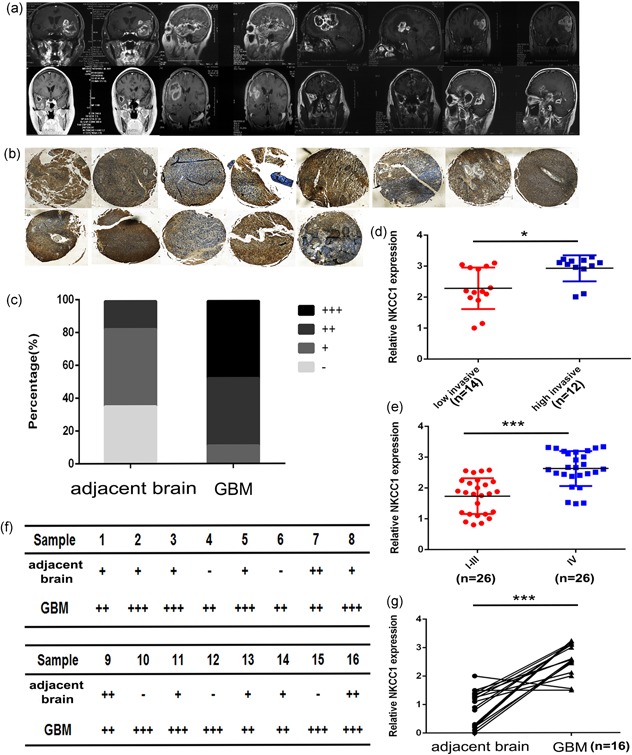
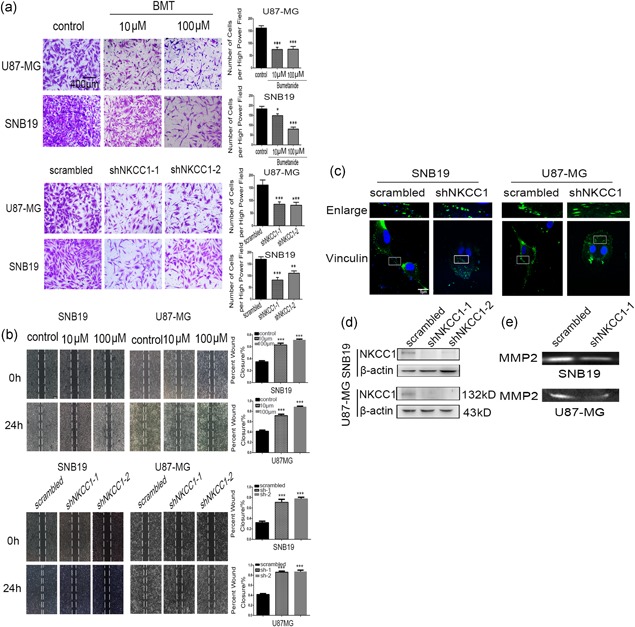
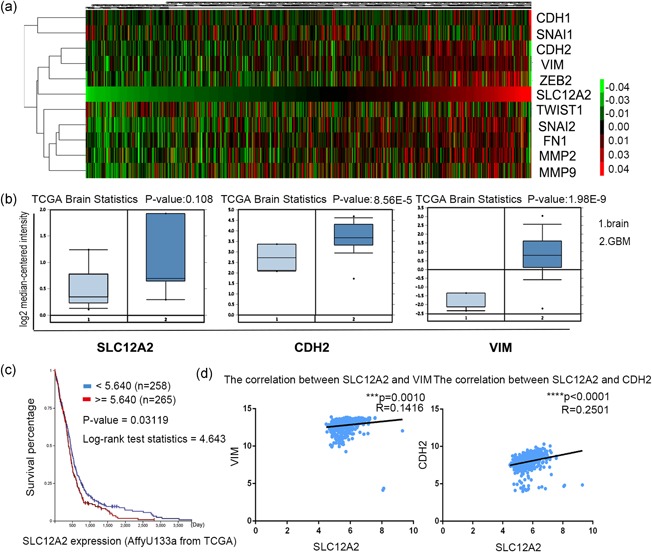
Glioblastoma is the most common and lethal primary intracranial tumor. As the key regulator of tumor cell volume, sodium-potassium-chloride cotransporter 1 (NKCC1) expression increases along with the malignancy of the glioma, and NKCC1 has been implicated in glioblastoma invasion. However, little is known about the role of NKCC1 in the epithelial-mesenchymal transition-like process in gliomas. We noticed that aberrantly elevated expression of NKCC1 leads to changes in the shape, polarity, and adhesion of cells in glioma. Here, we investigated whether NKCC1 promotes an epithelial-mesenchymal transition (EMT)-like process in gliomas via the RhoA and Rac1 signaling pathways. Pharmacological inhibition and knockdown of NKCC1 both decrease the expressions of mesenchymal markers, such as N-cadherin, vimentin, and snail, whereas these treatments increase the expression of the epithelial marker E-cadherin. These findings indicate that NKCC1 promotes an EMT-like process in gliomas. The underlying mechanism is the facilitation of the binding of Rac1 and RhoA to GTP by NKCC1, which results in a significant enhancement of the EMT-like process. Specific inhibition or knockdown of NKCC1 both attenuate activated Rac1 and RhoA, and the pharmacological inhibitions of Rac1 and RhoA both impair the invasion and migration abilities of gliomas. Furthermore, we illustrated that NKCC1 knockdown abolished the dissemination and spread of glioma cells in a nude mouse intracranial model. These findings suggest that elevated NKCC1 activity acts in the regulation of an EMT-like process in gliomas, and thus provides a novel therapeutic strategy for targeting the invasiveness of gliomas, which might help to inhibit the spread of malignant intracranial tumors.
胶质母细胞瘤是最常见和最致命的原发性颅内肿瘤。作为肿瘤细胞体积的关键调节因子,钠-钾-氯协同转运蛋白 1(NKCC1)的表达随着胶质瘤的恶性程度而增加,并且 NKCC1 已被牵连到胶质母细胞瘤的侵袭中。然而,NKCC1 在胶质瘤上皮-间充质转化样过程中的作用知之甚少。我们注意到 NKCC1 的异常高表达导致了胶质瘤细胞形状、极性和黏附的变化。在这里,我们研究了 NKCC1 是否通过 RhoA 和 Rac1 信号通路促进了胶质瘤中的上皮-间充质转化(EMT)样过程。NKCC1 的药理学抑制和敲低均降低了间充质标志物的表达,如 N-钙黏蛋白、波形蛋白和 snail,而这些处理则增加了上皮标志物 E-钙黏蛋白的表达。这些发现表明 NKCC1 促进了胶质瘤中的 EMT 样过程。其潜在机制是 NKCC1 促进 Rac1 和 RhoA 与 GTP 的结合,从而显著增强 EMT 样过程。NKCC1 的特异性抑制或敲低均减弱了激活的 Rac1 和 RhoA,Rac1 和 RhoA 的药理学抑制均损害了胶质瘤的侵袭和迁移能力。此外,我们还说明了 NKCC1 的敲低消除了裸鼠颅内模型中胶质瘤细胞的扩散和播散。这些发现表明,NKCC1 活性的升高在调节胶质瘤中的 EMT 样过程中起作用,因此为靶向胶质瘤的侵袭性提供了一种新的治疗策略,这可能有助于抑制恶性颅内肿瘤的扩散。