Department of Medicine, Vanderbilt University Medical Center, Nashville, TN, 37232, USA.
Biomedical Informatics, Vanderbilt University Medical Center, Nashville, TN, 37232, USA.
Nat Commun. 2018 Aug 30;9(1):3522. doi: 10.1038/s41467-018-05624-4.
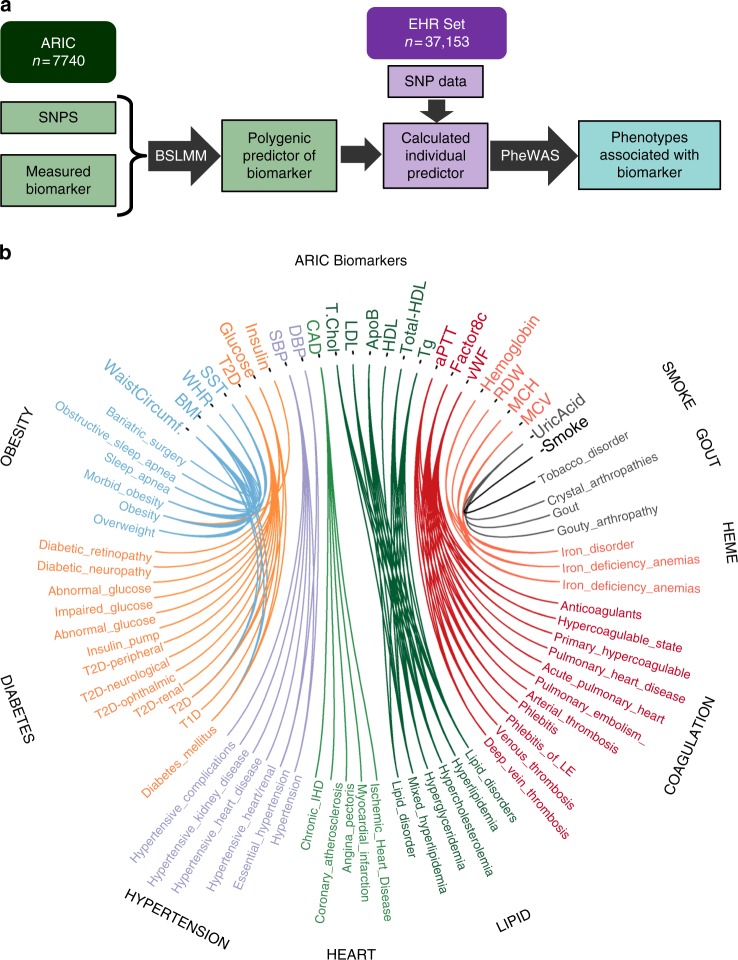
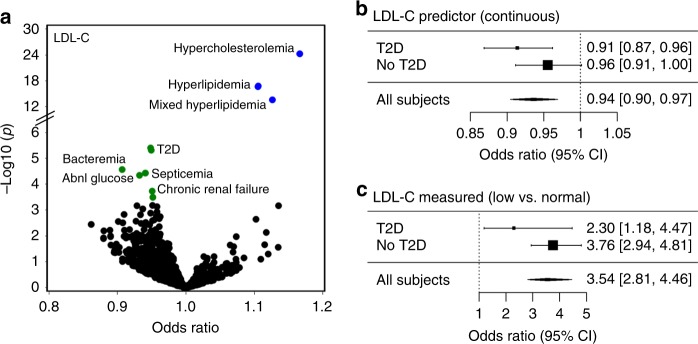
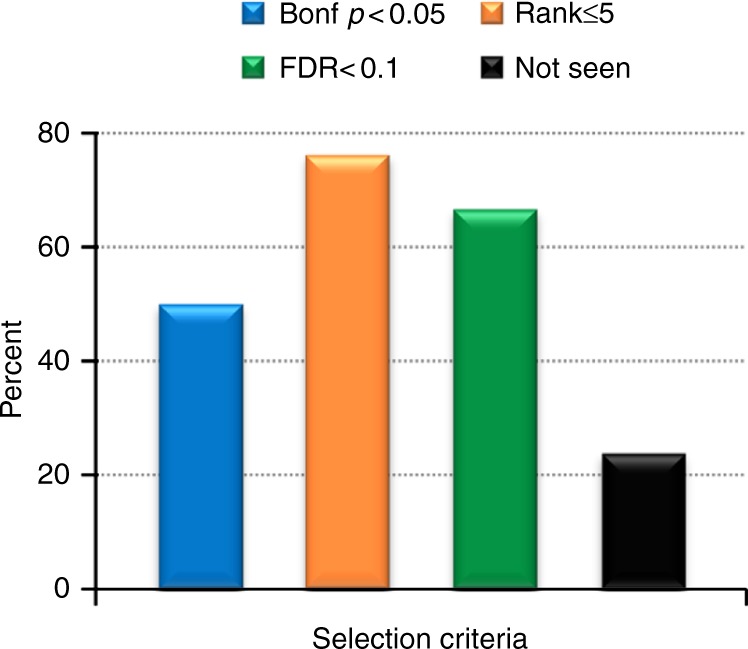
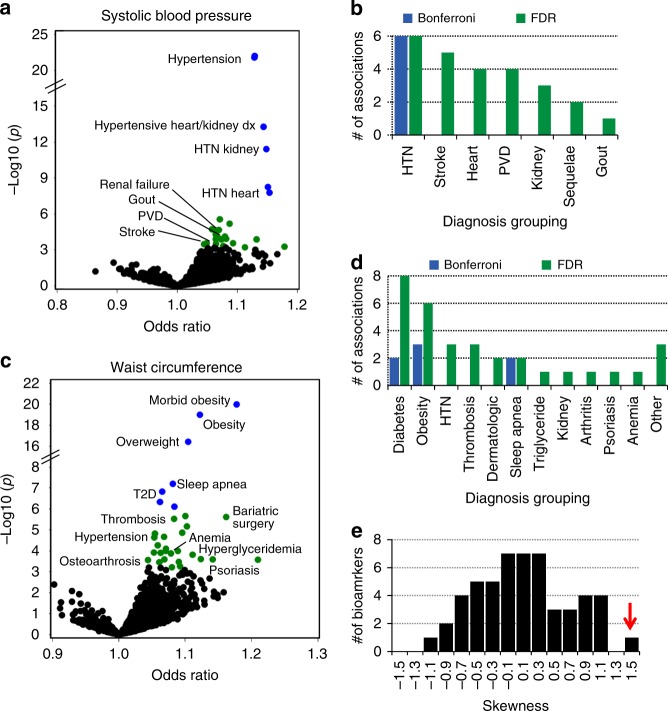
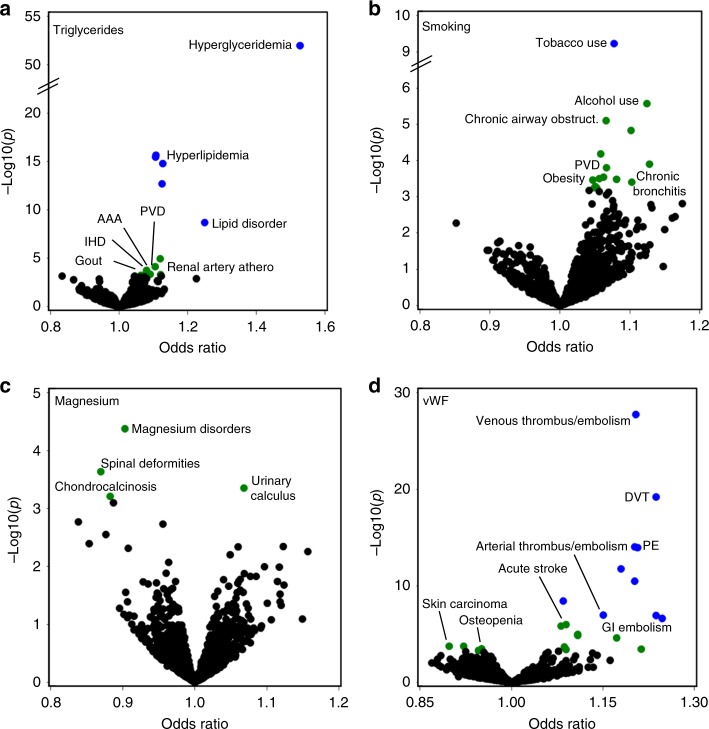
Defining the full spectrum of human disease associated with a biomarker is necessary to advance the biomarker into clinical practice. We hypothesize that associating biomarker measurements with electronic health record (EHR) populations based on shared genetic architectures would establish the clinical epidemiology of the biomarker. We use Bayesian sparse linear mixed modeling to calculate SNP weightings for 53 biomarkers from the Atherosclerosis Risk in Communities study. We use the SNP weightings to computed predicted biomarker values in an EHR population and test associations with 1139 diagnoses. Here we report 116 associations meeting a Bonferroni level of significance. A false discovery rate (FDR)-based significance threshold reveals more known and undescribed associations across a broad range of biomarkers, including biometric measures, plasma proteins and metabolites, functional assays, and behaviors. We confirm an inverse association between LDL-cholesterol level and septicemia risk in an independent epidemiological cohort. This approach efficiently discovers biomarker-disease associations.
定义与生物标志物相关的人类疾病的全貌对于将生物标志物推进临床实践是必要的。我们假设,基于共享的遗传结构,将生物标志物测量值与电子健康记录 (EHR) 人群相关联,将建立生物标志物的临床流行病学。我们使用贝叶斯稀疏线性混合模型来计算来自社区动脉粥样硬化风险研究的 53 个生物标志物的 SNP 权重。我们使用 SNP 权重来计算 EHR 人群中的预测生物标志物值,并测试与 1139 种诊断的关联。在这里,我们报告了 116 个达到 Bonferroni 水平显著意义的关联。基于错误发现率 (FDR) 的显著阈值揭示了广泛的生物标志物范围内的更多已知和未描述的关联,包括生物计量指标、血浆蛋白和代谢物、功能测定和行为。我们在一个独立的流行病学队列中确认了 LDL 胆固醇水平与败血症风险之间的反比关联。这种方法有效地发现了生物标志物-疾病的关联。