Department of Experimental Physiology and Pathophysiology, Laboratory of the Centre for Preclinical Research, Medical University of Warsaw, 02-097 Warsaw, Poland.
Institute of Organic Chemistry Polish Academy of Sciences, Kasprzaka 44/52, 01-224 Warsaw, Poland.
Molecules. 2018 Sep 3;23(9):2241. doi: 10.3390/molecules23092241.
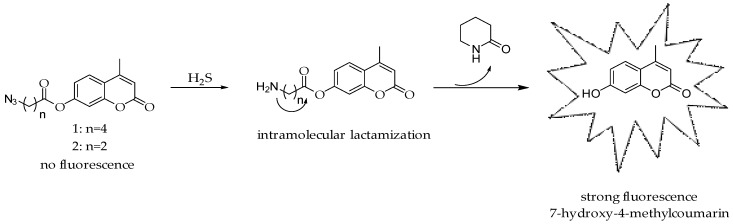
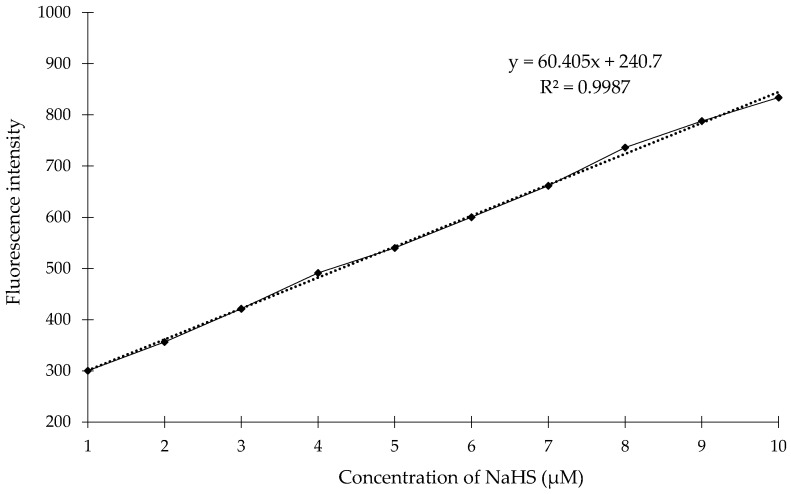
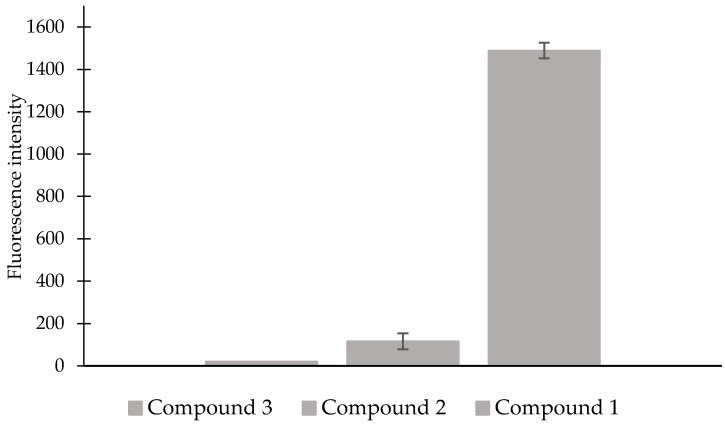
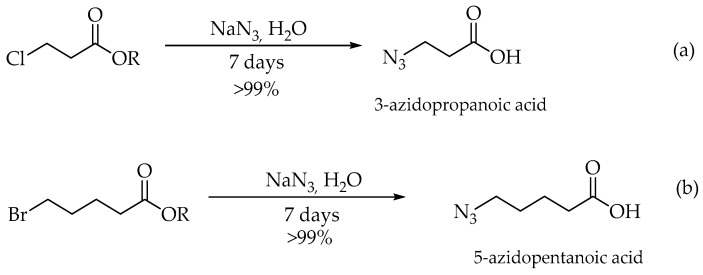
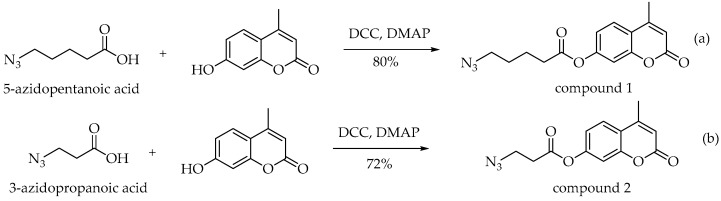
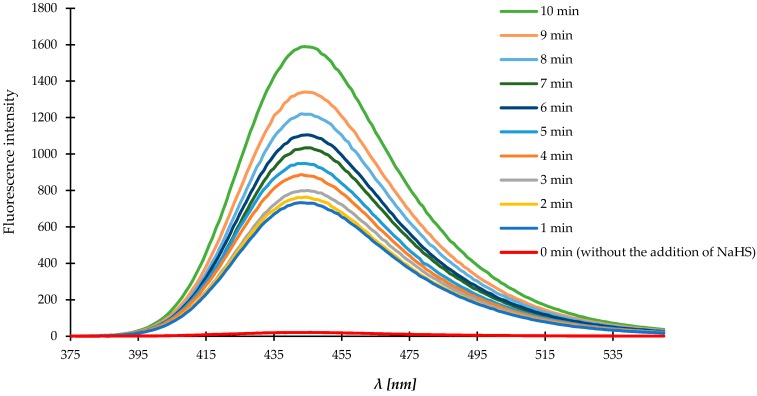
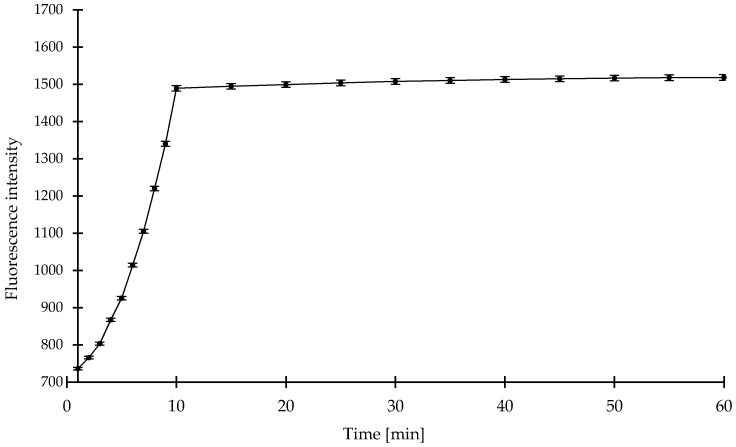
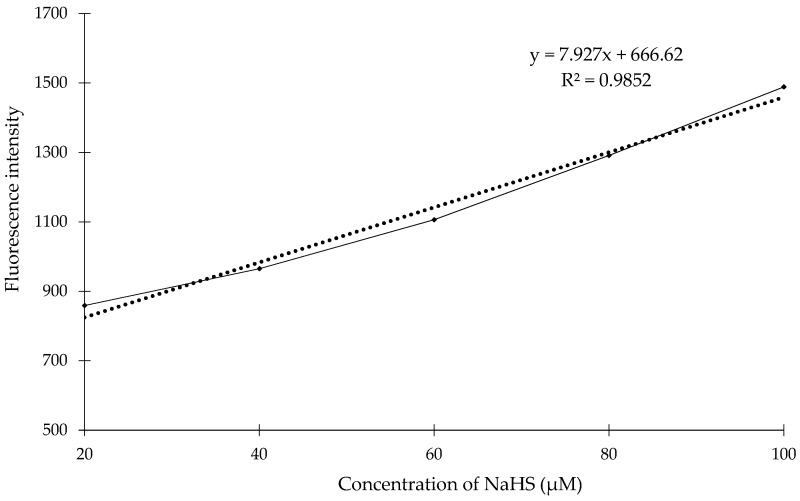
Ample evidence suggests that H₂S is an important biological mediator, produced by endogenous enzymes and microbiota. So far, several techniques including colorimetric methods, electrochemical analysis and sulfide precipitation have been developed for H₂S detection. These methods provide sensitive detection, however, they are destructive for tissues and require tedious sequences of preparation steps for the analyzed samples. Here, we report synthesis of a new fluorescent probe for H₂S detection, 4-methyl-2-oxo-2-chromen-7-yl 5-azidopentanoate (). The design of is based on combination of two strategies for H₂S detection, i.e., reduction of an azido group to an amine in the presence of H₂S and intramolecular lactamization. Finally, we measured salivary H₂S concentration in healthy, 18⁻40-year-old volunteers immediately after obtaining specimens. The newly developed self-immolative coumarin-based fluorescence probe (CHN₃O₄) showed high sensitivity to H₂S detection in both sodium phosphate buffer at physiological pH and in saliva. Salivary H₂S concentration in healthy volunteers was within a range of 1.641⁻7.124 μM.
大量证据表明,H₂S 是一种重要的生物介质,由内源性酶和微生物群落产生。迄今为止,已经开发出包括比色法、电化学分析和硫化物沉淀在内的几种用于 H₂S 检测的技术。这些方法提供了灵敏的检测,但对组织具有破坏性,并且需要对分析样本进行繁琐的准备步骤序列。在这里,我们报告了一种用于 H₂S 检测的新型荧光探针 4-甲基-2-氧代-2-色烯-7-基 5-叠氮戊酸酯()的合成。的设计基于两种 H₂S 检测策略的结合,即在存在 H₂S 的情况下将叠氮基团还原为胺和分子内内酰胺化。最后,我们在获得标本后立即测量了健康、18-40 岁志愿者的唾液 H₂S 浓度。新开发的基于自耗式香豆素的荧光探针(CHN₃O₄)在生理 pH 的磷酸钠缓冲液中和唾液中对 H₂S 检测均表现出高灵敏度。健康志愿者的唾液 H₂S 浓度在 1.641⁻7.124 μM 范围内。