UCL Institute of Neurology, University College London, London, WC1N 3BG, UK.
The Open University, Milton Keynes, MK7 6AA, UK.
Nat Commun. 2018 Sep 3;9(1):3554. doi: 10.1038/s41467-018-05896-w.
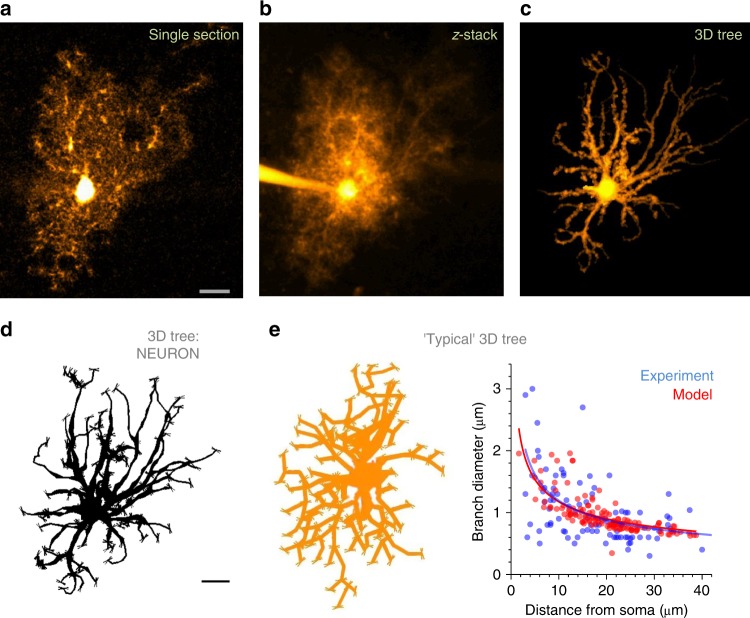
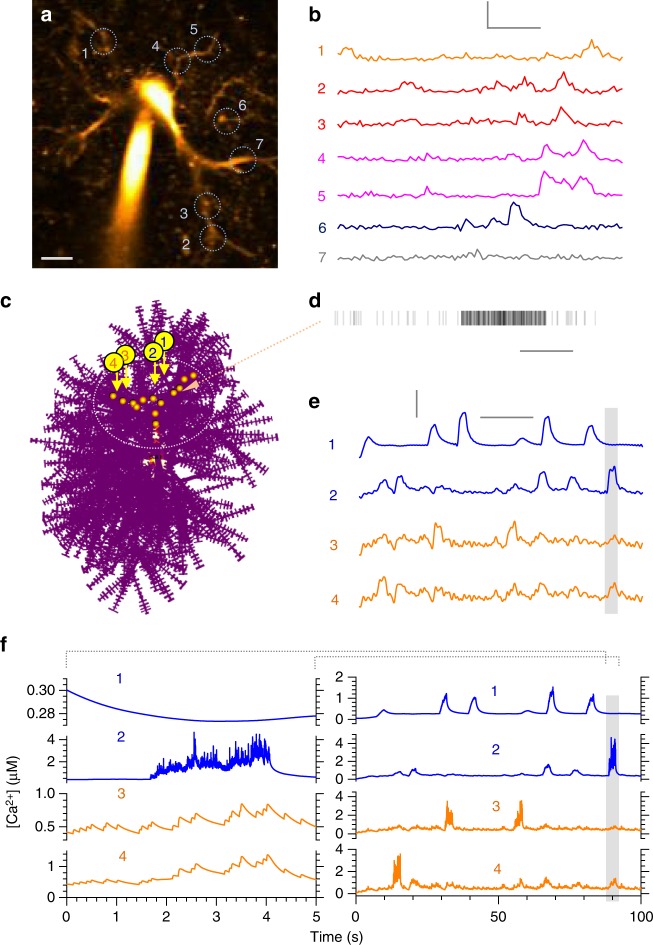
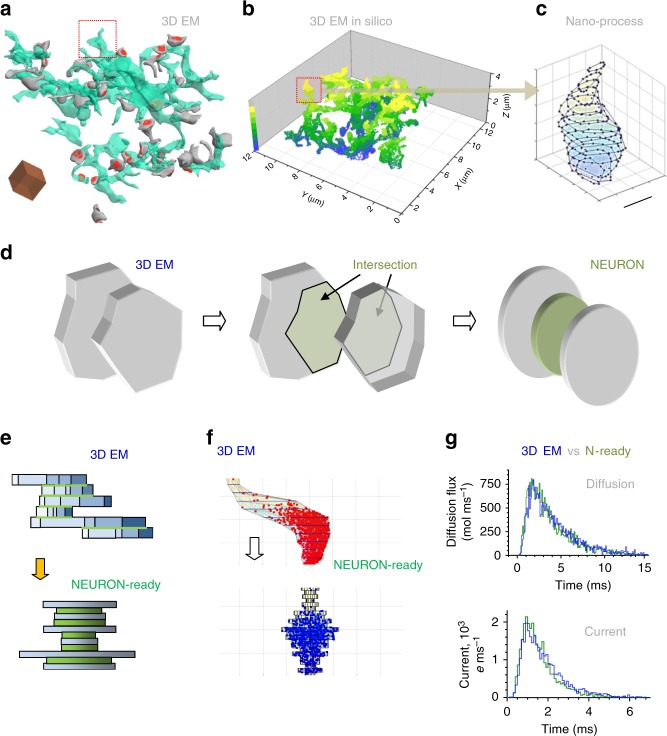
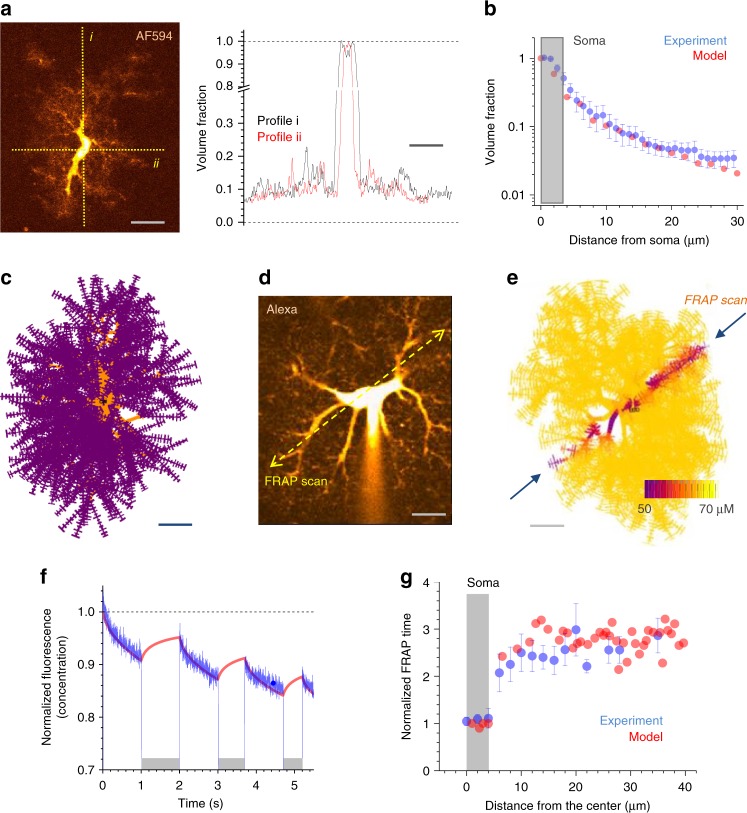
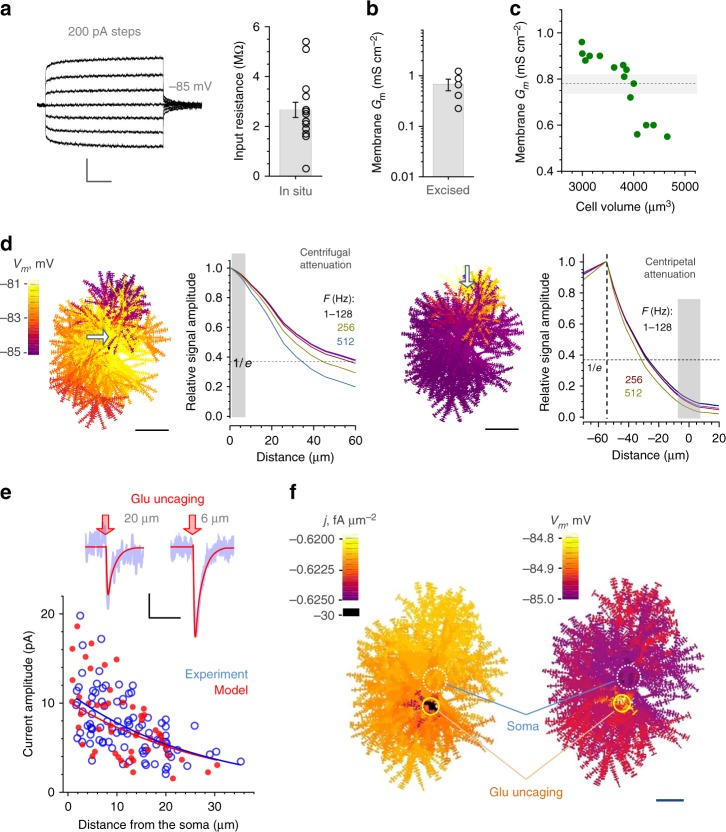
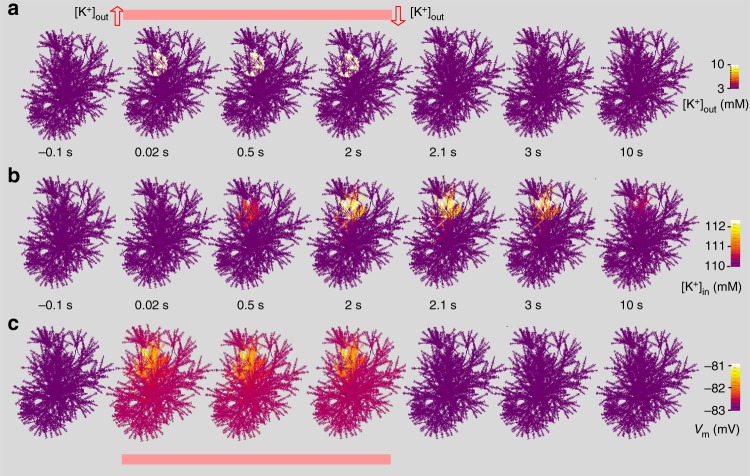
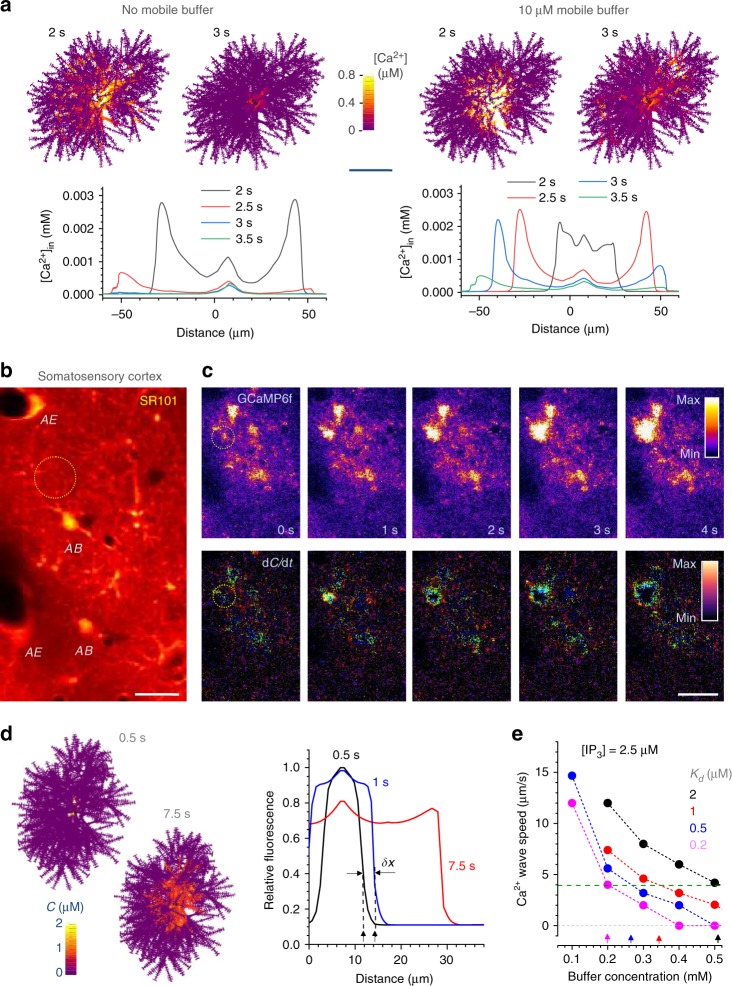
Electrically non-excitable astroglia take up neurotransmitters, buffer extracellular K and generate Ca signals that release molecular regulators of neural circuitry. The underlying machinery remains enigmatic, mainly because the sponge-like astrocyte morphology has been difficult to access experimentally or explore theoretically. Here, we systematically incorporate multi-scale, tri-dimensional astroglial architecture into a realistic multi-compartmental cell model, which we constrain by empirical tests and integrate into the NEURON computational biophysical environment. This approach is implemented as a flexible astrocyte-model builder ASTRO. As a proof-of-concept, we explore an in silico astrocyte to evaluate basic cell physiology features inaccessible experimentally. Our simulations suggest that currents generated by glutamate transporters or K channels have negligible distant effects on membrane voltage and that individual astrocytes can successfully handle extracellular K hotspots. We show how intracellular Ca buffers affect Ca waves and why the classical Ca sparks-and-puffs mechanism is theoretically compatible with common readouts of astroglial Ca imaging.
电兴奋星形胶质细胞摄取神经递质,缓冲细胞外 K+并产生 Ca 信号,释放神经回路的分子调节剂。其潜在的机制仍然是个谜,主要是因为海绵状星形胶质细胞形态在实验上很难接近,理论上也很难探索。在这里,我们系统地将多尺度、三维星形胶质细胞结构纳入到一个现实的多室细胞模型中,通过经验测试来约束该模型,并将其整合到 NEURON 计算生物物理环境中。这种方法实现为一个灵活的星形胶质细胞模型构建器 ASTRO。作为概念验证,我们探索了一种计算机模拟星形胶质细胞,以评估实验上无法获得的基本细胞生理学特征。我们的模拟表明,谷氨酸转运体或 K 通道产生的电流对膜电压的远距离影响可以忽略不计,并且单个星形胶质细胞可以成功处理细胞外 K+热点。我们展示了细胞内 Ca 缓冲如何影响 Ca 波,以及为什么经典的 Ca 火花-脉冲机制在理论上与常见的星形胶质细胞 Ca 成像读数兼容。