Engineering Design Centre, Department of Engineering, University of Cambridge, Trumpington Street, Cambridge, UK.
Int J Qual Health Care. 2019 Jun 1;31(5):393-401. doi: 10.1093/intqhc/mzy194.
A number of challenges have been identified with current risk assessment practice in hospitals, including: a lack of consultation with a sufficiently wide group of stakeholders; a lack of consistency and transparency; and insufficient risk assessment guidance. Consequently, risk assessment may not be fully effective as a means to ensure safety.
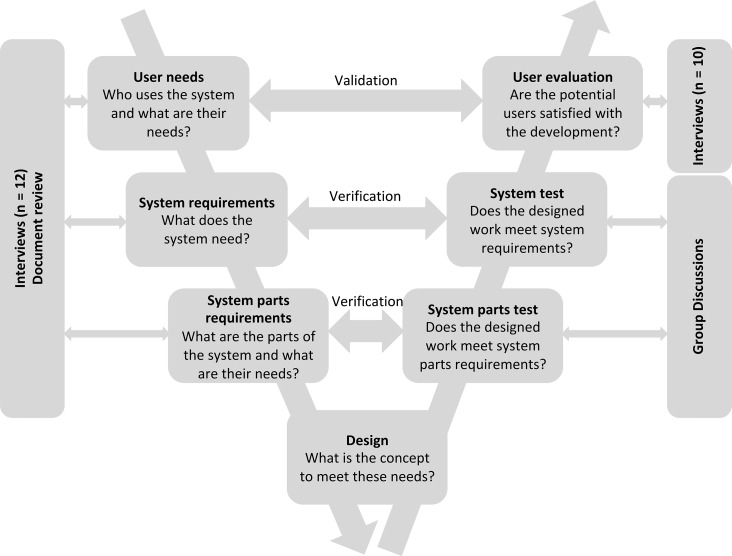
We used a V system developmental model, in conjunction with mixed methods, including interviews and document analysis to identify user needs and requirements.
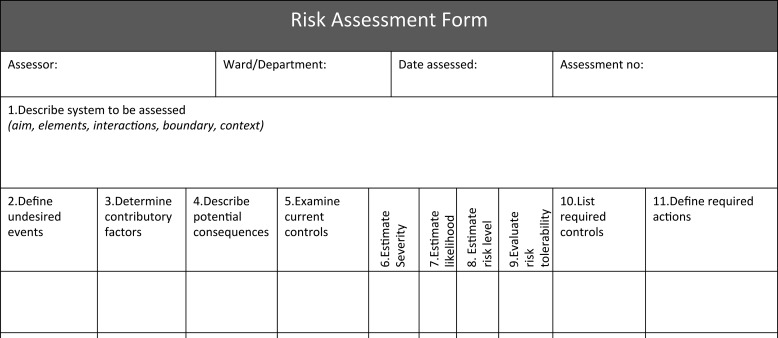
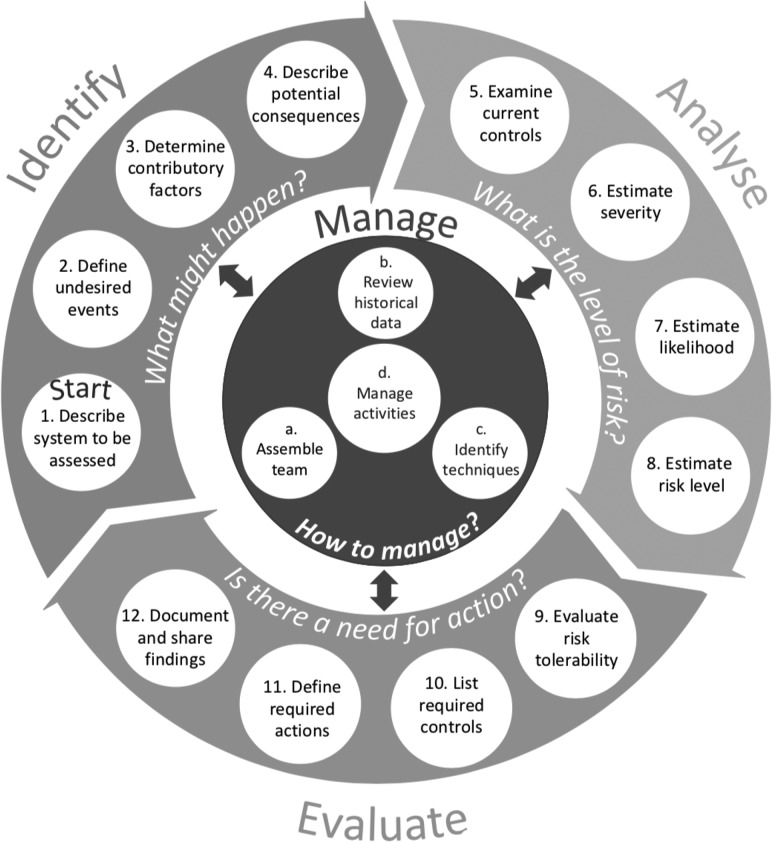
One way to address current challenges is through providing good guidance on the fundamental aspects of risk assessment. We designed a risk assessment framework, comprising: a risk assessment model that depicts the main risk assessment steps; risk assessment explanation cards that provide prompts to help apply each step; and a risk assessment form that helps to systematize the risk assessment and document the findings.
We conducted multiple group discussions to pilot the framework through the use of a representative scenario and used our findings for the user evaluation.
User evaluation was conducted with 10 participants through interviews and showed promising results.
While the framework was recommended for use in practice, it was also proposed that it be adopted as a training tool. With its use in risk assessment, we anticipate that risk assessments would lead to more effective decisions being made and more appropriate actions being taken to minimize risks. Consequently, the quality and safety of care delivered could be improved.
当前医院的风险评估实践存在诸多挑战,包括:没有与足够广泛的利益相关者进行协商;缺乏一致性和透明度;以及风险评估指南不足。因此,风险评估可能无法作为确保安全的充分手段。
我们使用 V 系统开发模型,结合混合方法,包括访谈和文件分析,以确定用户的需求和要求。
解决当前挑战的一种方法是提供关于风险评估基本方面的良好指导。我们设计了一个风险评估框架,包括:一个描绘主要风险评估步骤的风险评估模型;提供提示以帮助应用每个步骤的风险评估说明卡;以及帮助系统化风险评估并记录发现的风险评估表。
我们通过使用代表性场景进行了多次小组讨论来试行该框架,并将我们的发现用于用户评估。
通过访谈对 10 名参与者进行了用户评估,结果令人鼓舞。
虽然该框架被推荐用于实际应用,但也建议将其作为培训工具采用。通过在风险评估中的使用,我们预计风险评估将导致更有效的决策,并采取更适当的行动来最小化风险。因此,可以提高所提供护理的质量和安全性。