Department of Microbiology, Boston University School of Medicine, Boston, MA 02118, USA; National Emerging Infectious Diseases Laboratories, Boston University School of Medicine, Boston, MA 02118, USA.
Department of Microbiology, Boston University School of Medicine, Boston, MA 02118, USA; National Emerging Infectious Diseases Laboratories, Boston University School of Medicine, Boston, MA 02118, USA.
Cell Rep. 2018 Sep 4;24(10):2573-2580.e4. doi: 10.1016/j.celrep.2018.08.008.
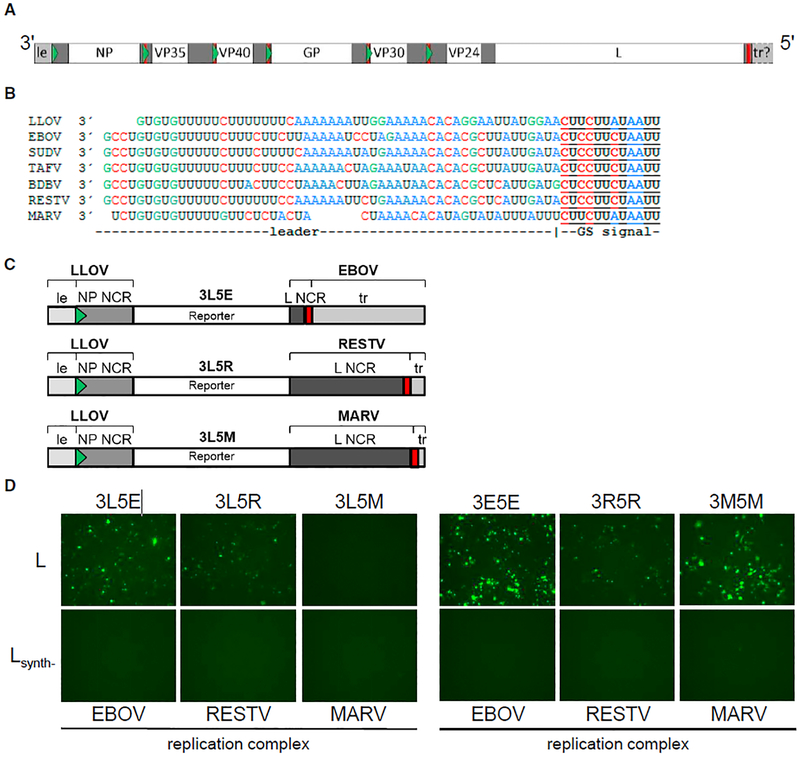
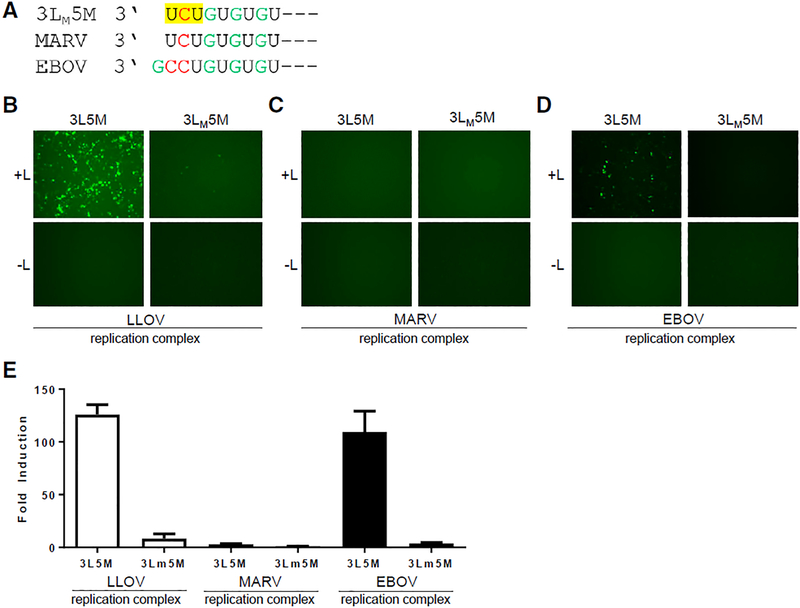
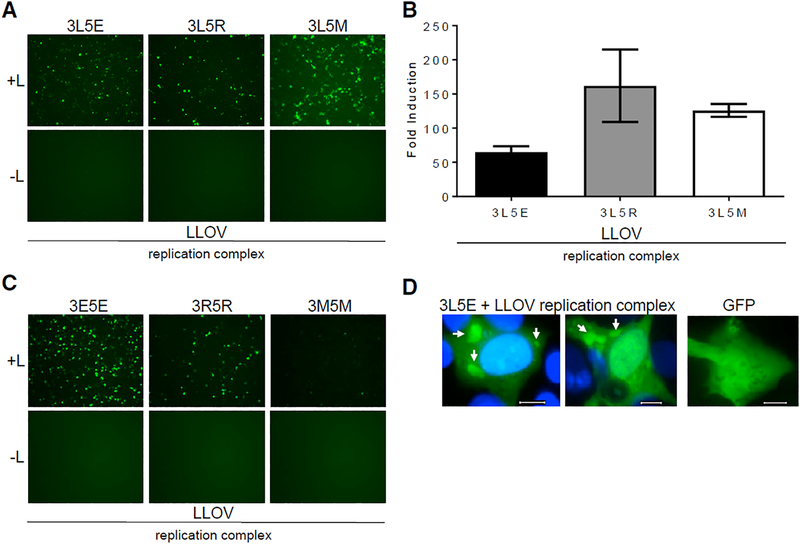
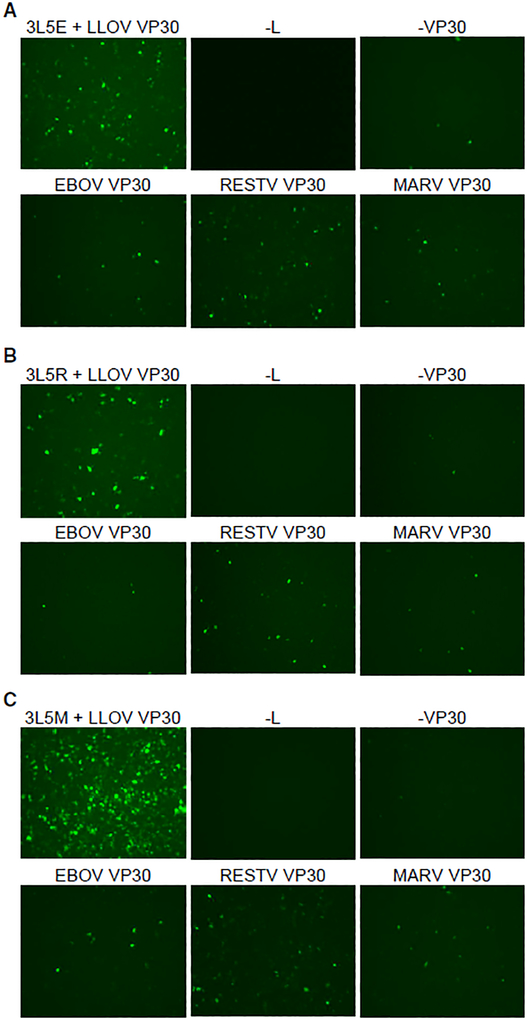
Recently, traces of zoonotic viruses have been discovered in bats and other species around the world, but despite repeated attempts, full viral genomes have not been rescued. The absence of critical genetic sequences from these viruses and the difficulties to isolate infectious virus from specimens prevent research on their pathogenic potential for humans. One example of these zoonotic pathogens is Lloviu virus (LLOV), a filovirus that is closely related to Ebola virus. Here, we established LLOV minigenome systems based on sequence complementation from other filoviruses. Our results show that the LLOV replication and transcription mechanisms are, in general, more similar to ebolaviruses than to marburgviruses. We also show that a single nucleotide at the 3' genome end determines species specificity of the LLOV polymerase. The data obtained here will be instrumental for the rescue of infectious LLOV clones for pathogenesis studies.
最近,在世界各地的蝙蝠和其他物种中发现了一些动物源性病毒的痕迹,但尽管反复尝试,仍未能完全拯救出病毒的基因组。由于这些病毒缺乏关键的遗传序列,以及从样本中分离出传染性病毒的困难,阻碍了对其对人类致病潜力的研究。其中一种人畜共患病原体是 Lloviu 病毒(LLOV),一种丝状病毒,与埃博拉病毒密切相关。在这里,我们基于其他丝状病毒的序列互补建立了 LLOV 小基因系统。我们的结果表明,LLOv 的复制和转录机制通常与埃博拉病毒更相似,而与马尔堡病毒更不相似。我们还表明,基因组 3'末端的一个核苷酸决定了 LLOV 聚合酶的种特异性。这里获得的数据将有助于拯救感染性 LLOV 克隆进行发病机制研究。