Lu Dan, Mai Hong-Cheng, Liang Yu-Bin, Xu Bing-Dong, Xu An-Ding, Zhang Yu-Sheng
Department of Neurology and Stroke Center, The First Affiliated Hospital, Jinan University, Guangzhou, China.
Clinical Neuroscience Institute of Jinan University, Jinan University, Guangzhou, China.
Front Pharmacol. 2018 Aug 21;9:926. doi: 10.3389/fphar.2018.00926. eCollection 2018.
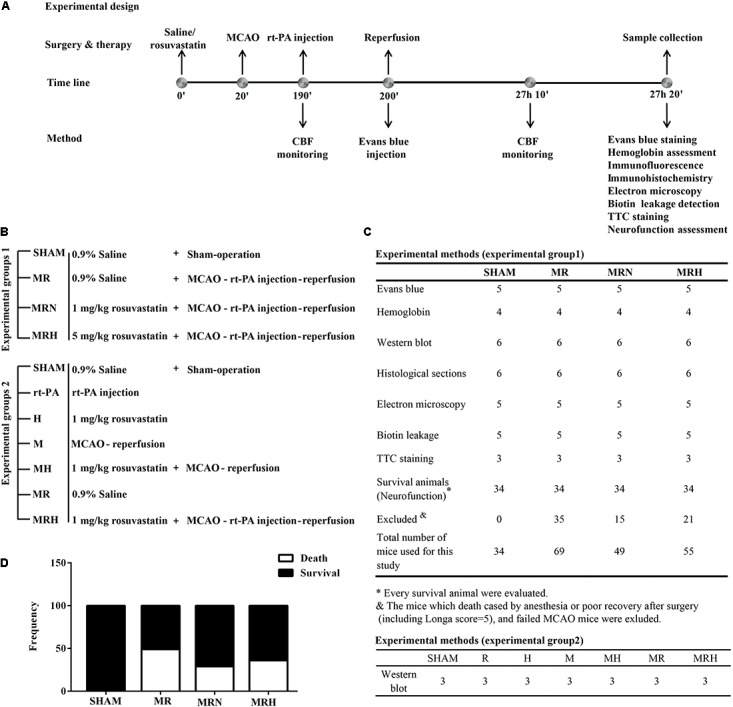
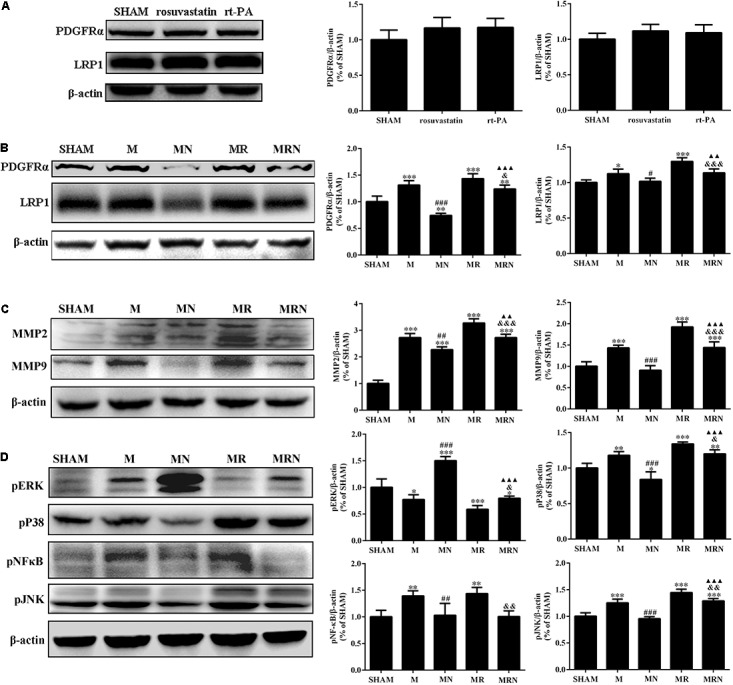
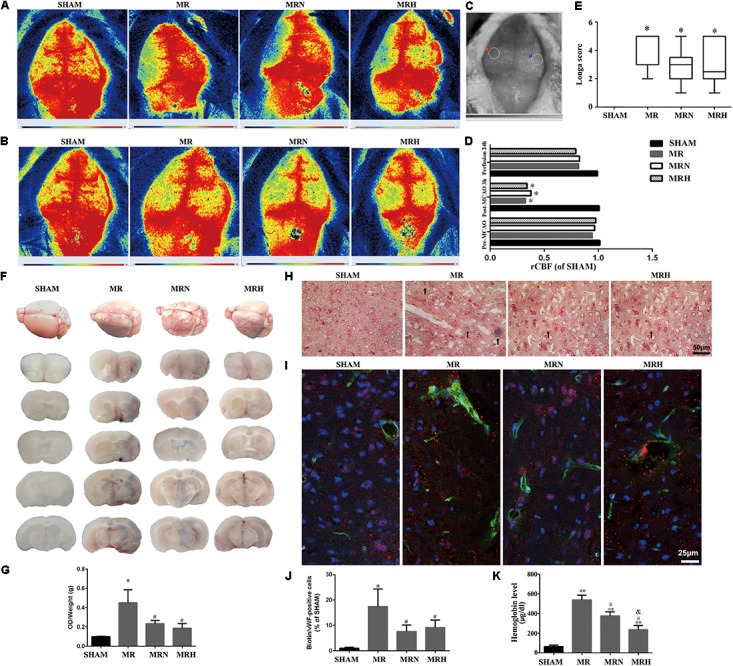
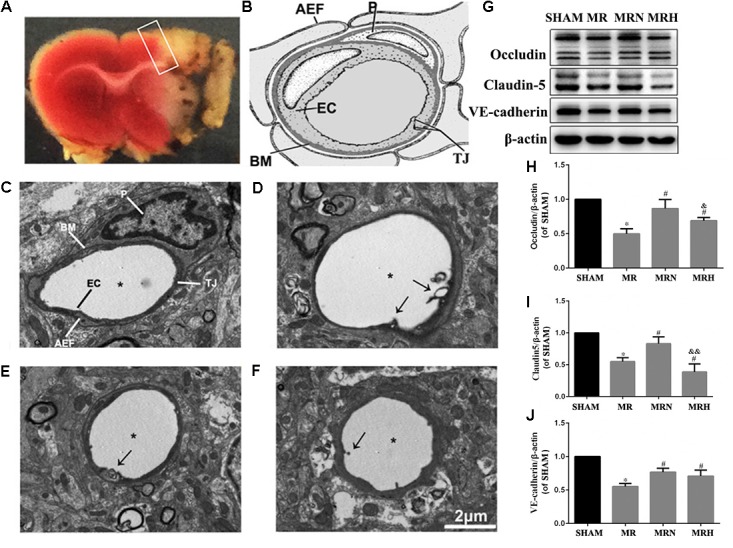
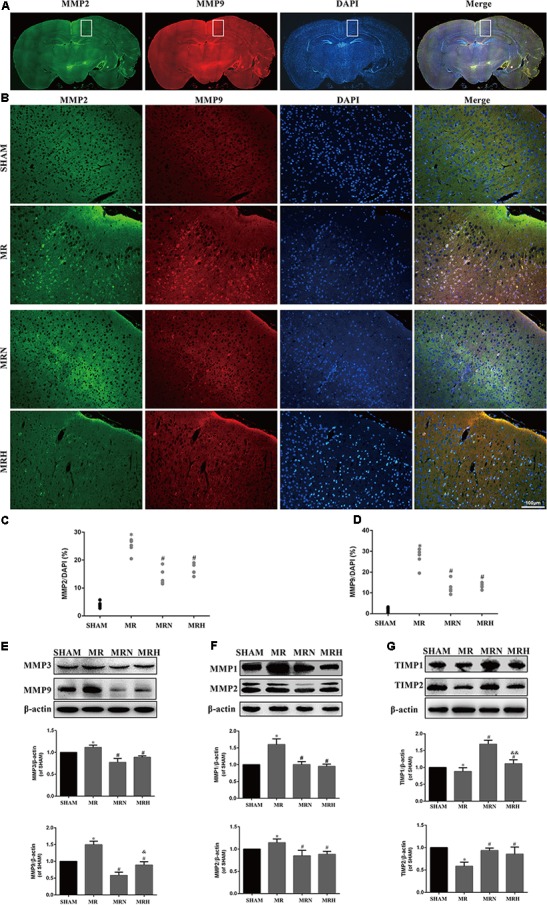
Hemorrhage transformation is the most challenging preventable complication in thrombolytic therapy and is related to recombinant tissue plasminogen activator (rt-PA)-induced blood-brain barrier (BBB) damage. Intraperitoneal injections of normal or high doses of rosuvastatin were administered to Balb/c mice 20 min prior to middle cerebral artery occlusion (MCAO) surgery for 3 h followed by reperfusion with rt-PA thrombolytic therapy and cerebral blood flow monitoring to investigate whether a high or normal dose of rosuvastatin reduces BBB damage after brain ischemia and rt-PA reperfusion. The integrity of the BBB was ameliorated by normal and high doses of rosuvastatin as determined from Evans blue staining, ultrastructure assessments and immunochemistry at 24 h after reperfusion. The levels of TJ proteins were preserved, potentially by targeting platelet-derived growth factor receptor α (PDGFR-α) and low-density lipoprotein receptor-related protein 1 (LRP1) to inhibit the expression of matrix metalloproteinase proteins (MMPs) by reducing the levels of phosphorylated c-jun-N-terminal kinase (pJNK), phosphorylated mitogen-activated protein kinase (MAPK) p38 (pP38) and increasing the levels of phosphorylated extracellular regulated protein kinases (pERK), and tissue inhibitor of metalloproteinases (TIMPs), as inferred from Western blotting and molecular docking analyses. In summary, rosuvastatin reduced rt-PA therapy-associated BBB permeability by PDGFR-α- and LRP1-associated MAPK pathways to reduce the mortality of mice, and a normal dose of rosuvastatin exerted greater preventative effects on reducing BBB damage than did a high dose in the time window of thrombolytic therapy.
出血转化是溶栓治疗中最具挑战性的可预防并发症,与重组组织型纤溶酶原激活剂(rt-PA)诱导的血脑屏障(BBB)损伤有关。在大脑中动脉闭塞(MCAO)手术前20分钟,对Balb/c小鼠腹腔注射正常剂量或高剂量的瑞舒伐他汀,持续3小时,随后进行rt-PA溶栓治疗并监测脑血流量,以研究高剂量或正常剂量的瑞舒伐他汀是否能减轻脑缺血和rt-PA再灌注后的血脑屏障损伤。再灌注24小时后,通过伊文思蓝染色、超微结构评估和免疫化学测定,发现正常剂量和高剂量的瑞舒伐他汀均可改善血脑屏障的完整性。紧密连接蛋白的水平得以维持,这可能是通过靶向血小板衍生生长因子受体α(PDGFR-α)和低密度脂蛋白受体相关蛋白1(LRP1),通过降低磷酸化c-jun氨基末端激酶(pJNK)、磷酸化丝裂原活化蛋白激酶(MAPK)p38(pP38)的水平,并提高磷酸化细胞外调节蛋白激酶(pERK)和金属蛋白酶组织抑制剂(TIMPs)的水平,从而抑制基质金属蛋白酶蛋白(MMPs)的表达,这是通过蛋白质印迹和分子对接分析推断得出的。总之,瑞舒伐他汀通过PDGFR-α和LRP1相关的MAPK途径降低了rt-PA治疗相关的血脑屏障通透性,从而降低了小鼠的死亡率,并且在溶栓治疗的时间窗内,正常剂量的瑞舒伐他汀在减轻血脑屏障损伤方面比高剂量具有更大的预防作用。