Jin Qian, Wu Peipei, Zhou Xinru, Qian Hui, Xu Wenrong
Key Laboratory of Laboratory Medicine of Jiangsu Province, School of Medicine, Jiangsu University, 212013 Zhenjiang, Jiangsu, China.
Zhenjiang Key Laboratory of High Technology Research on Exosomes Foundation and Transformation Application, Jiangsu Key Laboratory of Medical Science and Laboratory Medicine, School of Medicine, Jiangsu University, 301 Xuefu Road, Zhenjiang, Jiangsu 212013, China.
Stem Cells Int. 2021 Feb 17;2021:6640836. doi: 10.1155/2021/6640836. eCollection 2021.
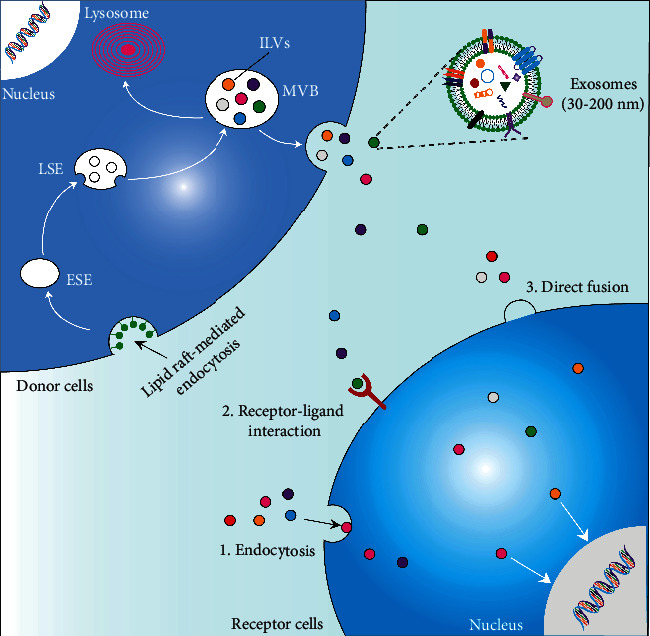
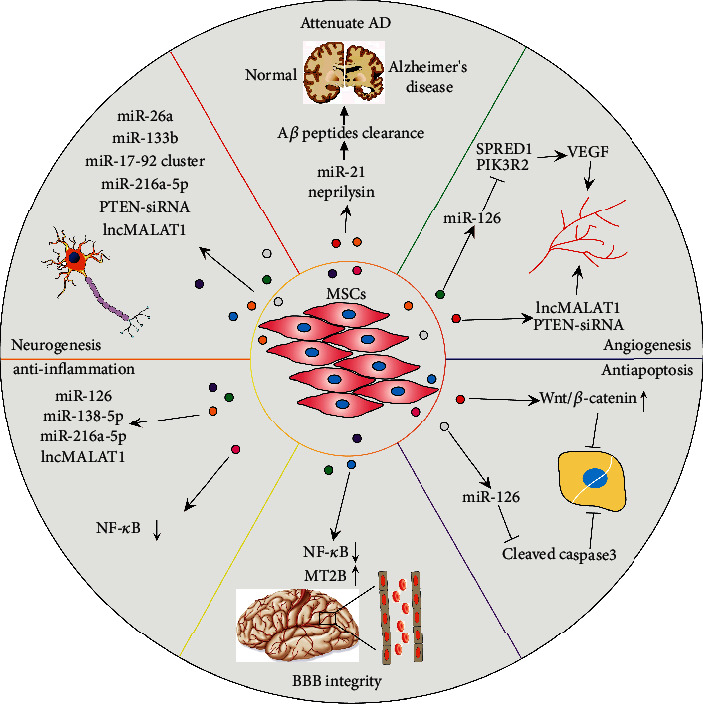
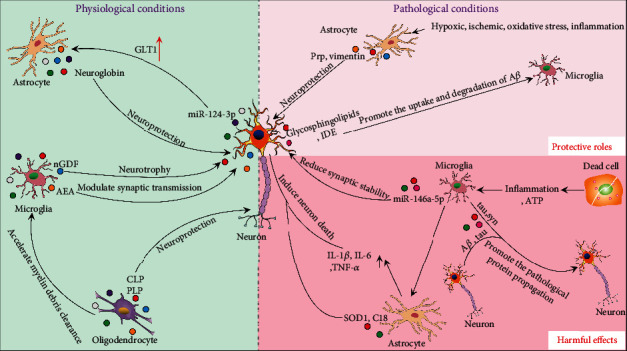
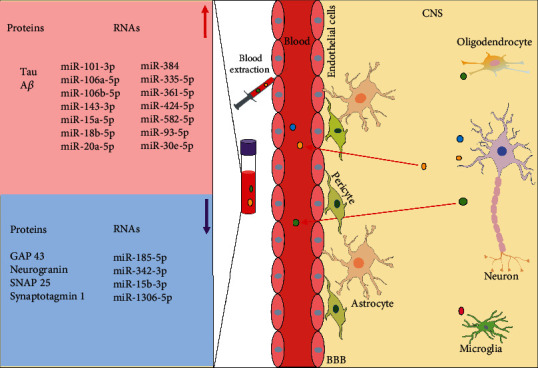
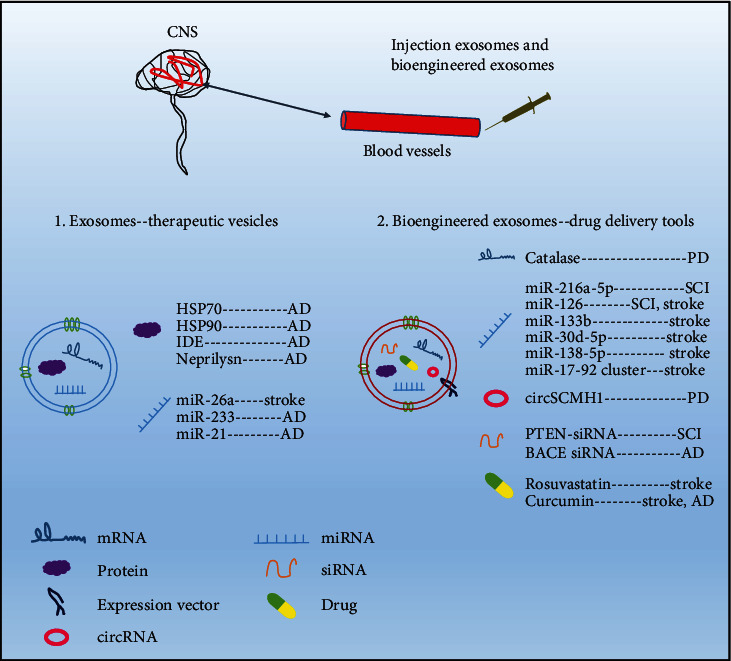
Exosomes are small extracellular vesicles (EVs) secreted by almost all cells, which have been recognized as a novel platform for intercellular communication in the central nervous system (CNS). Exosomes are capable of transferring proteins, nucleic acids, lipids, and metabolites between neurons and glial cells, contributing to CNS development and maintenance of homeostasis. Evidence shows that exosomes originating from CNS cells act as suppressors or promoters in the initiation and progression of neurological disorders. Moreover, these exosomes have been shown to transfer molecules associated with diseases through the blood-brain barrier (BBB) and thus can be detected in blood. This unique feature enables exosomes to act as potential diagnostic biomarkers for neurological disorders. In addition, a substantial number of researches have indicated that exosomes derived from mesenchymal stem cells (MSCs) have repair effects on neurological disorders. Herein, we briefly introduce the roles of exosomes under physiological and pathological conditions. In particular, novel roles of exosomes as potential diagnostic biomarkers and therapeutic tools for neurological disorders are highlighted.
外泌体是几乎所有细胞分泌的小细胞外囊泡(EVs),已被公认为中枢神经系统(CNS)中细胞间通讯的新平台。外泌体能够在神经元和神经胶质细胞之间传递蛋白质、核酸、脂质和代谢物,有助于中枢神经系统的发育和内环境稳态的维持。有证据表明,源自中枢神经系统细胞的外泌体在神经疾病的发生和发展中起抑制或促进作用。此外,这些外泌体已被证明可通过血脑屏障(BBB)转运与疾病相关的分子,因此可以在血液中检测到。这一独特特性使外泌体能够作为神经疾病的潜在诊断生物标志物。此外,大量研究表明,间充质干细胞(MSCs)来源的外泌体对神经疾病具有修复作用。在此,我们简要介绍外泌体在生理和病理条件下的作用。特别强调了外泌体作为神经疾病潜在诊断生物标志物和治疗工具的新作用。