College of Animal Science and Technology, Sichuan Agricultural University, Wenjiang, Chengdu, 611130, Sichuan, China.
Key Laboratory of Fishery Drug Development, Ministry of Agriculture and Rural Affairs, Pearl River Fisheries Research Institute, Chinese Academy of Fishery Sciences, Guangzhou, 510380, China.
BMC Microbiol. 2018 Sep 10;18(1):113. doi: 10.1186/s12866-018-1237-1.
Fish culture in rice paddies can contribute to increasing yields of rice and surplus fish products. Environmental impacts and food-safety issues have become important topics in aquaculture, and organic foods currently were paid attention by researchers and industry practitioners. But the mechanism of differences in quality of Loach (Paramisgurnus dabryanus) reared in rice fields and ponds remains largely uncharacterized. In this study,digestive enzyme activity, intestinal mucosa cells and the gut microbial community of loach were determined under the two separate cultivation modes.
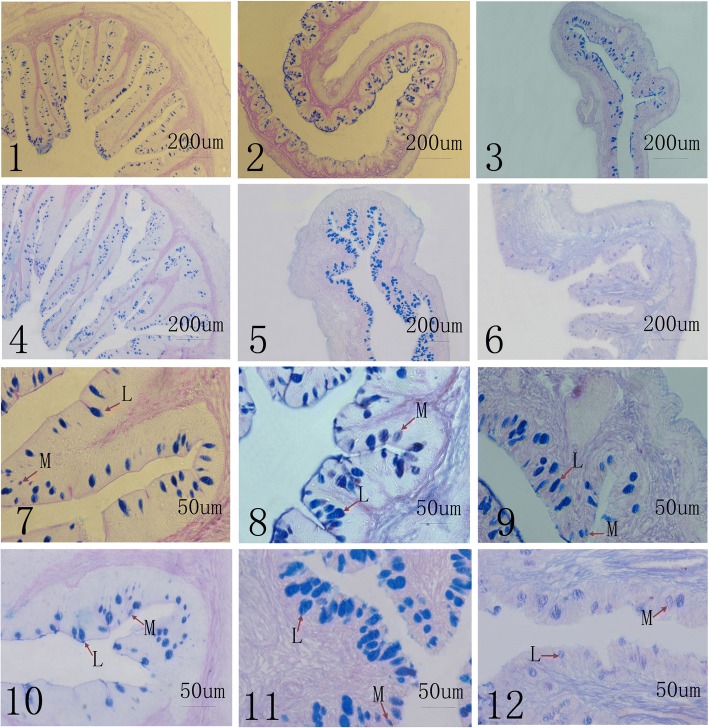
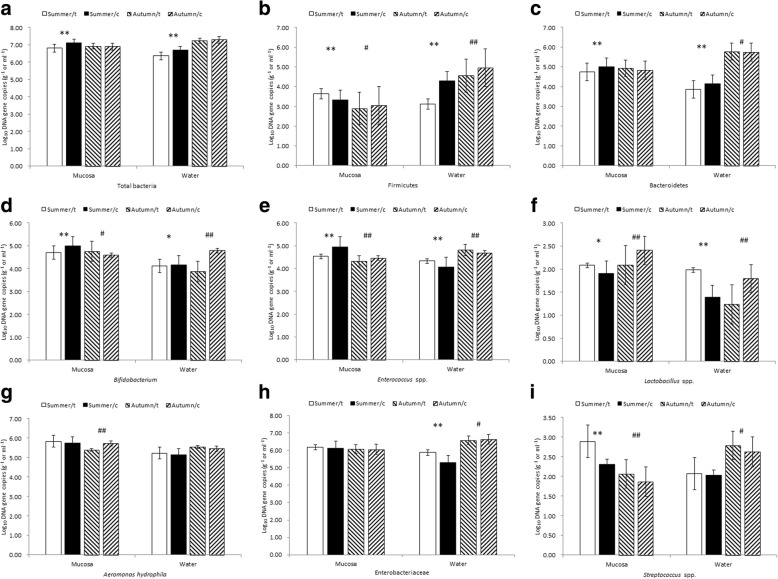
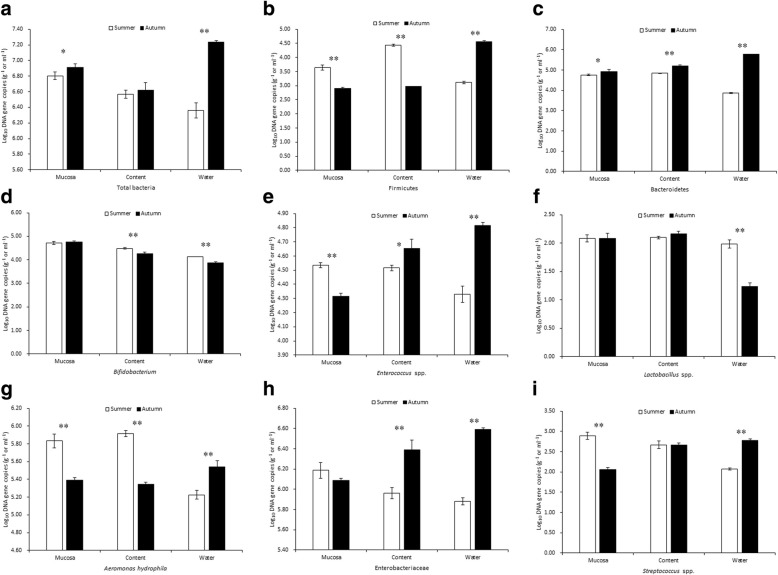
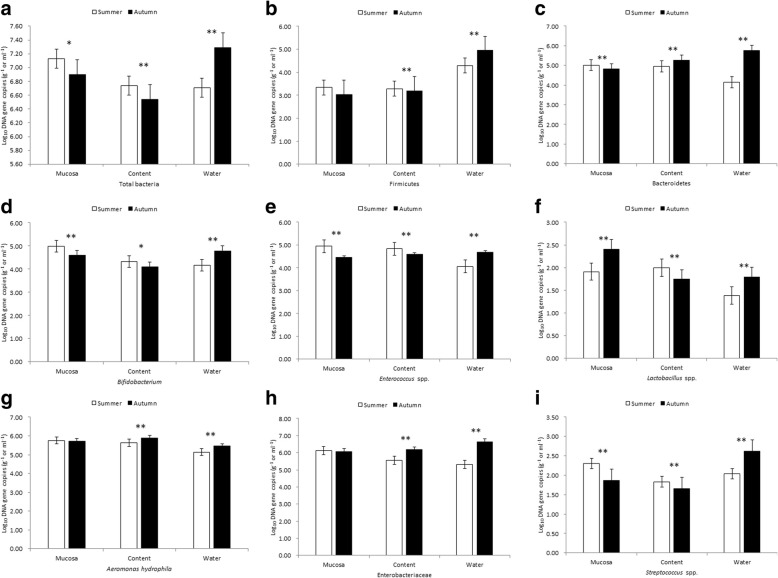
The levels of intestinal digestive enzyme activity of fish reared in the paddy-cultivated mode (PACM) were higher (P < 0.05) than those in the pond-cultivated mode (POCM). It was extremely significant (P < 0.01) for the activity of lipase in the liver, foregut and midgut, and for the activities of amylase and trypsin in the hindgut. Acid mucous cells in the loach foregut in PACM were fewer than in POCM (P < 0.01). In summer, the abundance of the Firmicutes, Lactobacillus spp., Aeromonas hydrophila, Enterobacteriaceae and Streptococcus spp. in loach intestinal mucosa in PACM was higher than in POCM. In fall, the abundance of total bacteria, the Bacteroidetes, Bifidobacterium and Enterobacteriaceae in the intestinal mucosa in PACM was likewise higher than in POCM. These differences were significant (P < 0.05 or P < 0.01) between loach in the two separate culture modes for all microorganisms except for A. hydrophila and Streptococcus spp. In addition, quantitative PCR assays showed that some microorganisms presented consistently similar abundances in the gut as in the culture water.
These results showed some enzymatic activities involved in digestion in liver and intestine of loach in PACM were higher than those in POCM, as using digestive enzyme analysis and histological observation of intestinal sections. These findings suggest most of the microorganisms examined in the gut mucosa of loach in the two culture modes significantly differed in abundance between summer and fall. However, some pathogenic bacteria in the gut, particularly A. hydrophila, presented lower abundance in PACM in fall, yet did not differ in abundance between loach in the two cultivation modes.
稻田养鱼可以增加稻谷和鱼类产品的产量。环境影响和食品安全问题已成为水产养殖的重要课题,有机食品目前受到研究人员和行业从业者的关注。但是,稻田和池塘中养殖的泥鳅品质差异的机制在很大程度上仍未得到阐明。在这项研究中,分别在两种不同的养殖模式下,测定了泥鳅的消化酶活性、肠道黏膜细胞和肠道微生物群落。
稻田养殖模式(PACM)下养殖的鱼的肠道消化酶活性水平较高(P<0.05)。在肝脏、前肠和中肠的脂肪酶活性以及后肠的淀粉酶和胰蛋白酶活性方面,差异极显著(P<0.01)。PACM 中泥鳅前肠的酸性黏蛋白细胞比 POCM 少(P<0.01)。夏季,PACM 中泥鳅肠道黏膜的厚壁菌门、乳杆菌属、嗜水气单胞菌、肠杆菌科和链球菌属的丰度高于 POCM。秋季,PACM 中肠道黏膜的总细菌、拟杆菌门、双歧杆菌和肠杆菌科的丰度也高于 POCM。除嗜水气单胞菌和链球菌属外,两种不同养殖模式下的泥鳅肠道微生物中,所有微生物的丰度均存在显著差异(P<0.05 或 P<0.01)。此外,定量 PCR 检测显示,一些微生物在肠道和养殖水中的丰度一致。
这些结果表明,PACM 中泥鳅肝和肠中参与消化的一些酶活性高于 POCM,这可以通过消化酶分析和肠道切片的组织学观察来证明。这些发现表明,在两种养殖模式下,泥鳅肠道黏膜中检测到的大多数微生物在夏季和秋季的丰度存在显著差异。然而,肠道中的一些病原菌,特别是嗜水气单胞菌,在秋季 PACM 中的丰度较低,但在两种养殖模式下的泥鳅中丰度没有差异。