Ciuffreda Kenneth J, Joshi Nabin R, Truong James Q
Brain Injury Research Clinic, SUNY/State College of Optometry, 33 West 42nd Street, New York City, NY 10036, USA.
Concussion. 2017 Aug 3;2(3):CNC36. doi: 10.2217/cnc-2016-0029. eCollection 2017 Nov.
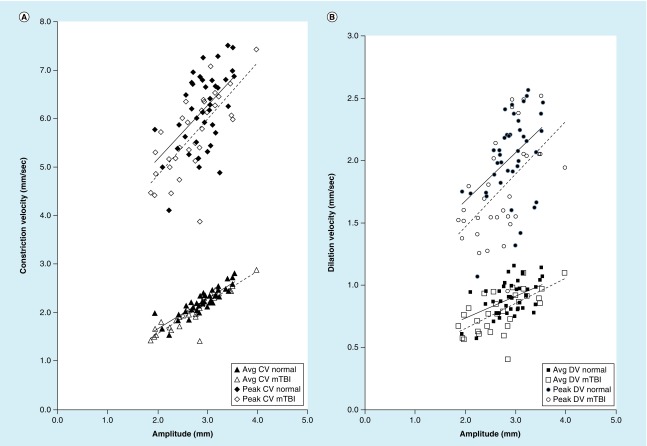
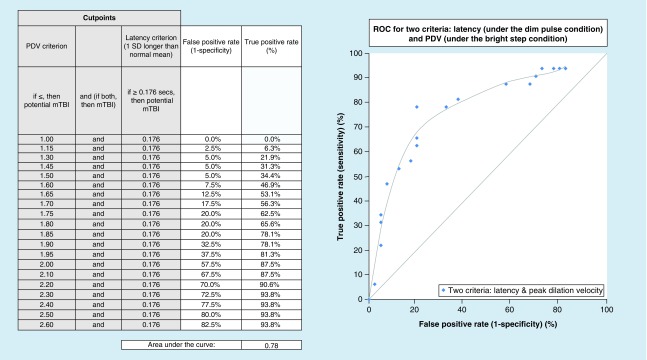
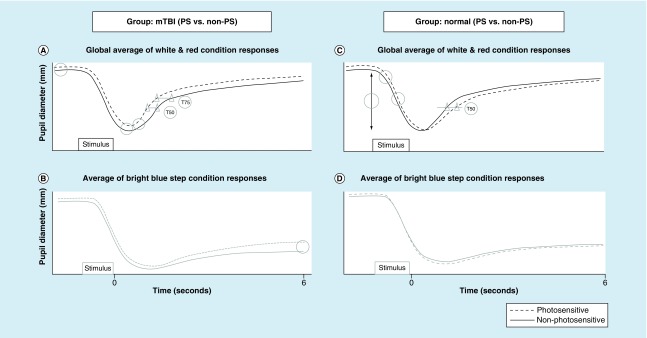
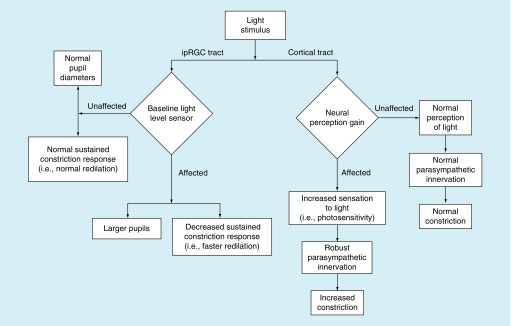
The pupillary light reflex represents an optimal visual system to investigate and exploit in the mild traumatic brain injury (mTBI) population. Static and dynamic aspects of the pupillary light reflex were investigated objectively and quantitatively in the mTBI population. Pupillary responsivity was found to be significantly delayed, slowed and reduced, but symmetrical in nature, and with a smaller baseline diameter, as compared with normals. Several pupillary parameters also discriminated between those with versus without photosensitivity. Thus, dynamic pupillometry provides several objective biomarkers for the presence of mTBI and photosensitivity, gives insight into the global sites of neurological dysfunction and possible related mechanisms, and should result in improved patient care.
瞳孔对光反射是研究和应用于轻度创伤性脑损伤(mTBI)人群的理想视觉系统。我们对mTBI人群的瞳孔对光反射的静态和动态方面进行了客观和定量的研究。结果发现,与正常人相比,mTBI人群的瞳孔反应性显著延迟、减慢和降低,但本质上是对称的,且基线直径较小。几个瞳孔参数也能区分有光敏性和无光敏性的人群。因此,动态瞳孔测量为mTBI和光敏性的存在提供了几个客观的生物标志物,有助于深入了解神经功能障碍的整体部位和可能的相关机制,并应能改善患者护理。