Department of Respiratory Medicine, NUTRIM School of Nutrition and Translational Research in Metabolism, Maastricht University Medical Center+, Maastricht, the Netherlands.
Department of Anatomy & Embryology, NUTRIM School of Nutrition and Translational Research in Metabolism, Maastricht University Medical Center+, Maastricht, the Netherlands.
PLoS One. 2018 Sep 13;13(9):e0203630. doi: 10.1371/journal.pone.0203630. eCollection 2018.
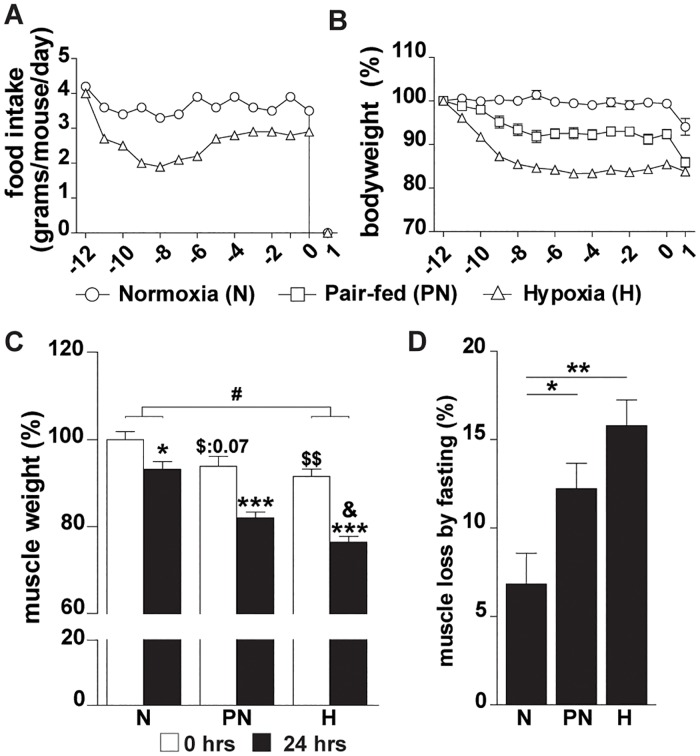
Hypoxemia in humans may occur during high altitude mountaineering and in patients suffering from ventilatory insufficiencies such as cardiovascular- or respiratory disease including Chronic Obstructive Pulmonary Disease (COPD). In these conditions, hypoxemia has been correlated to reduced appetite and decreased food intake. Since hypoxemia and reduced food intake intersect in various physiological and pathological conditions and both induce loss of muscle mass, we investigated whether hypoxia aggravates fasting-induced skeletal muscle atrophy and evaluated underlying protein turnover signaling.
Mice were kept under hypoxic (8% oxygen) or normoxic conditions (21% oxygen), or were pair-fed to the hypoxia group for 12 days. Following an additional 24 hours of fasting, muscle weight and protein turnover signaling were assessed in the gastrocnemius muscle by RT-qPCR and Western blotting.
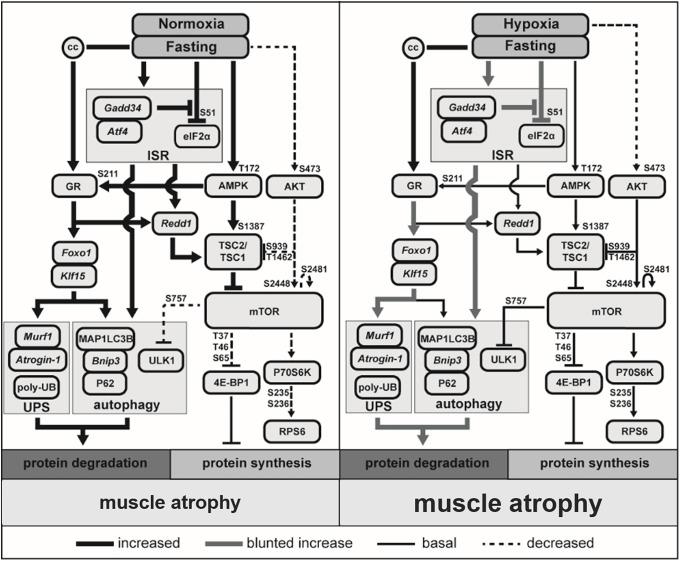
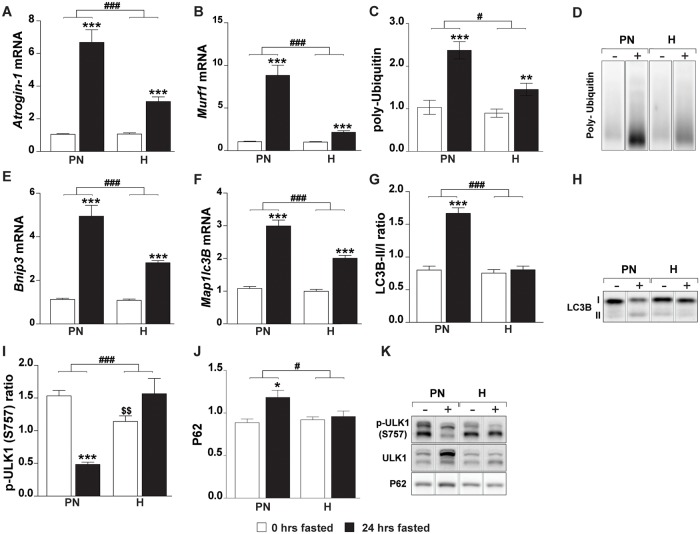
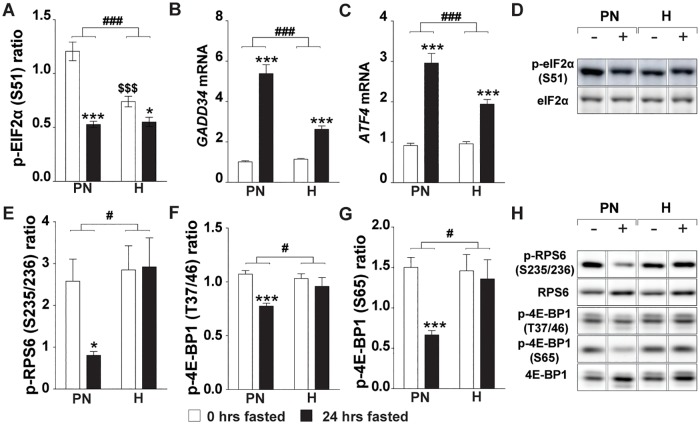
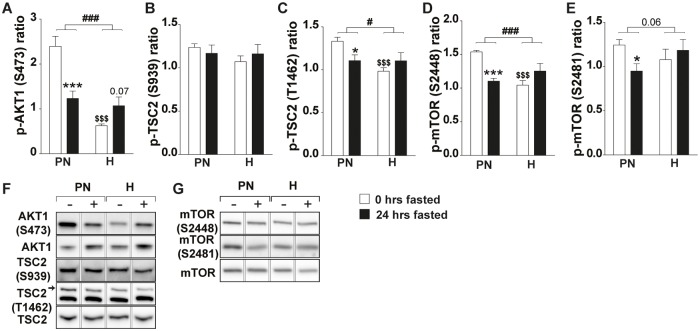
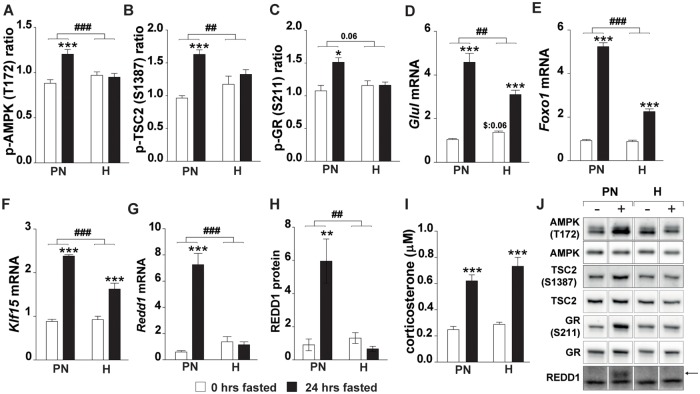
Loss of gastrocnemius muscle mass in response to fasting in the hypoxic group was increased compared to the normoxic group, but not to the pair-fed normoxic control group. Conversely, the fasting-induced increase in poly-ubiquitin conjugation, and expression of the ubiquitin 26S-proteasome E3 ligases, autophagy-lysosomal degradation-related mRNA transcripts and proteins, and markers of the integrated stress response (ISR), were attenuated in the hypoxia group compared to the pair-fed group. Mammalian target of rapamycin complex 1 (mTORC1) downstream signaling was reduced by fasting under normoxic conditions, but sustained under hypoxic conditions. Activation of AMP-activated protein kinase (AMPK) / tuberous sclerosis complex 2 (TSC2) signaling by fasting was absent, in line with retained mTORC1 activity under hypoxic conditions. Similarly, hypoxia suppressed AMPK-mediated glucocorticoid receptor (GR) signaling following fasting, which corresponded with blunted proteolytic signaling responses.
Hypoxia aggravates fasting-induced muscle wasting, and suppresses AMPK and ISR activation. Altered AMPK-mediated regulation of mTORC1 and GR may underlie aberrant protein turnover signaling and affect muscle atrophy responses in hypoxic skeletal muscle.
在高海拔登山和患有心血管或呼吸系统疾病(包括慢性阻塞性肺疾病)等通气不足的患者中,可能会发生低氧血症。在这些情况下,低氧血症与食欲下降和食物摄入减少有关。由于低氧血症和食物摄入减少在各种生理和病理条件下相互交叉,并且两者都会导致肌肉质量下降,我们研究了低氧血症是否会加重饥饿引起的骨骼肌萎缩,并评估了潜在的蛋白质周转信号。
将小鼠置于低氧(8%氧气)或常氧(21%氧气)条件下,或与低氧组进行配对喂养 12 天。在禁食 24 小时后,通过 RT-qPCR 和 Western blot 评估腓肠肌的肌肉重量和蛋白质周转信号。
与常氧组相比,低氧组因禁食而导致的腓肠肌质量损失增加,但与配对喂养的常氧对照组相比则没有增加。相反,与配对喂养组相比,低氧组中饥饿诱导的多泛素化缀合增加,以及泛素 26S-蛋白酶体 E3 连接酶、自噬-溶酶体降解相关 mRNA 转录物和蛋白、以及整合应激反应(ISR)的标志物的表达均减弱。在常氧条件下,禁食会降低哺乳动物雷帕霉素靶蛋白复合物 1(mTORC1)下游信号,但在低氧条件下仍能维持。饥饿时 AMP 激活的蛋白激酶(AMPK)/结节性硬化复合物 2(TSC2)信号的激活缺失,与低氧条件下保留的 mTORC1 活性一致。同样,低氧抑制了 AMPK 介导的糖皮质激素受体(GR)信号在禁食后的反应,这与破坏的蛋白水解信号反应相对应。
低氧加重了饥饿引起的肌肉消耗,并抑制了 AMPK 和 ISR 的激活。改变的 AMPK 介导的 mTORC1 和 GR 调节可能是异常蛋白质周转信号的基础,并影响低氧骨骼肌的肌肉萎缩反应。