Chair for Medical Information Technology, Helmholtz-Institute for Biomedical Engineering, RWTH Aachen University, D-52076 Aachen, Germany.
Institute for Medical Engineering and Science (IMES), Massachusetts Institute of Technology (M.I.T.), Boston, MA 02139, USA.
Sensors (Basel). 2018 Sep 13;18(9):3080. doi: 10.3390/s18093080.
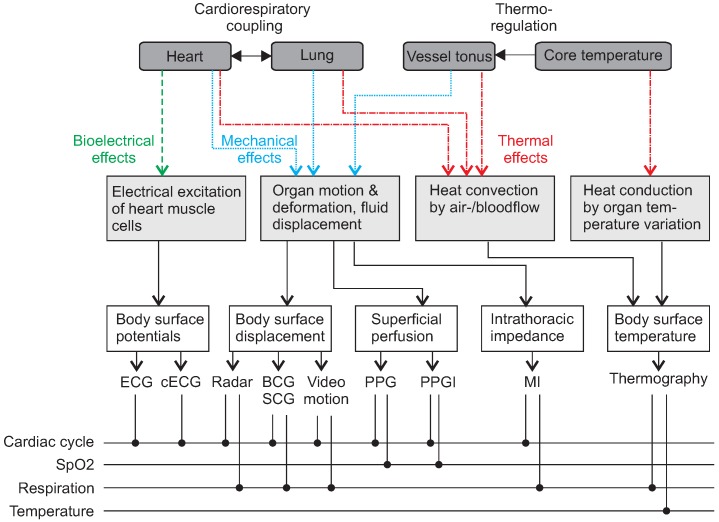
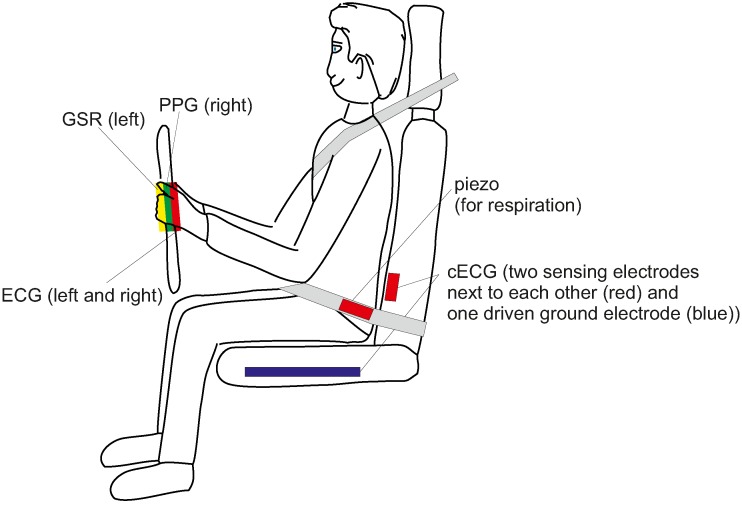
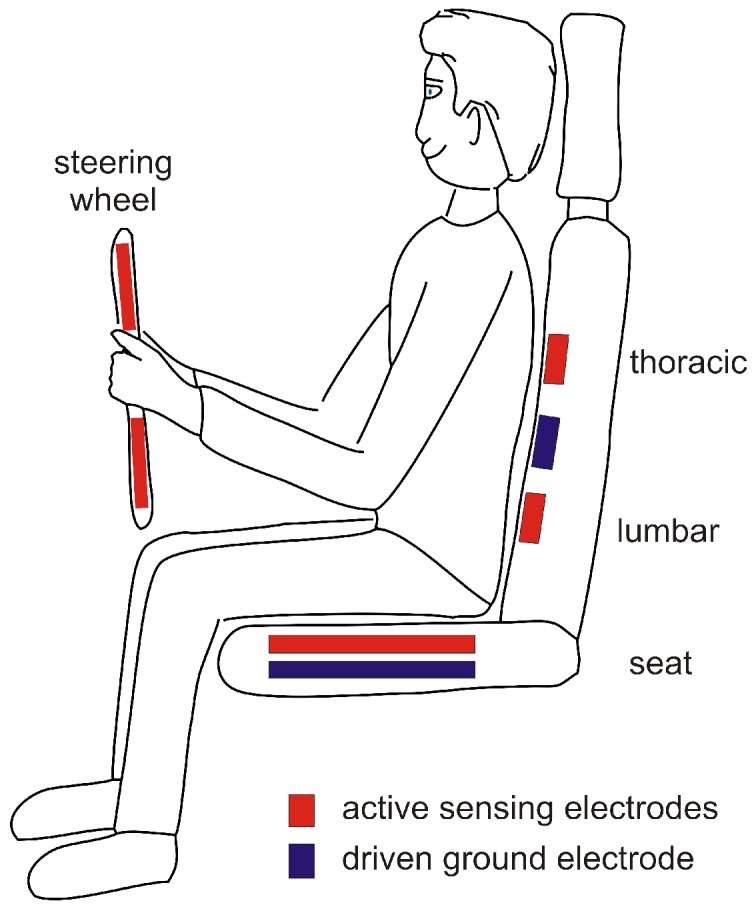
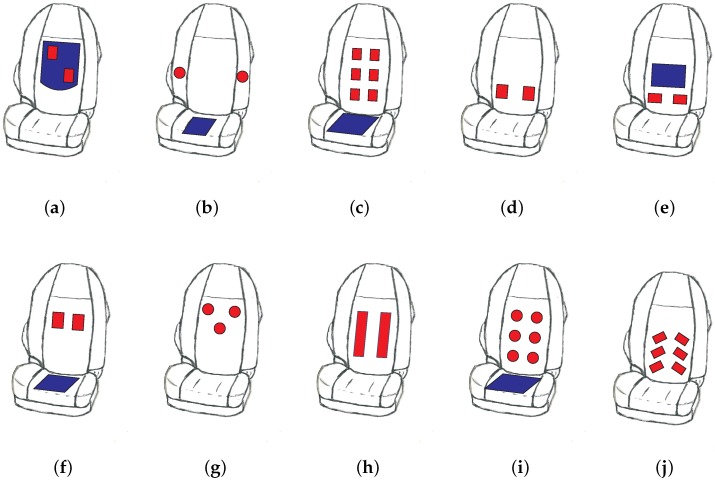
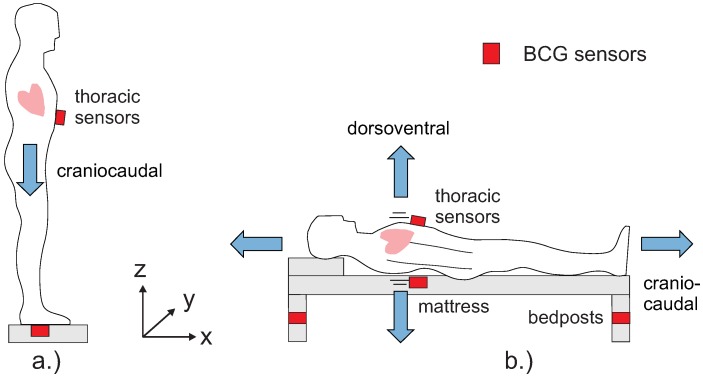
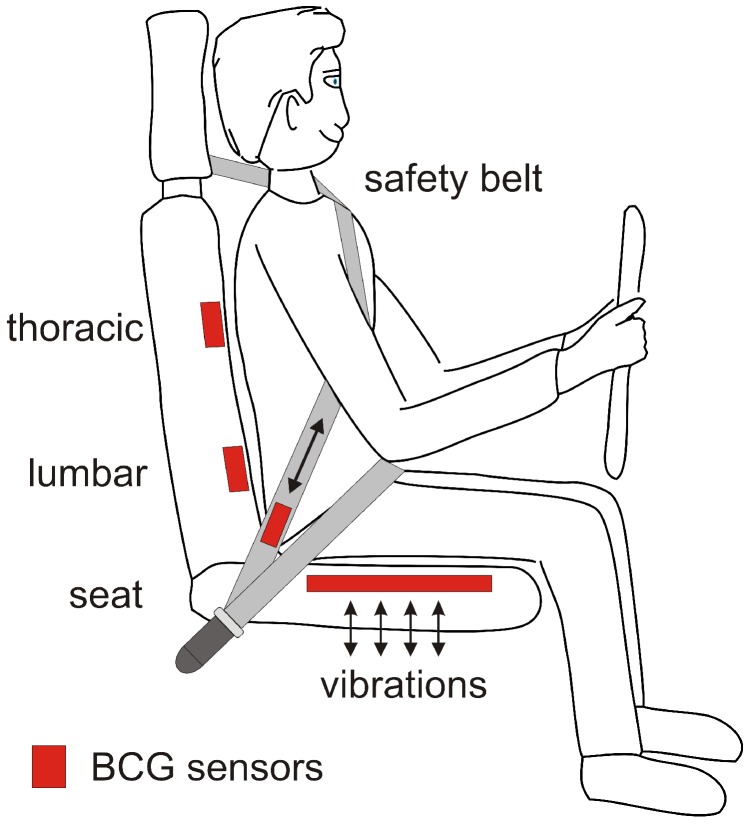
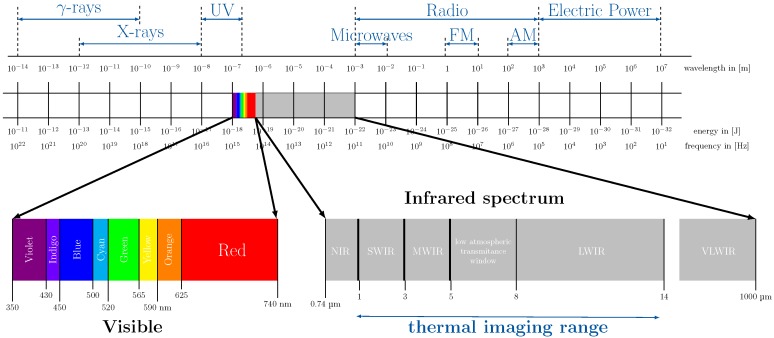
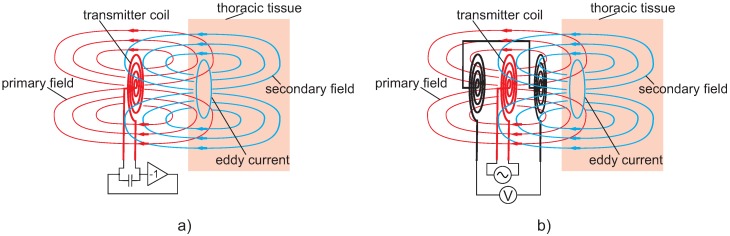
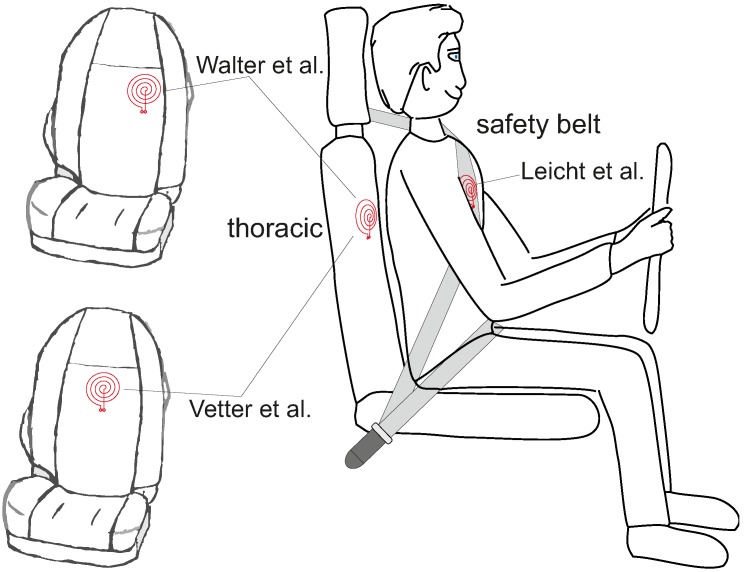
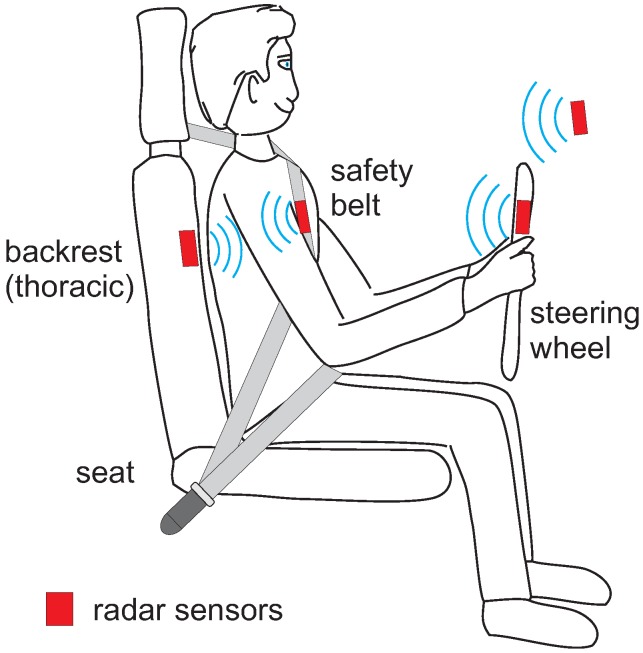
This review provides an overview of unobtrusive monitoring techniques that could be used to monitor some of the human vital signs (i.e., heart activity, breathing activity, temperature and potentially oxygen saturation) in a car seat. It will be shown that many techniques actually measure mechanical displacement, either on the body surface and/or inside the body. However, there are also techniques like capacitive electrocardiogram or bioimpedance that reflect electrical activity or passive electrical properties or thermal properties (infrared thermography). In addition, photopleythysmographic methods depend on optical properties (like scattering and absorption) of biological tissues and-mainly-blood. As all unobtrusive sensing modalities are always fragile and at risk of being contaminated by disturbances (like motion, rapidly changing environmental conditions, triboelectricity), the scope of the paper includes a survey on redundant sensor arrangements. Finally, this review also provides an overview of automotive demonstrators for vital sign monitoring.
这篇综述提供了对非侵入性监测技术的概述,这些技术可用于监测汽车座椅中一些人体生命体征(即心脏活动、呼吸活动、体温和潜在的血氧饱和度)。研究表明,许多技术实际上测量的是身体表面和/或体内的机械位移。然而,也有一些技术,如电容心电图或生物阻抗,反映的是电活动或被动电特性或热特性(红外热成像)。此外,光容积描记法取决于生物组织的光学特性(如散射和吸收),主要是血液。由于所有非侵入性感应方式都很脆弱,并且容易受到干扰(如运动、快速变化的环境条件、摩擦起电)的影响,因此本文的范围还包括对冗余传感器配置的调查。最后,这篇综述还概述了用于生命体征监测的汽车演示。