Teresi Jeanne A, Ocepek-Welikson Katja, Toner John A, Kleinman Marjorie, Ramirez Mildred, Eimicke Joseph P, Gurland Barry J, Siu Albert
Columbia University Stroud Center at New York State Psychiatric Institute.
Research Division, Hebrew Home at Riverdale; RiverSpring Health.
Appl Res Qual Life. 2017 Jun;12(2):251-288. doi: 10.1007/s11482-017-9516-9. Epub 2017 Apr 4.
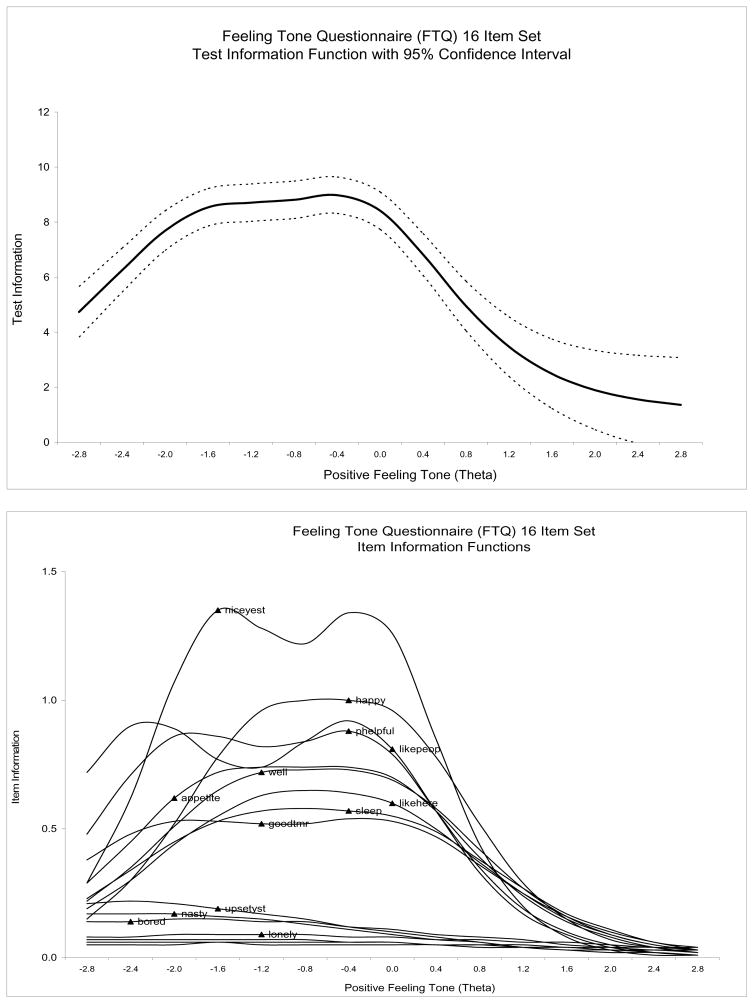
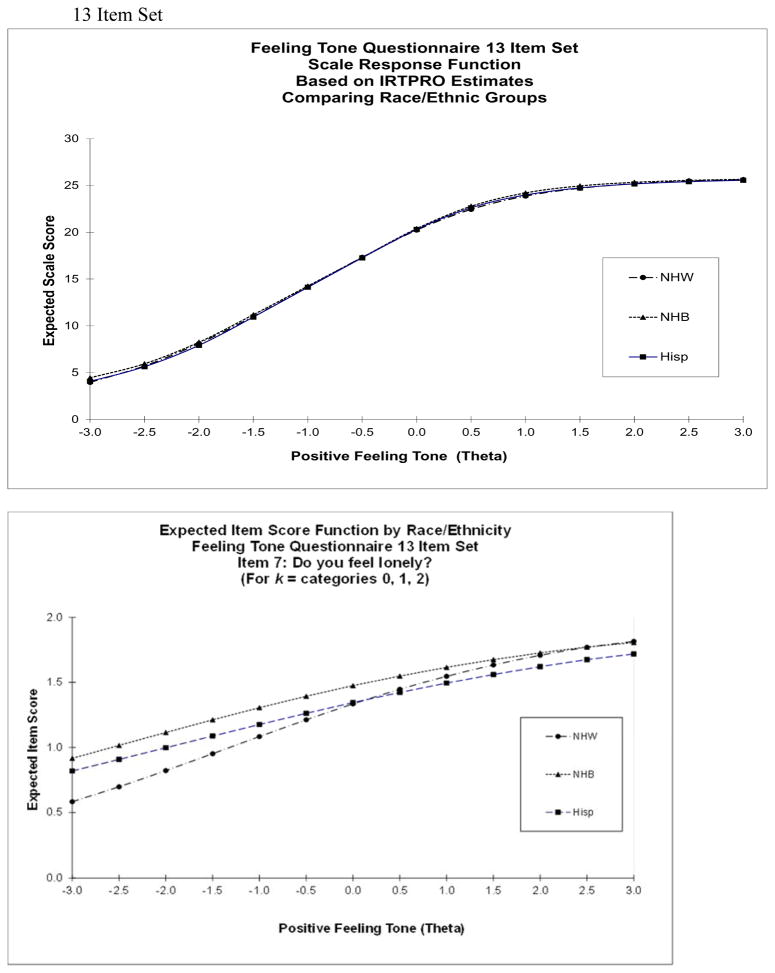
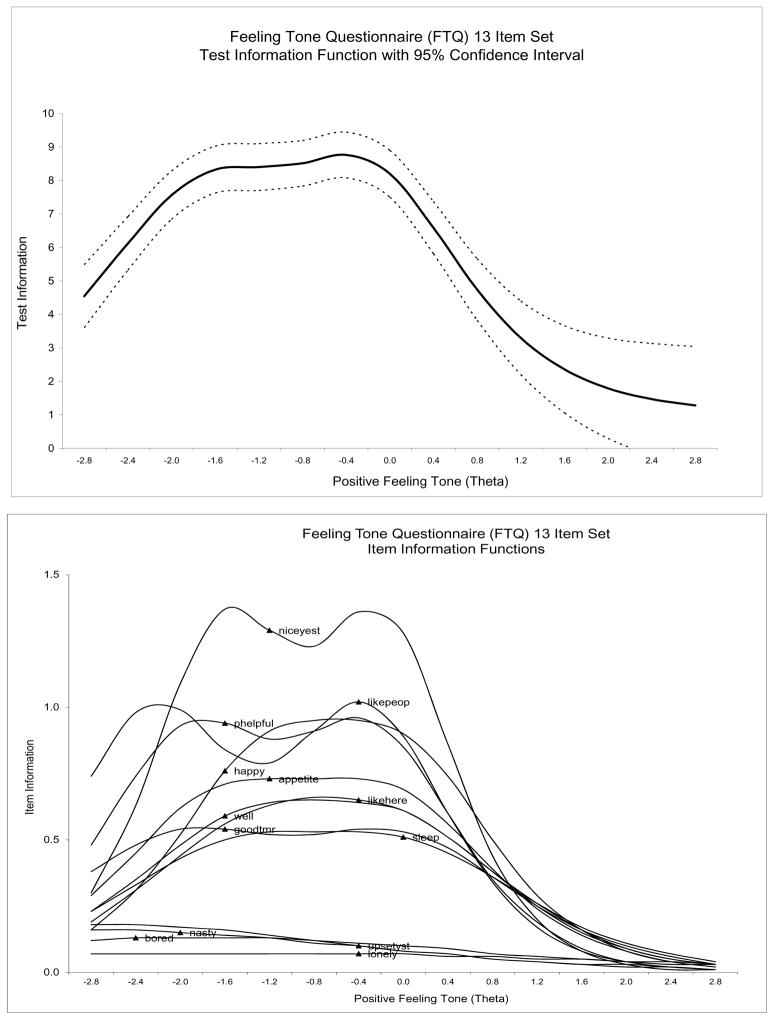
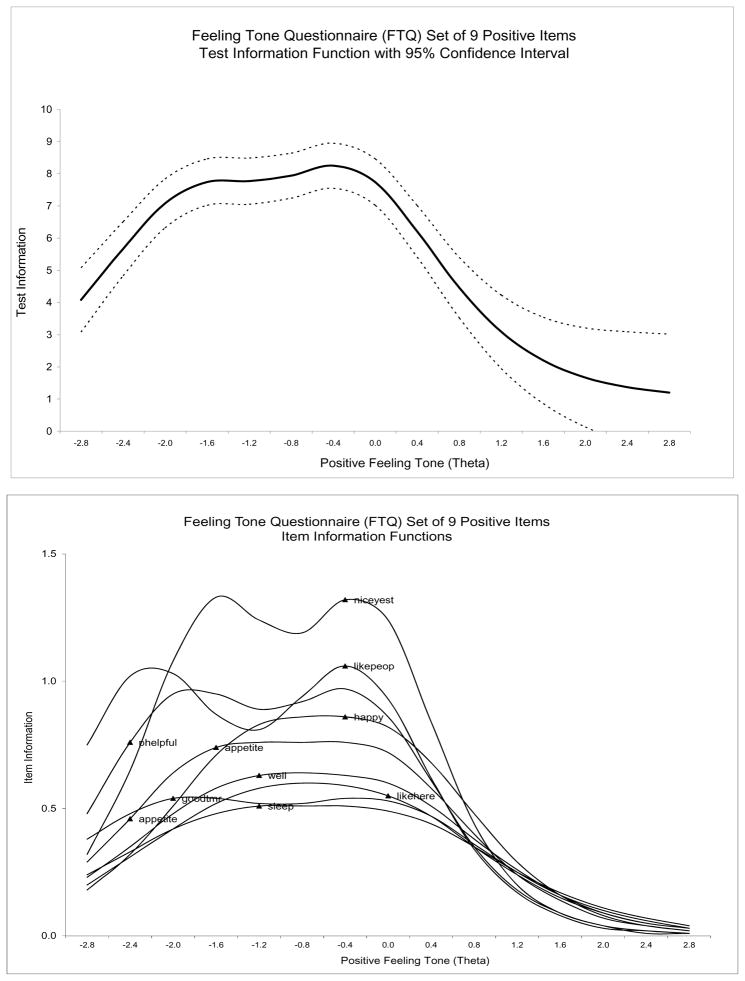
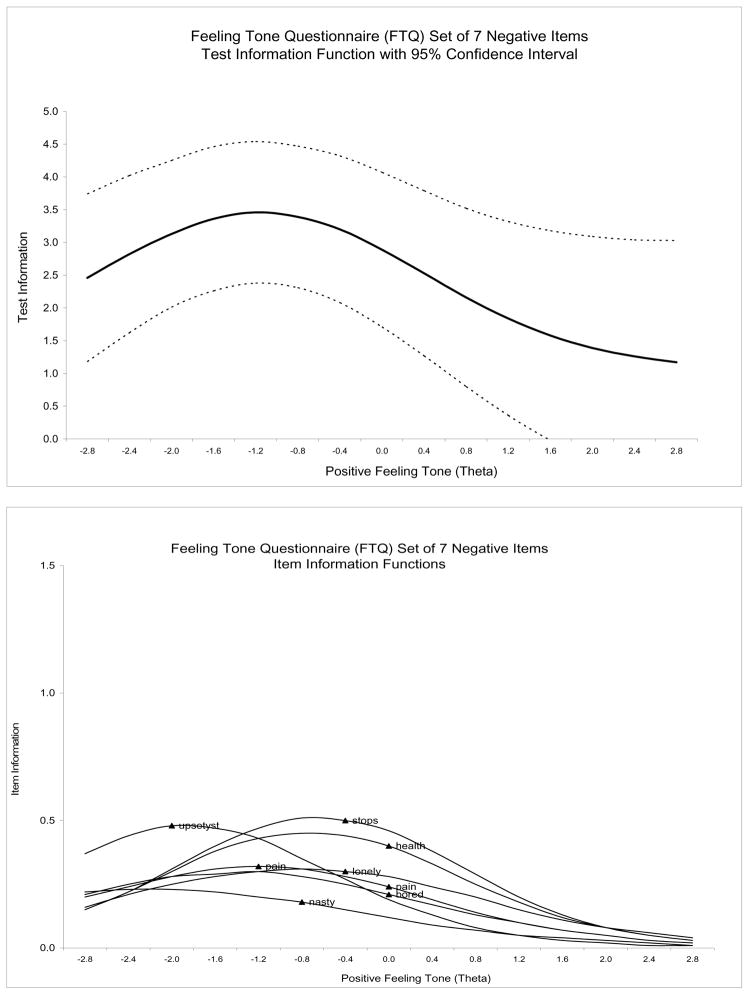
Quality of life assessment includes measurement of positive affect. Methods artifacts associated with positively and negatively worded items can manifest as negative items loading on a second factor, despite the conceptual view that the items are measuring one underlying latent construct. Negatively worded items may elicit biased responses. Additionally, item-level response bias across ethnically diverse groups may compromise group comparisons. The aim was to illustrate methodological approaches to examining method factors and measurement equivalence in an affect measure with 9 positively and 7 negatively worded items: The Feeling Tone Questionnaire (FTQ). The sample included 4,960 non-Hispanic White, 1,144 non-Hispanic Black, and 517 Hispanic community and institutional residents receiving long-term supportive services. The mean age was 82 (s.d.=11.0); 73% were female. Two thirds were cognitively impaired. Methods effects were assessed using confirmatory factor analyses (CFA), and reliability with McDonald's omega and item response theory (IRT) generated estimates. Measurement equivalence was examined using IRT-based Wald tests. Methods effects associated with negatively worded items were observed; these provided little IRT information, and as a composite evidenced lower reliability. Both 13 and 9 item positive affect scales performed well in terms of model fit, reliability, IRT information, and evidenced little differential item functioning of high magnitude or impact. Both CFA and IRT approaches provided complementary methodological information about scale performance. The 9-item affect scale based on the FTQ can be recommended as a brief quality-of-life measure among frail and cognitively impaired individuals in palliative and long-term care settings.
生活质量评估包括对积极情绪的测量。与正向和负向措辞项目相关的方法性人为因素可能表现为负向项目在第二个因子上的负荷,尽管从概念上来说这些项目是在测量一个潜在的单一结构。负向措辞的项目可能会引发有偏差的回答。此外,不同种族群体间项目层面的反应偏差可能会影响群体比较。目的是阐述在一个包含9个正向措辞项目和7个负向措辞项目的情感测量工具(情感基调问卷,FTQ)中检验方法因子和测量等价性的方法。样本包括4960名非西班牙裔白人、1144名非西班牙裔黑人以及517名接受长期支持性服务的西班牙裔社区和机构居民。平均年龄为82岁(标准差 = 11.0);73%为女性。三分之二的人存在认知障碍。使用验证性因子分析(CFA)评估方法效应,并使用麦克唐纳ω系数和项目反应理论(IRT)生成的估计值评估信度。使用基于IRT的 Wald 检验来检验测量等价性。观察到了与负向措辞项目相关的方法效应;这些效应提供的IRT信息很少,并且作为一个综合指标,其信度较低。13项和9项的积极情绪量表在模型拟合、信度、IRT信息方面表现良好,并且几乎没有高幅度或高影响的项目功能差异。CFA和IRT方法都提供了关于量表性能的补充性方法学信息。基于FTQ的9项情感量表可推荐作为姑息治疗和长期护理环境中虚弱及认知障碍个体的简短生活质量测量工具。