Rikkert Marian, van Rood Yanda, de Roos Carlijn, Ratter Julia, van den Hout Marcel
Department of Medical Psychology, Ziekenhuis Rivierenland, Tiel, The Netherlands.
Department of Psychiatry, Leiden Universitair Medisch Centrum (LUMC), Leiden, The Netherlands.
Eur J Psychotraumatol. 2018 Sep 11;9(1):1512248. doi: 10.1080/20008198.2018.1512248. eCollection 2018.
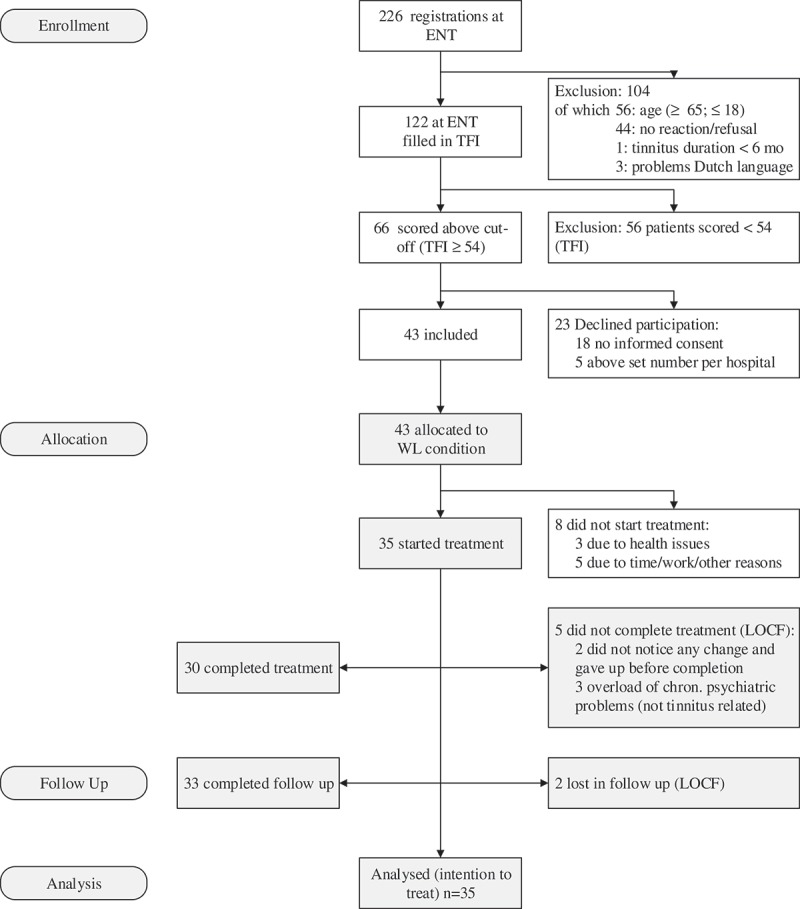
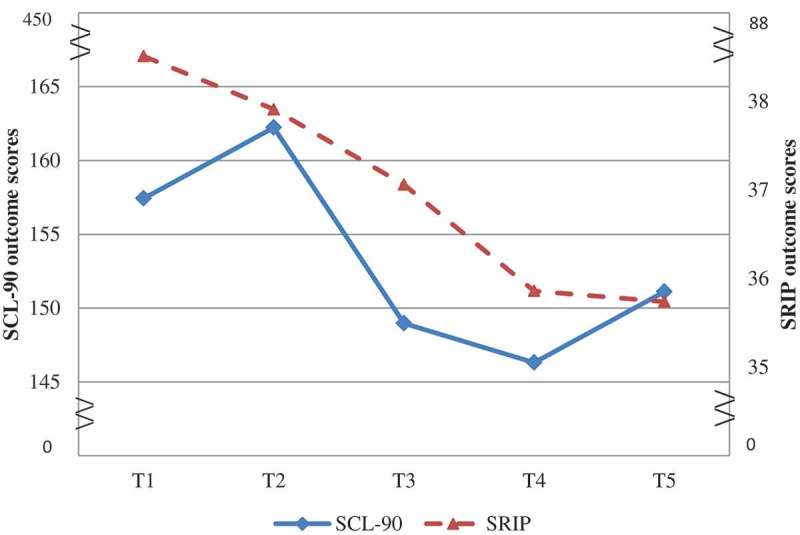
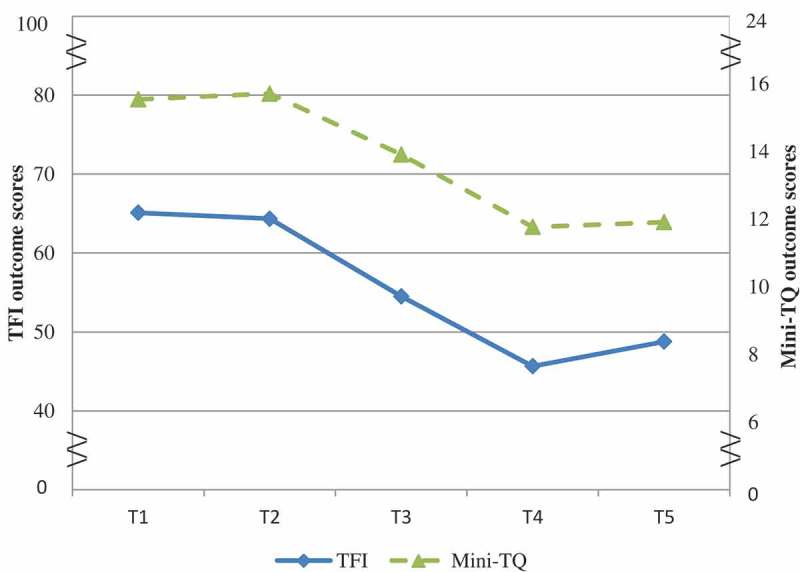
While normal tinnitus is a short-term sensation of limited duration, in 10-15% of the general population it develops into a chronic condition. For 3-6% it seriously interferes with many aspects of life. The aim of this trial was to assess effectiveness of a trauma-focused approach, eye movement desensitization and reprocessing (EMDR), in reducing tinnitus distress. The sample consisted of 35 adults with high levels of chronic tinnitus distress from five general hospitals in the Netherlands. Participants served as their own controls. After pre-assessment (T1), participants waited for a period of 3 months, after which they were assessed again (T2) before they received six 90 min manualized EMDR treatment sessions in which tinnitus-related traumatic or stressful events were the focus of treatment. Standardized self-report measures, the Tinnitus Functional Index (TFI), Mini-Tinnitus Questionnaire (Mini-TQ), Symptom Checklist-90 (SCL-90) and the Self-Rating Inventory List for Post-traumatic Stress Disorder (SRIP), were completed again halfway through treatment (T3), post-treatment (T4) and at 3 months' follow-up (T5). Repeated measures analysis of variance revealed significant improvement after EMDR treatment on the primary outcome, TFI. Compared to the waiting-list condition, scores significantly decreased in EMDR treatment [(34) = -4.25, < .001, Cohen's = .72]. Secondary outcomes, Mini-TQ and SCL-90, also decreased significantly. The treatment effects remained stable at 3 months' follow-up. No adverse events or side effects were noted in this trial. This is the first study to suggest that EMDR is effective in reducing tinnitus distress. Randomized controlled trials are warranted.
虽然正常耳鸣是一种持续时间有限的短期感觉,但在10%至15%的普通人群中,它会发展成一种慢性疾病。对于3%至6%的人来说,它会严重干扰生活的许多方面。本试验的目的是评估一种以创伤为重点的方法——眼动脱敏再处理疗法(EMDR)在减轻耳鸣困扰方面的有效性。样本包括来自荷兰五家综合医院的35名慢性耳鸣困扰程度较高的成年人。参与者自身作为对照。在进行预评估(T1)后,参与者等待3个月,之后在接受6次每次90分钟的标准化EMDR治疗疗程之前再次进行评估(T2),这些疗程以与耳鸣相关的创伤性或应激性事件为治疗重点。在治疗中期(T3)、治疗后(T4)以及3个月随访时(T5),再次完成标准化的自我报告测量,即耳鸣功能指数(TFI)、小型耳鸣问卷(Mini-TQ)、症状自评量表90(SCL-90)以及创伤后应激障碍自评量表(SRIP)。重复测量方差分析显示,EMDR治疗后主要结局指标TFI有显著改善。与等待名单状态相比,EMDR治疗中的得分显著降低[F(1,34)= -4.25,p <.001,科恩d = 0.72]。次要结局指标Mini-TQ和SCL-90也显著降低。治疗效果在3个月随访时保持稳定。本试验未观察到不良事件或副作用。这是第一项表明EMDR在减轻耳鸣困扰方面有效的研究。有必要进行随机对照试验。