International Collaboration on Repair Discoveries (ICORD), the University of British Columbia, Vancouver, British Columbia V5Z1M9, Canada.
Wolfson Centre for Age-Related Diseases, King's College London, London SE1 1UL, United Kingdom.
eNeuro. 2018 Sep 13;5(5). doi: 10.1523/ENEURO.0077-18.2018. eCollection 2018 Sep-Oct.
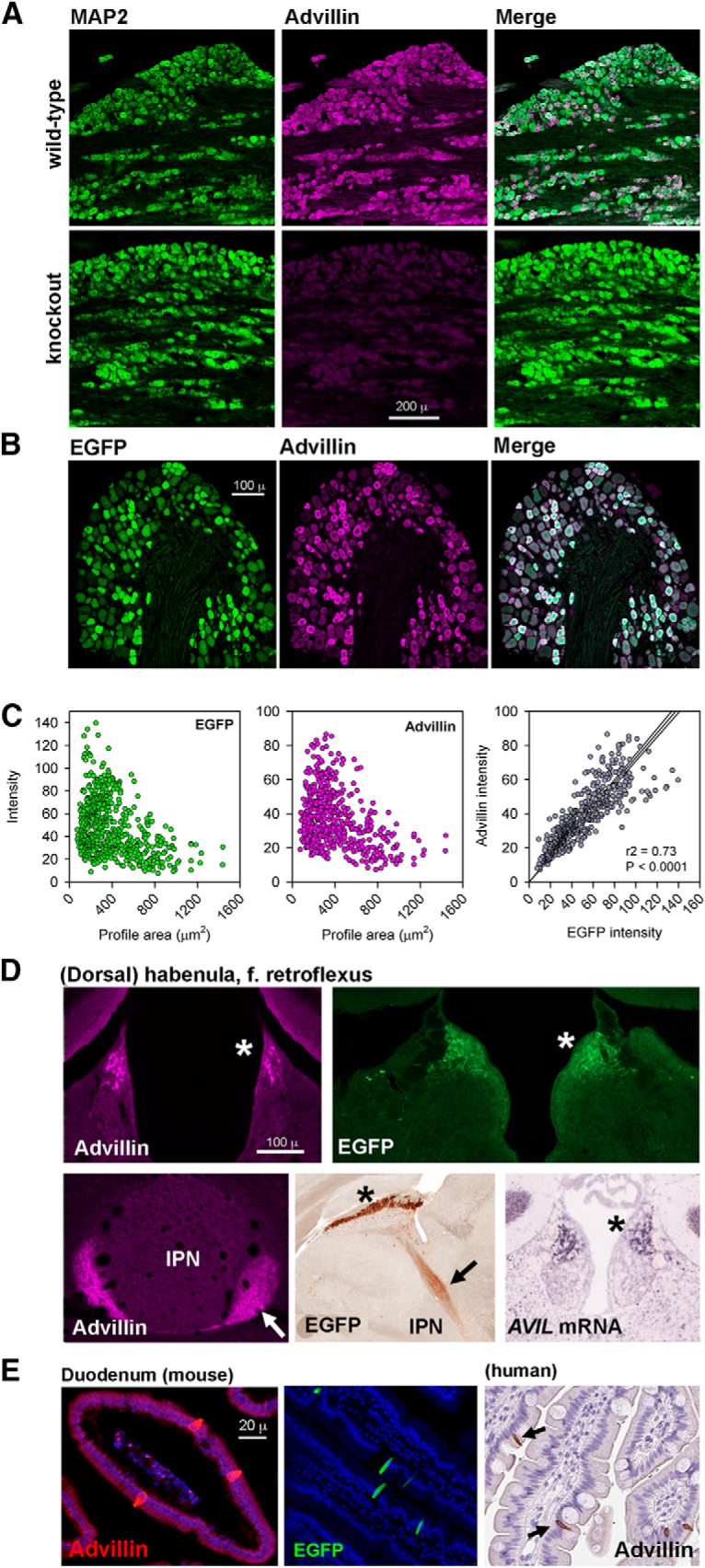
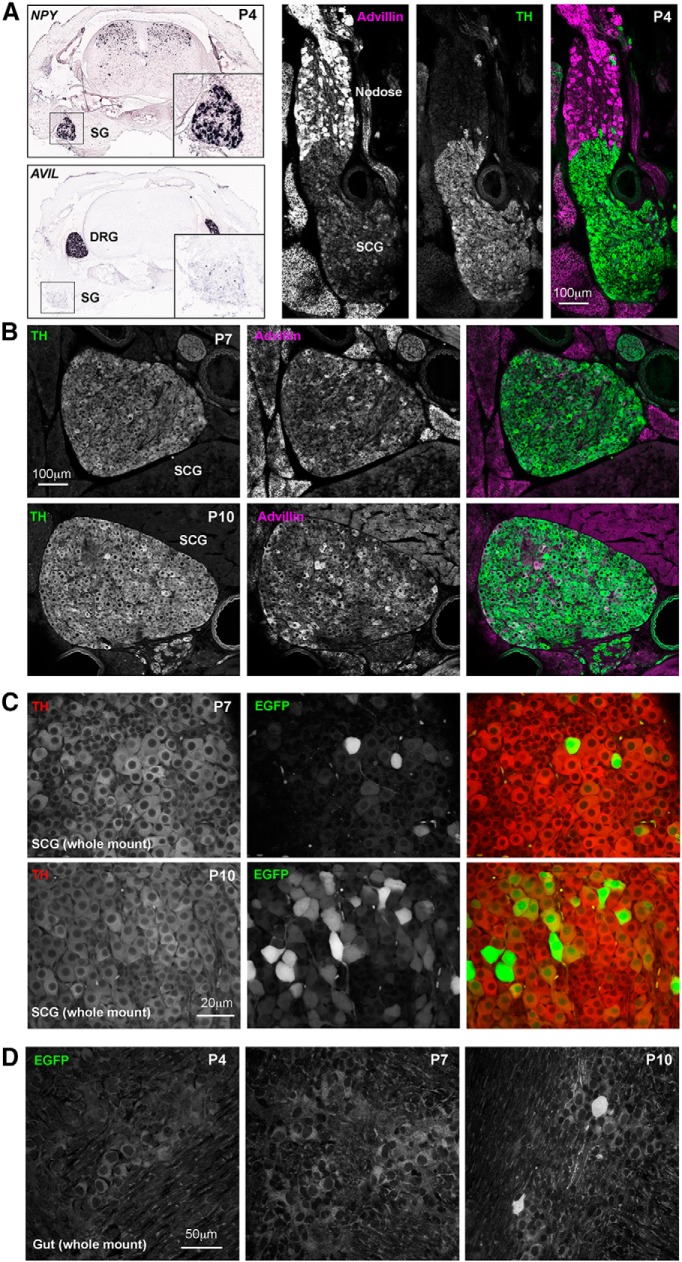
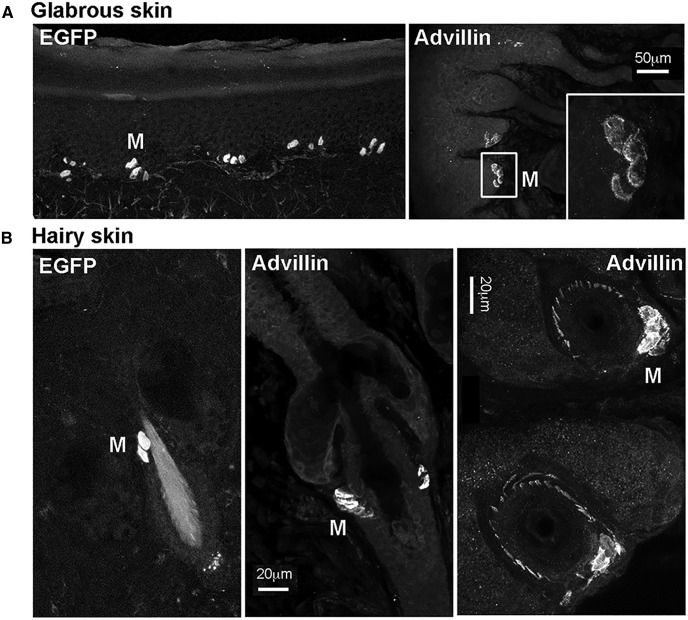
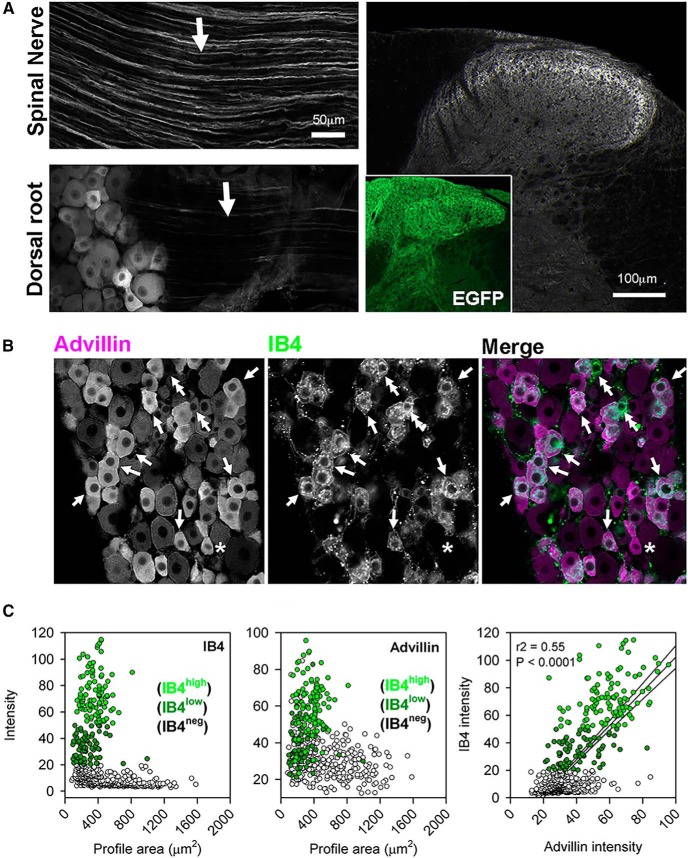
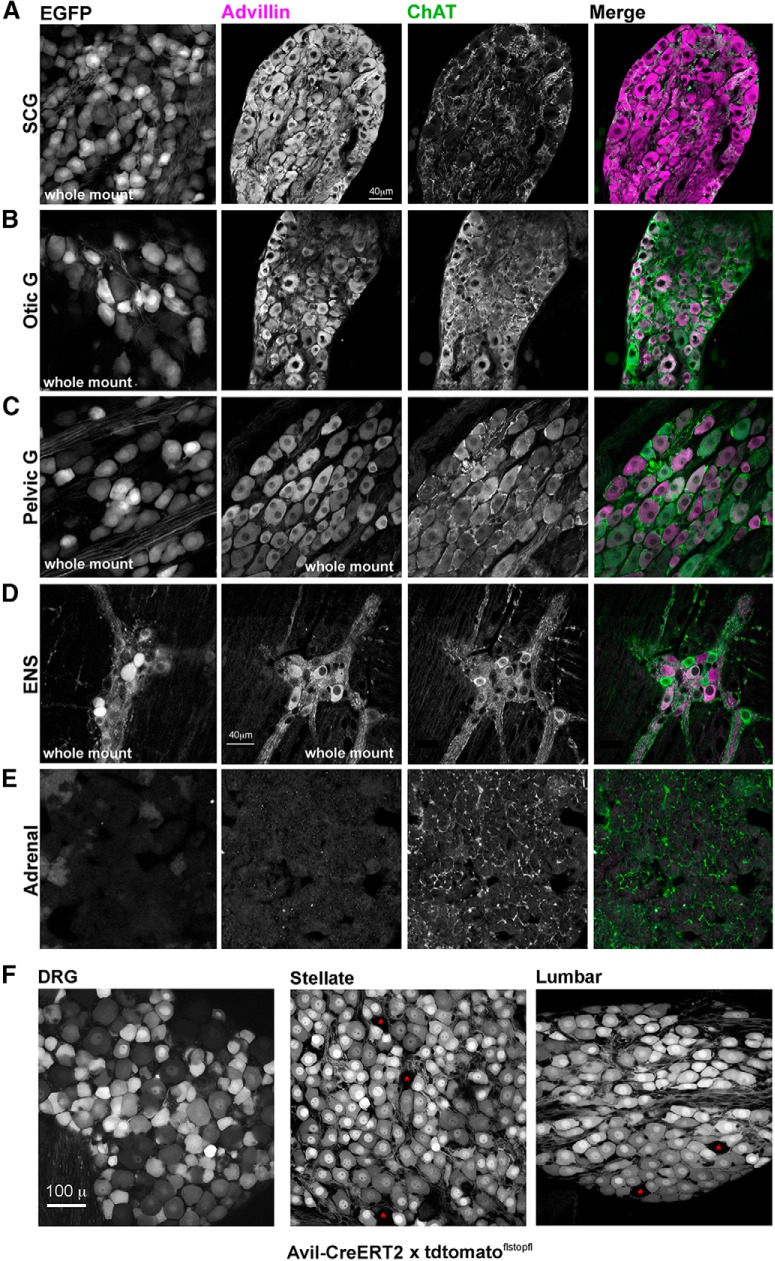
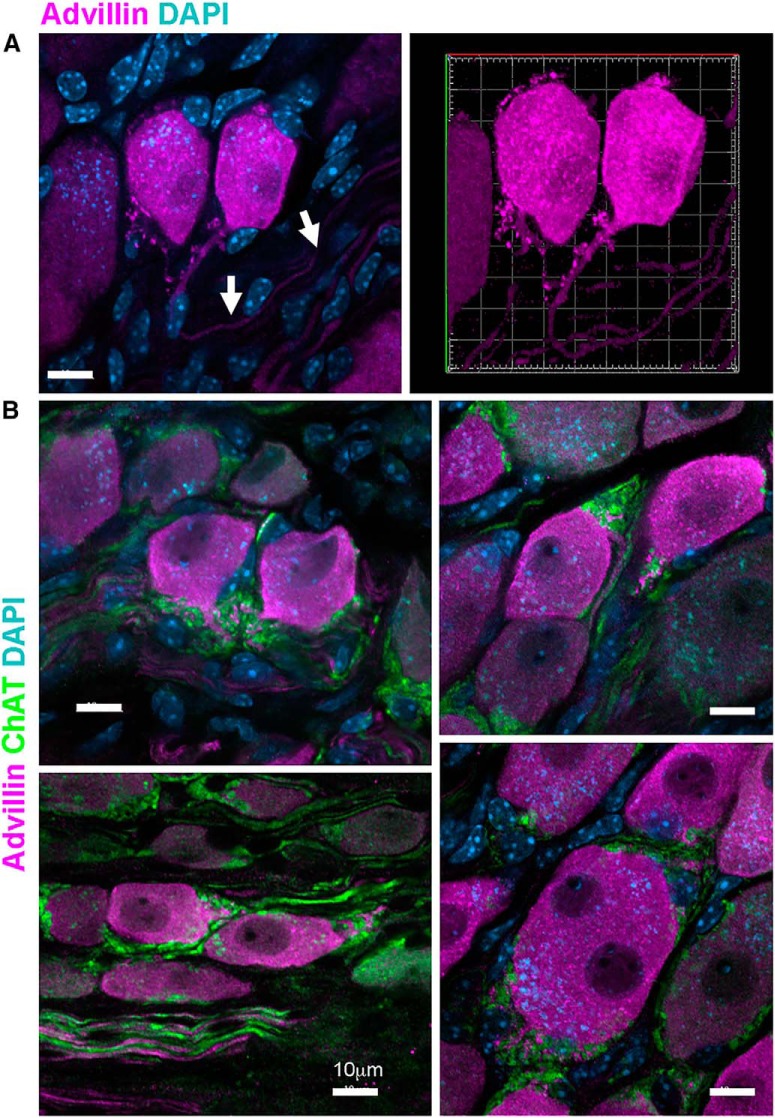
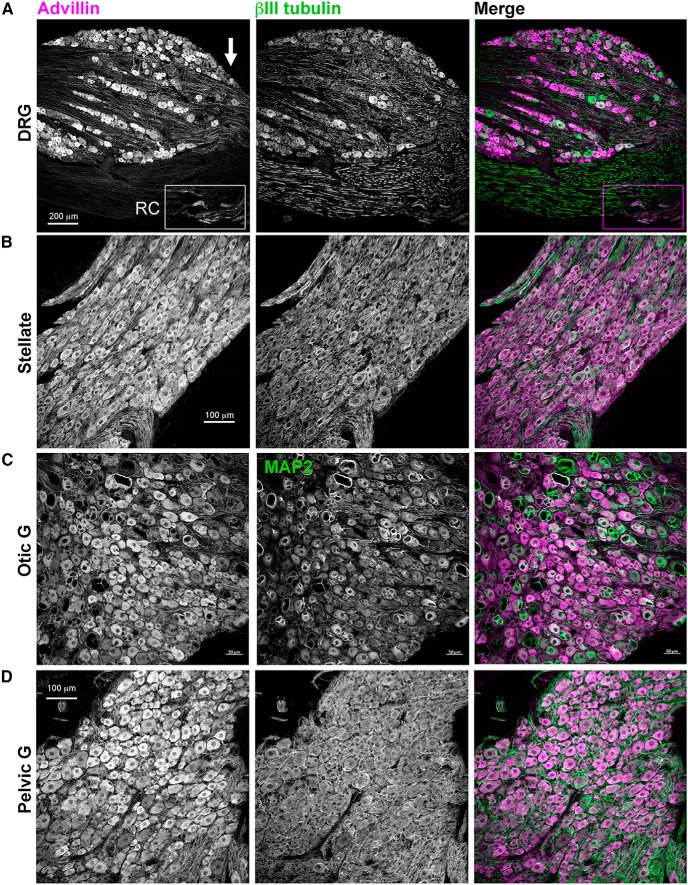
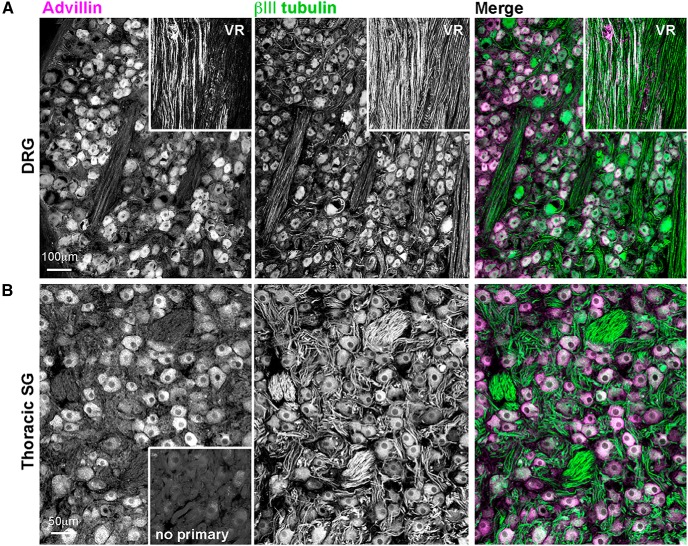
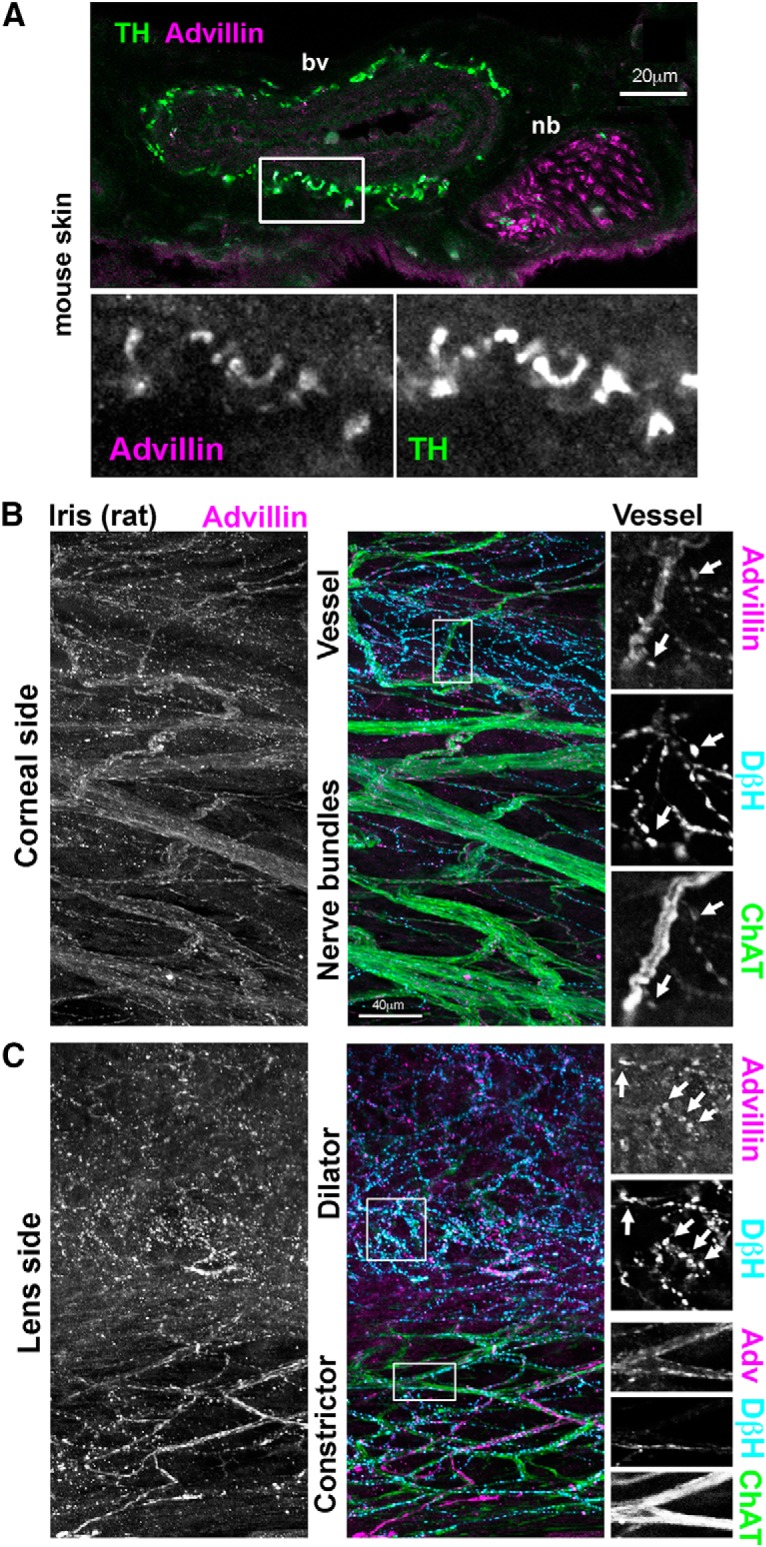
Promoter-based genetic recombination (via, e.g., Cre-lox) is most useful when all cells of interest express a particular gene. The discovery that the actin-binding protein advillin is expressed in all somatic sensory neurons has been exploited repeatedly to drive DNA recombination therein, yet specificity of expression has not been well demonstrated. Here, we characterize advillin expression amongst sensory neurons and in several other neural and non-neural tissues. We first validate an advillin antibody against advillin knock-out tissue, advillin promoter-driven EGFP, and advillin mRNA expression. In the dorsal root ganglion (DRG), advillin is enriched in non-peptidergic nociceptors. We also show that advillin expression, and advillin promotor-driven EGFP and Cre-recombinase expression, occurs in multiple tissues including the dorsal habenula of the epithalamus, endocrine cells of the gut, Merkel cells in the skin, and most strikingly, throughout the autonomic nervous system (sympathetic, parasympathetic, and enteric neurons) in mice, rats, and non-human primates. In the mouse pelvic ganglion, advillin immunoreactivity is most intense in pairs of small neurons, and concentrated in spine-like structures on the axon initial segment contacted by sympathetic preganglionic axons. In autonomic targets (iris and blood vessels), advillin is distributed along cholinergic parasympathetic axons and in sympathetic varicosities. Developmentally, advillin expression is absent from sympathetics at postnatal day 4 but begins to emerge by day 7, accounting for previous reports (based on embryonic expression) of advillin's specificity to sensory neurons. These results indicate that caution is warranted in interpreting previous studies in which advillin-driven genomic editing is either constitutive or performed after postnatal day 4.
基于启动子的基因重组(例如通过 Cre-lox)在所有感兴趣的细胞都表达特定基因时最为有用。肌动蛋白结合蛋白 advillin 表达于所有体感觉神经元的发现已被反复利用来驱动其中的 DNA 重组,但表达的特异性尚未得到很好的证明。在这里,我们描述了 advillin 在感觉神经元中的表达以及在其他几种神经和非神经组织中的表达。我们首先验证了针对 advillin 敲除组织、advillin 启动子驱动的 EGFP 和 advillin mRNA 表达的 advillin 抗体。在背根神经节(DRG)中,advillin 在非肽能伤害感受器中富集。我们还表明,advillin 表达以及 advillin 启动子驱动的 EGFP 和 Cre 重组酶表达发生在多种组织中,包括上丘脑背侧缰核、肠道内分泌细胞、皮肤 Merkel 细胞,最显著的是,在小鼠、大鼠和非人类灵长类动物的自主神经系统(交感神经、副交感神经和肠神经元)中。在小鼠骨盆神经节中,advillin 免疫反应性在一对小神经元中最为强烈,并集中在交感节前轴突接触的轴突起始段的棘状结构上。在自主靶标(虹膜和血管)中,advillin 分布在胆碱能副交感神经轴突和交感神经末梢中。在发育过程中,advillin 在出生后第 4 天的交感神经中没有表达,但从第 7 天开始出现,这解释了先前基于胚胎表达的 advillin 对感觉神经元特异性的报道。这些结果表明,在解释以前的研究时需要谨慎,这些研究中的 advillin 驱动的基因组编辑要么是组成型的,要么是在出生后第 4 天之后进行的。