Makarow M, Nevalainen L T, Kääriäinen L
Proc Natl Acad Sci U S A. 1986 Nov;83(21):8117-21. doi: 10.1073/pnas.83.21.8117.
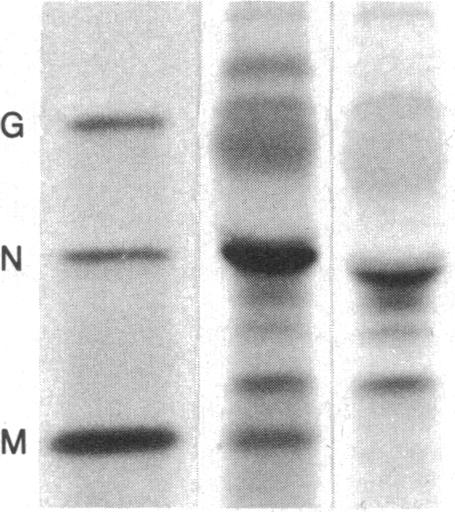
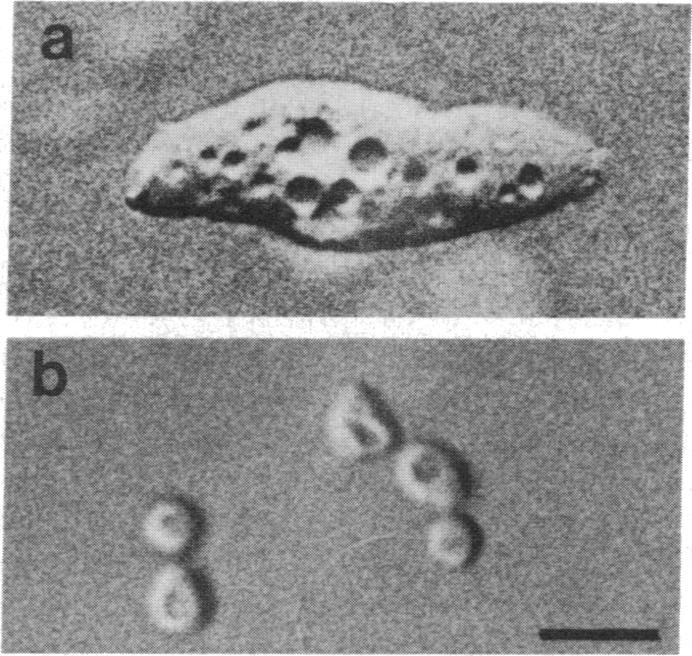
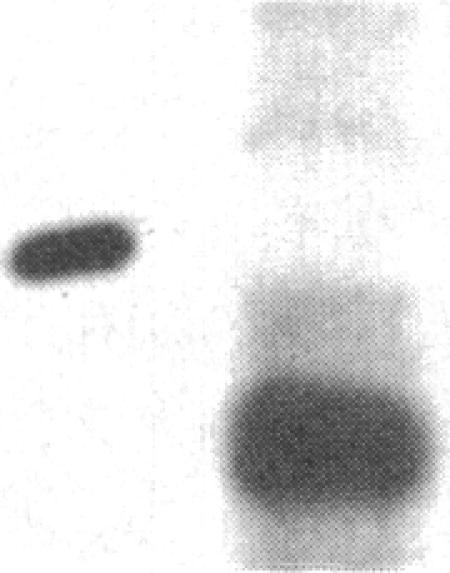
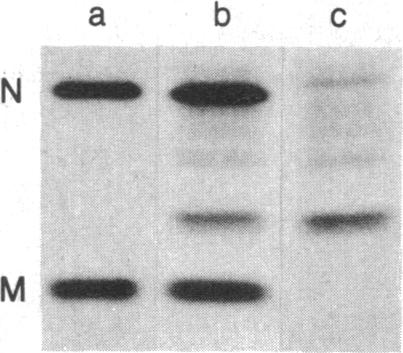
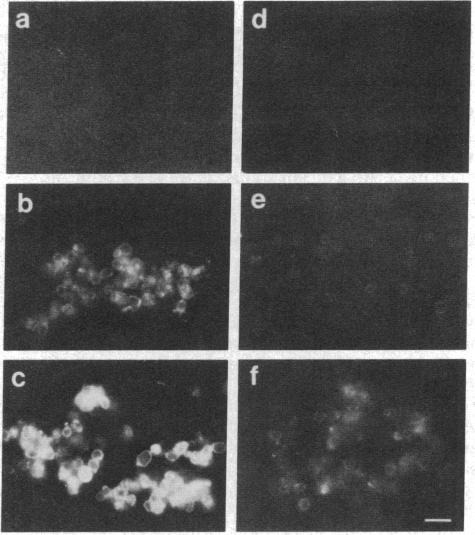
The nucleocapsid of vesicular stomatitis virus (VSV) was introduced into the cytoplasm of Saccharomyces cerevisiae by low pH-dependent fusion of the viral envelope with the spheroplast plasma membrane. This led to de novo synthesis of the three major structural proteins of the virus--the G, N, and M proteins--as shown by immunoprecipitation of [35S]methionine-labeled spheroplast lysates. In NaDodSO4/polyacrylamide gel electrophoresis, M and N proteins comigrated with those of the virion, whereas the yeast-made G protein migrated as two bands with apparent molecular sizes of 60 and 70 kDa. Both polypeptides appeared to be N-glycosylated, since only one polypeptide with the apparent molecular mass of approximately equal to 55 kDa was produced in the presence of tunicamycin. Phase separation into Triton X-114 suggested that the unglycosylated G protein was membrane bound. According to immunofluorescent surface staining of live spheroplasts, at least part of the G protein was transported to the plasma membrane. Spheroplasts expressing the VSV genes could be fused together by low pH to form polykaryons, indicating that G protein synthetized by yeast was fusogenic--i.e., biologically active.
通过病毒包膜与原生质体质膜的低pH依赖性融合,将水疱性口炎病毒(VSV)的核衣壳导入酿酒酵母的细胞质中。如对[35S]甲硫氨酸标记的原生质体裂解物进行免疫沉淀所示,这导致了病毒三种主要结构蛋白——G、N和M蛋白的从头合成。在十二烷基硫酸钠/聚丙烯酰胺凝胶电泳中,M和N蛋白与病毒粒子的M和N蛋白迁移情况相同,而酵母产生的G蛋白以两条带的形式迁移,表观分子大小分别为60 kDa和70 kDa。这两种多肽似乎都进行了N-糖基化,因为在衣霉素存在的情况下,只产生了一种表观分子量约为55 kDa的多肽。用Triton X-114进行相分离表明,未糖基化的G蛋白与膜结合。根据活原生质体的免疫荧光表面染色,至少部分G蛋白被转运到了质膜上。表达VSV基因的原生质体可以通过低pH融合在一起形成多核体,这表明酵母合成的G蛋白具有融合活性——即具有生物活性。