Bambino Gesù Children's Hospital-IRCCS, Research Laboratories, V.le di San Paolo 15, 00146, Rome, Italy.
Department of Chemistry, Sapienza University of Rome, P.le A. Moro 5, 00185, Rome, Italy.
Sci Rep. 2018 Sep 17;8(1):13888. doi: 10.1038/s41598-018-32258-9.
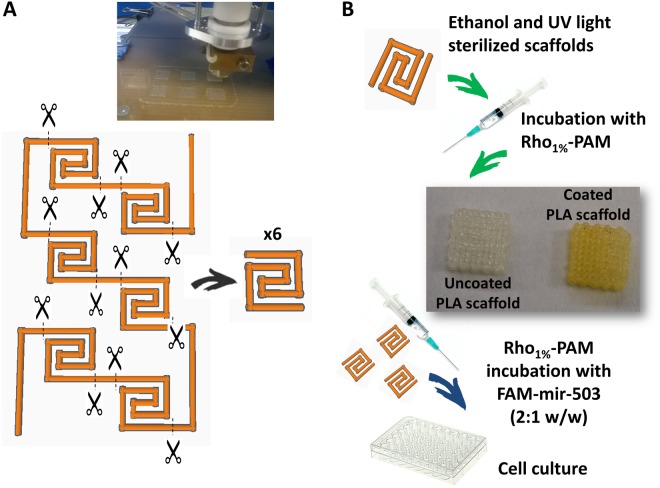
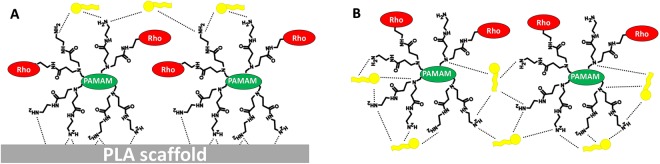
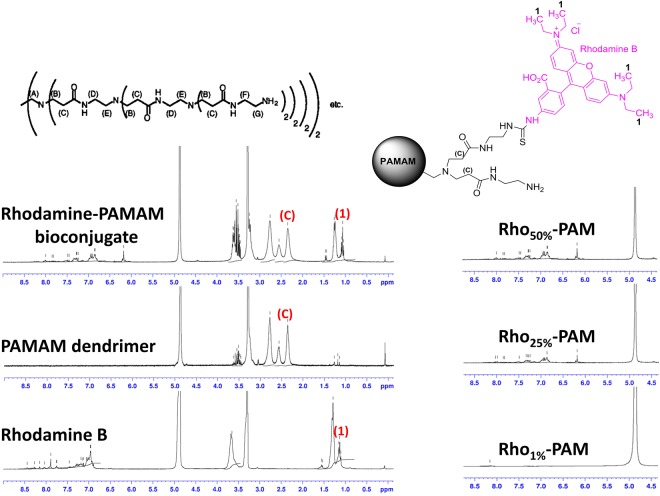
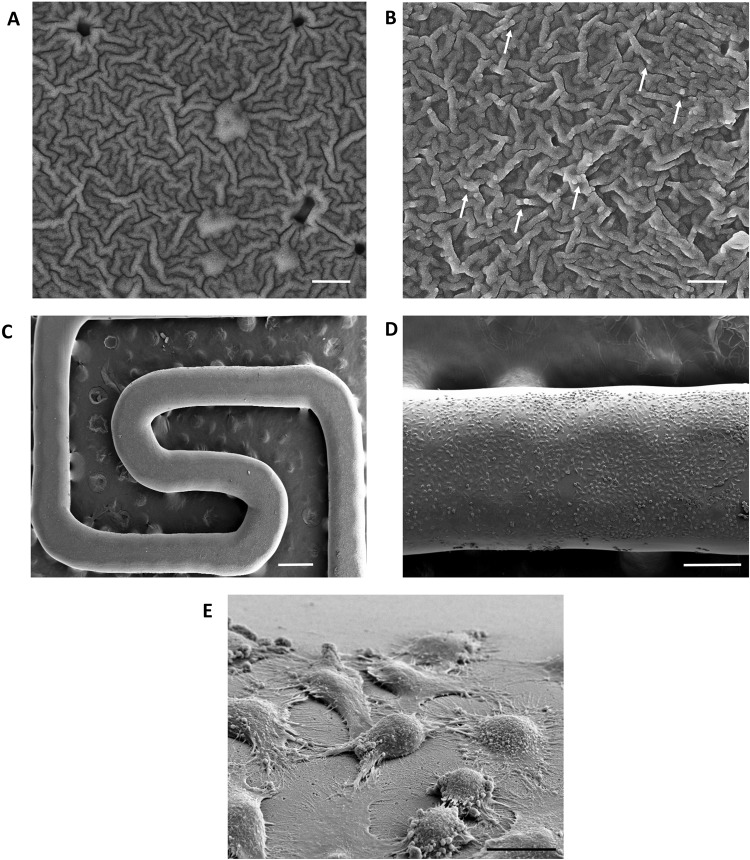
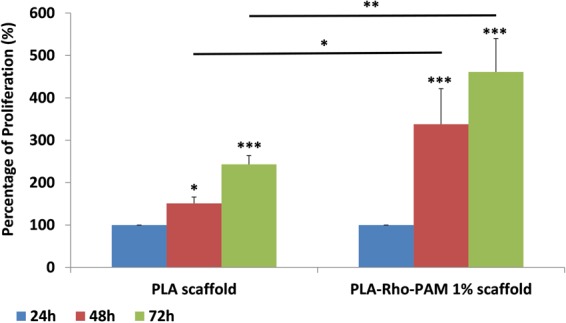
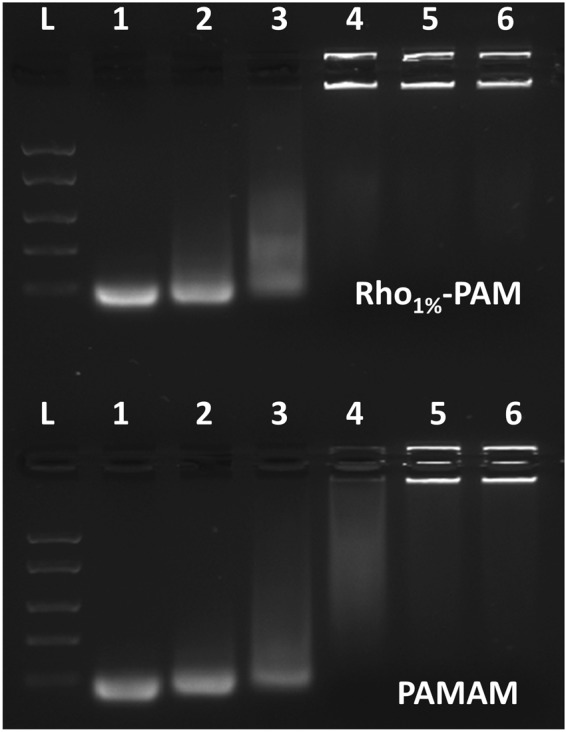
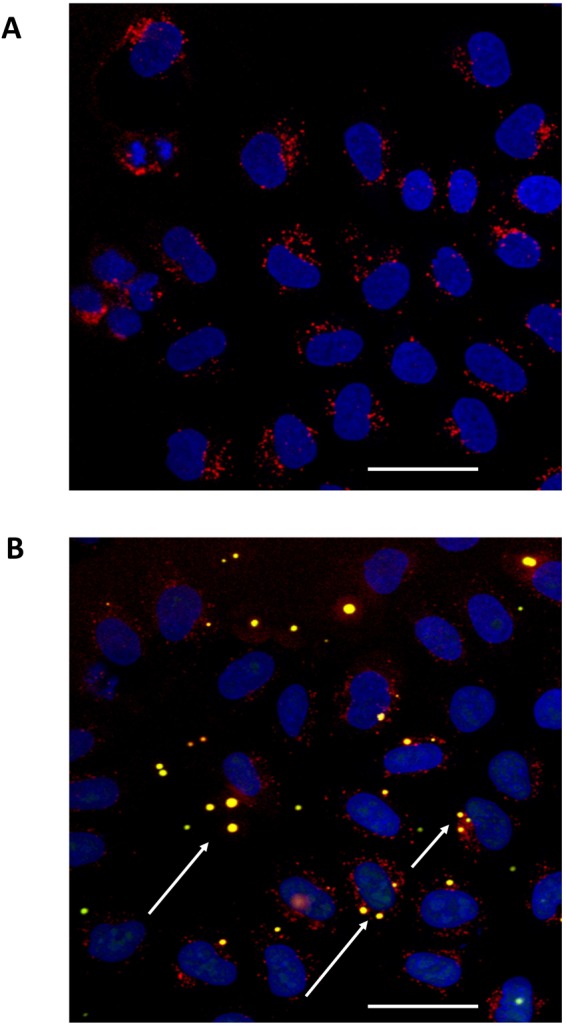
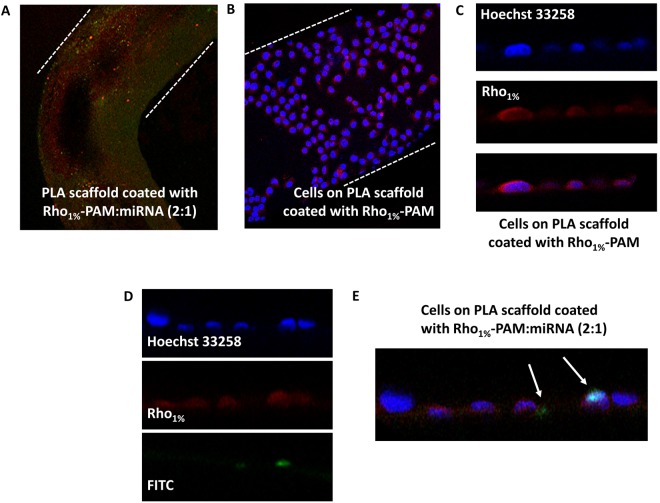
Many advanced synthetic, natural, degradable or non-degradable materials have been employed to create scaffolds for cell culture for biomedical or tissue engineering applications. One of the most versatile material is poly-lactide (PLA), commonly used as 3D printing filament. Manufacturing of multifunctional scaffolds with improved cell growth proliferation and able to deliver oligonucleotides represents an innovative strategy for controlled and localized gene modulation that hold great promise and could increase the number of applications in biomedicine. Here we report for the first time the synthesis of a novel Rhodamine derivative of a poly-amidoamine dendrimer (G = 5) able to transfect cells and to be monitored by confocal microscopy that we also employed to coat a 3D-printed PLA scaffold. The coating do not modify the oligonucleotide binding ability, toxicity or transfection properties of the scaffold that is able to increase cell proliferation and deliver miRNA mimics (i.e., pre-mir-503) into human cells. Although further experiments are required to optimize the dendrimer/miRNA ratio and improve transfection efficiency, we demonstrated the effectiveness of this promising and innovative 3D-printed transfection system to transfer miRNAs into human cells for future biomedical applications.
许多先进的合成、天然、可降解或不可降解的材料被用于为细胞培养创造生物医学或组织工程应用的支架。最通用的材料之一是聚乳酸(PLA),通常用作 3D 打印丝。制造具有改善细胞生长增殖能力且能够递送寡核苷酸的多功能支架是一种用于控制和局部基因调节的创新策略,具有很大的应用前景,并可能增加在生物医学中的应用数量。在这里,我们首次报道了一种新型聚酰胺-胺树枝状大分子(G=5)的罗丹明衍生物的合成,该衍生物能够转染细胞,并通过共聚焦显微镜进行监测,我们还将其用于涂覆 3D 打印的 PLA 支架。该涂层不会改变支架的寡核苷酸结合能力、毒性或转染特性,该支架能够增加细胞增殖并将 miRNA 模拟物(例如,pre-mir-503)递送至人细胞中。尽管需要进一步的实验来优化树枝状大分子/miRNA 的比例并提高转染效率,但我们证明了这种有前途和创新的 3D 打印转染系统在未来生物医学应用中将 miRNA 转染入人细胞中的有效性。