Schlur Laurent, Calado Jeremy Ramos, Spitzer Denis
Nanomatériaux pour les Systèmes Sous Sollicitations Extrêmes (NS3E), UMR 3208 ISL/CNRS/UNISTRA, French-German Research Institute of Saint-Louis, 5, rue du Général Cassagnou, 68300 Saint-Louis, France.
R Soc Open Sci. 2018 Aug 8;5(8):180510. doi: 10.1098/rsos.180510. eCollection 2018 Aug.
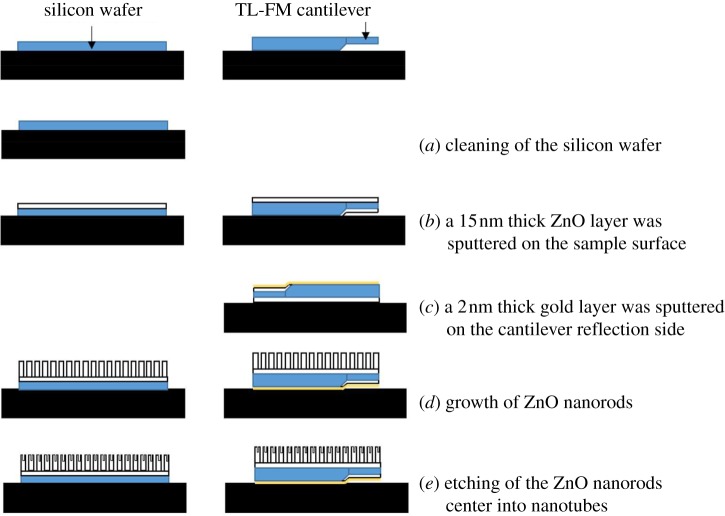
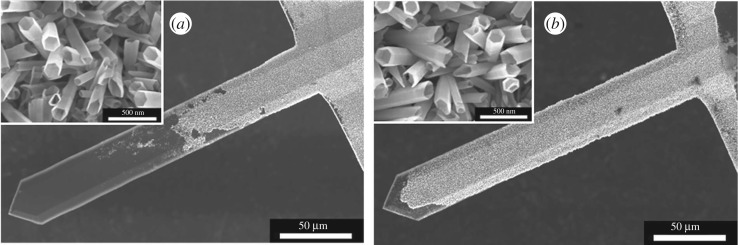
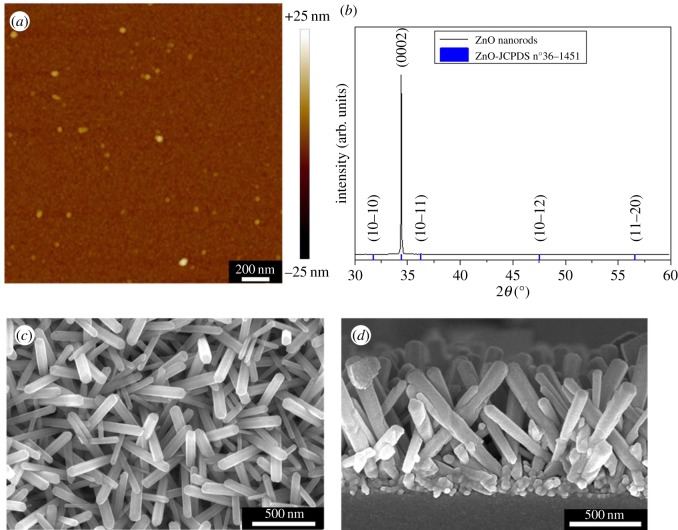
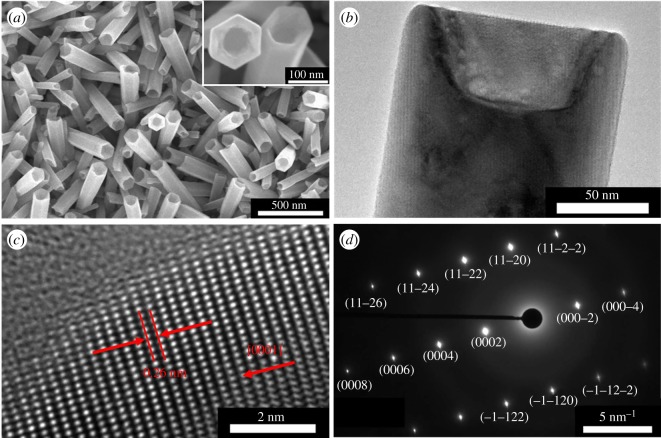
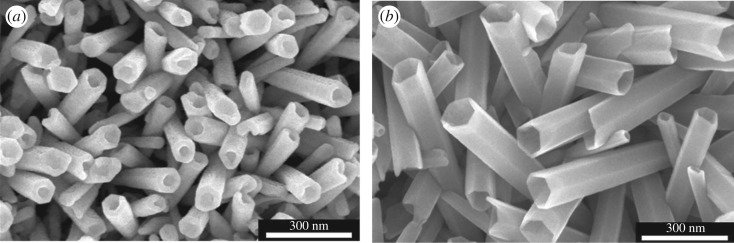
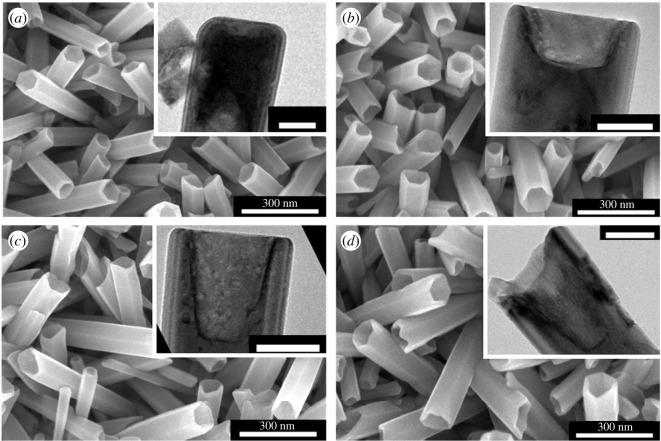
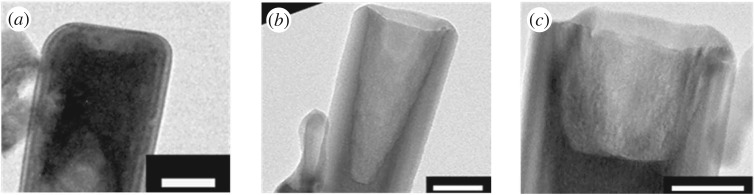
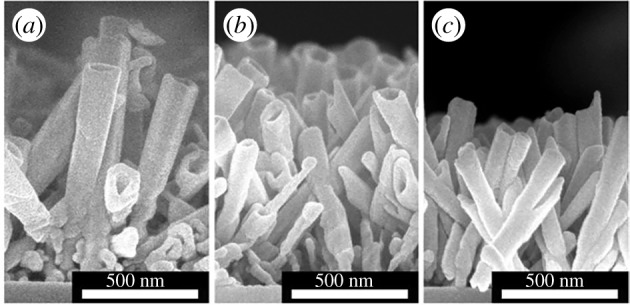
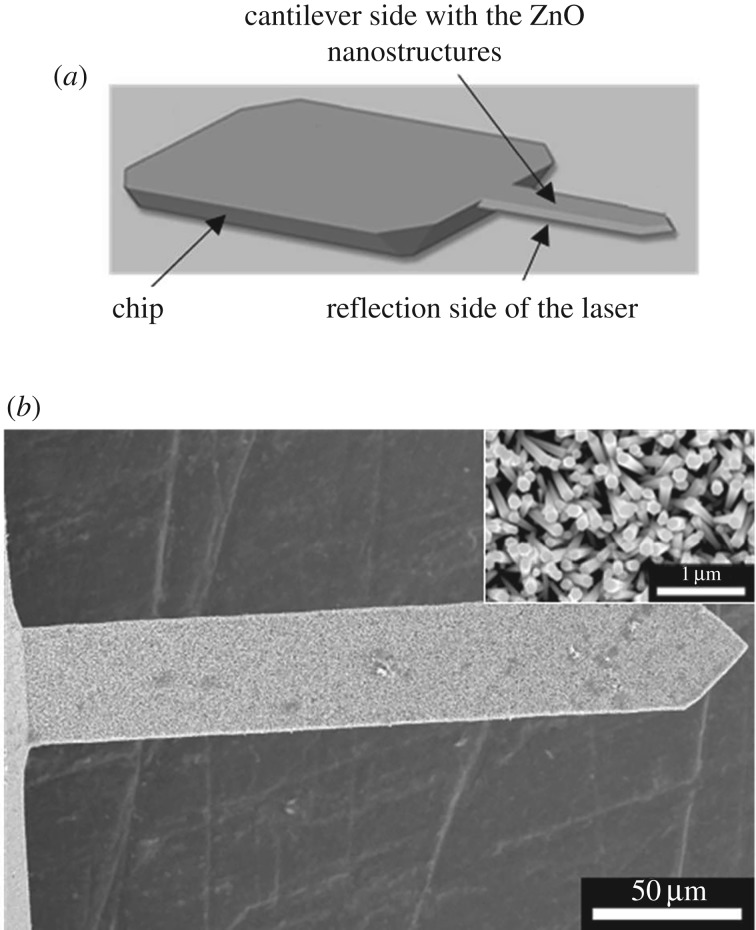
Cantilevers are really promising sensitive sensors despite their small surface. In order to increase this surface and consequently their sensitivity, we nanostructured them with zinc oxide (ZnO) nanorods or nanotubes having a diameter of approximately 100 nm and a length of 1 µm. The nanostructure growth was first optimized on a silicon wafer and then transferred to the cantilevers. The ZnO nanorods were grown in an autoclave. The centre of the nanorods was dissolved in order to obtain nanotubes. The dissolution conditions were optimized in order to have the longest etching depth. After 1.25 h in a dissolution solution containing 0.75 wt% of NH and 0.75 wt% of cetyltrimethyl ammonium bromide, the longest etching depth was obtained. After the transfer of the syntheses to the cantilevers, nanorods/nanotubes grew on both sides of the cantilever, which prevents the reflection of the laser allowing the resonance frequency measurement. A masking procedure was developed in order to avoid the growth on one face of the cantilever of zinc oxide nanostructures. As far as the authors are concerned, for the first time, zinc oxide nanotubes were synthesized on only one face of cantilevers with optical readout.
尽管悬臂梁的表面积较小,但它们仍是很有前景的灵敏传感器。为了增大其表面积并因此提高其灵敏度,我们用直径约为100纳米、长度为1微米的氧化锌(ZnO)纳米棒或纳米管对它们进行了纳米结构化处理。纳米结构的生长首先在硅片上进行优化,然后转移到悬臂梁上。ZnO纳米棒在高压釜中生长。纳米棒的中心被溶解以获得纳米管。对溶解条件进行了优化,以获得最长的蚀刻深度。在含有0.75重量%的NH和0.75重量%的十六烷基三甲基溴化铵的溶解溶液中处理1.25小时后,获得了最长的蚀刻深度。将合成过程转移到悬臂梁上后,纳米棒/纳米管在悬臂梁的两侧生长,这防止了激光的反射,从而可以进行共振频率测量。开发了一种掩膜工艺,以避免氧化锌纳米结构在悬臂梁的一个面上生长。就作者所知,首次在仅悬臂梁的一个面上合成了具有光学读出功能的氧化锌纳米管。