Gómez-Soler Maricel, Cordobilla Begoña, Morató Xavier, Fernández-Dueñas Víctor, Domingo Joan C, Ciruela Francisco
Unitat de Farmacologia, Departament de Patologia i Terapèutica Experimental, Facultat de Medicina, Institut d'Investigació Biomèdica de Bellvitge, Universitat de Barcelona, Barcelona, Spain.
Institut de Neurociències, Universitat de Barcelona, Barcelona, Spain.
Front Neurosci. 2018 Aug 28;12:604. doi: 10.3389/fnins.2018.00604. eCollection 2018.
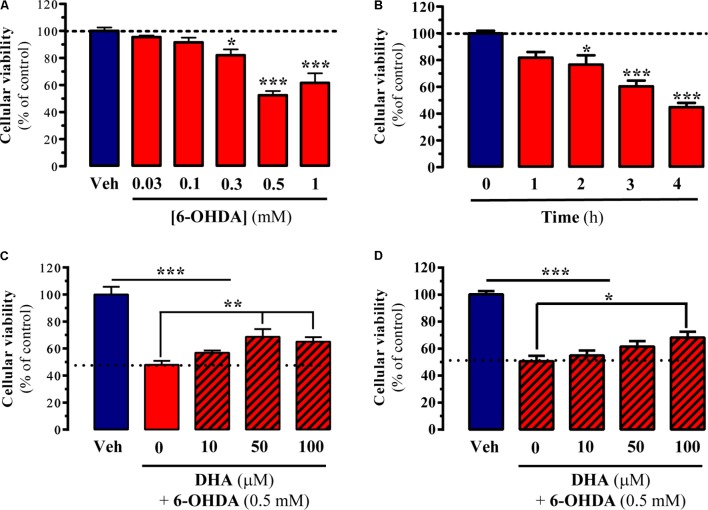
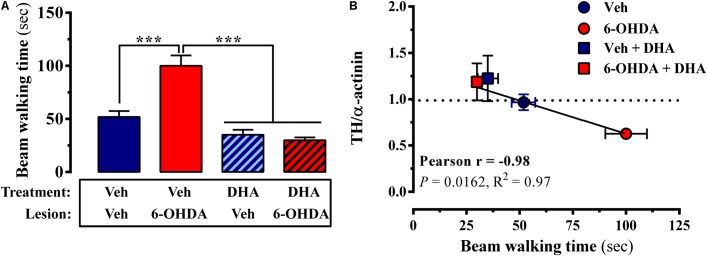
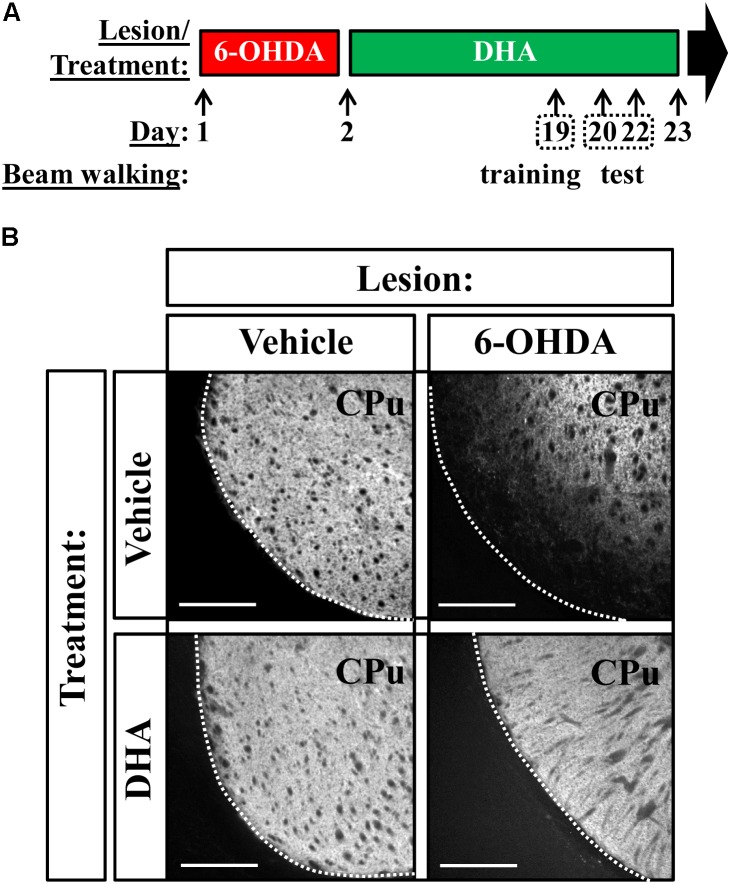
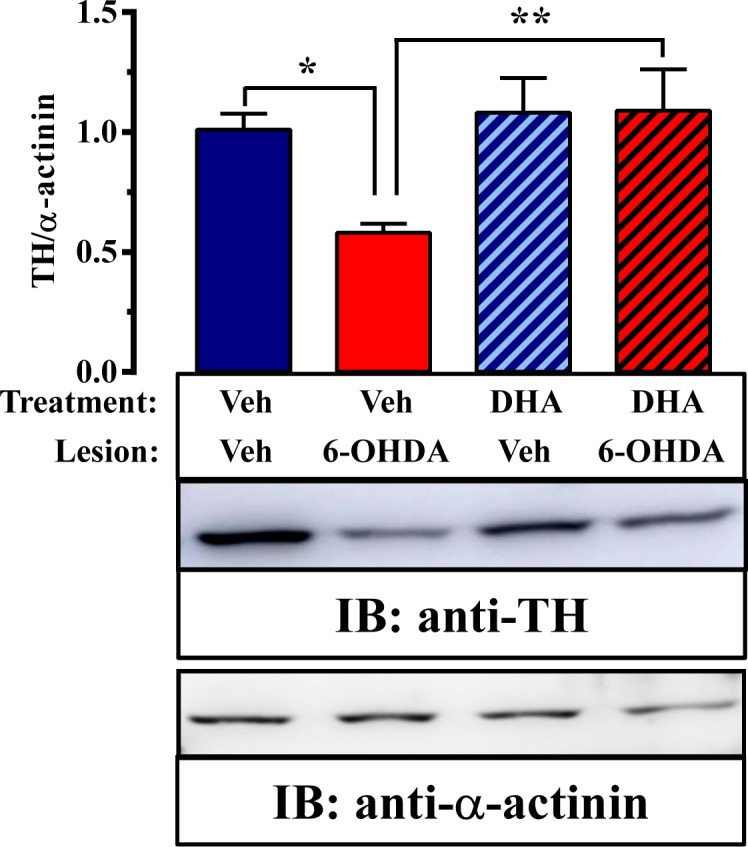
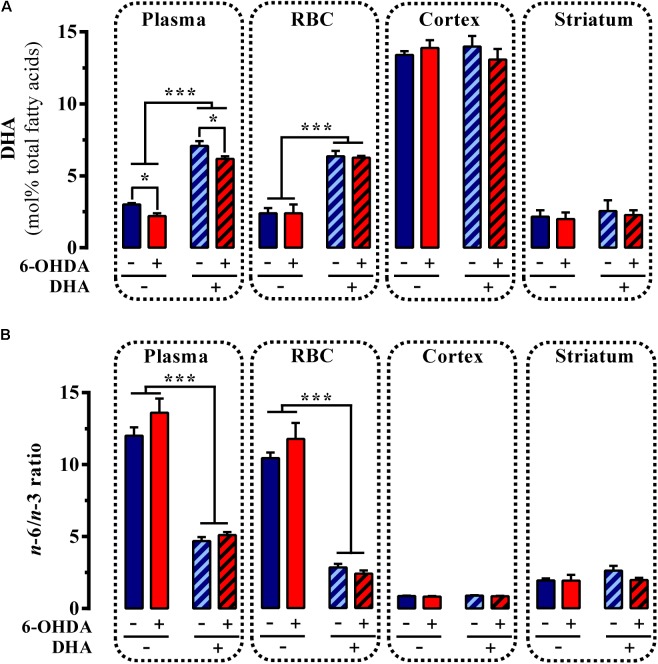
Parkinson's disease (PD) is a neurodegenerative disorder of unknown etiology. The main treatment of PD consists of medication with dopamine-based drugs, which palliate the symptoms but may produce adverse effects after chronic administration. Accordingly, there is a need to develop novel neuroprotective therapies. Several studies suggest that omega-3 polyunsaturated fatty acids (-3 PUFA) might provide protection against brain damage. Here, we studied several experimental models of PD, using striatal neuronal cultures, striatal slices, and mice, to assess the neuroprotective effects of docosahexaenoic acid (DHA), the main -3 PUFA in the brain, administered in its triglyceride form (TG-DHA). Hence, we determined the beneficial effects of TG-DHA on neural viability following 6-hydroxydopamine (6-OHDA)-induced neurotoxicity, a well-established PD model. We also implemented a novel mouse behavioral test, the beam walking test, to finely assess mouse motor skills following dopaminergic denervation. This test showed potential as a useful behavioral tool to assess novel PD treatments. Our results indicated that TG-DHA-mediated neuroprotection was independent of the net incorporation of PUFA into the striatum, thus suggesting a tight control of brain lipid homeostasis both in normal and pathological conditions.
帕金森病(PD)是一种病因不明的神经退行性疾病。PD的主要治疗方法包括使用多巴胺类药物,这些药物可缓解症状,但长期服用可能会产生不良反应。因此,需要开发新的神经保护疗法。多项研究表明,ω-3多不饱和脂肪酸(-3 PUFA)可能对脑损伤具有保护作用。在此,我们使用纹状体神经元培养物、纹状体切片和小鼠等多种PD实验模型,评估了以甘油三酯形式给药的二十二碳六烯酸(DHA,脑中主要的-3 PUFA)的神经保护作用。因此,我们确定了甘油三酯型DHA(TG-DHA)对6-羟基多巴胺(6-OHDA)诱导的神经毒性(一种成熟的PD模型)后神经活力的有益影响。我们还实施了一种新的小鼠行为测试——光束行走测试,以精确评估多巴胺能去神经支配后小鼠的运动技能。该测试显示出作为评估新型PD治疗方法的有用行为工具的潜力。我们的结果表明,TG-DHA介导的神经保护作用与PUFA在纹状体中的净掺入无关,这表明在正常和病理条件下脑脂质稳态都受到严格控制。