Franco Rafael, Aguinaga David, Reyes Irene, Canela Enric I, Lillo Jaume, Tarutani Airi, Hasegawa Masato, Del Ser-Badia Anna, Del Rio José A, Kreutz Michael R, Saura Carlos A, Navarro Gemma
Molecular Neurobiology Laboratory, Department of Biochemistry and Molecular Biomedicine, Universitat de Barcelona, Barcelona, Spain.
Centro de Investigación en Red, Enfermedades Neurodegenerativas (CIBERNED), Instituto de Salud Carlos III, Madrid, Spain.
Front Mol Neurosci. 2018 Aug 28;11:273. doi: 10.3389/fnmol.2018.00273. eCollection 2018.
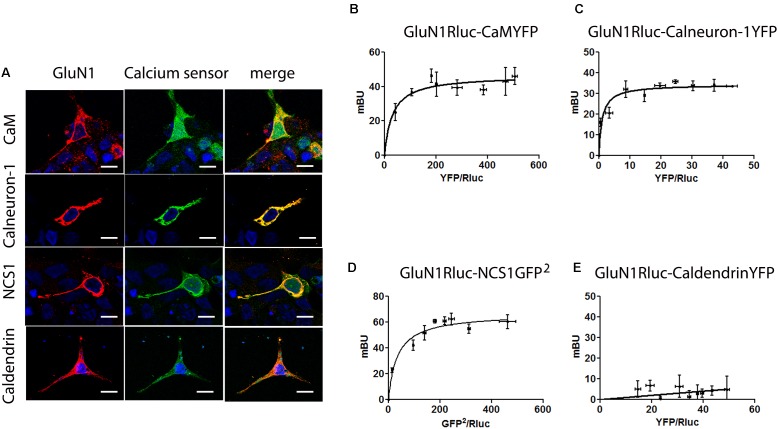
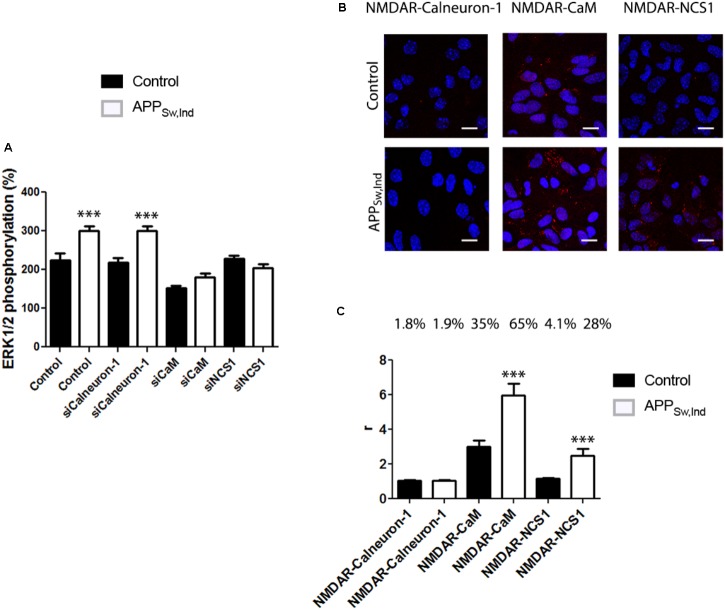
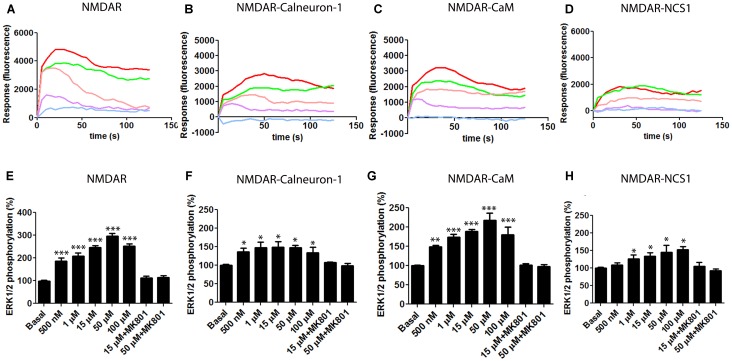
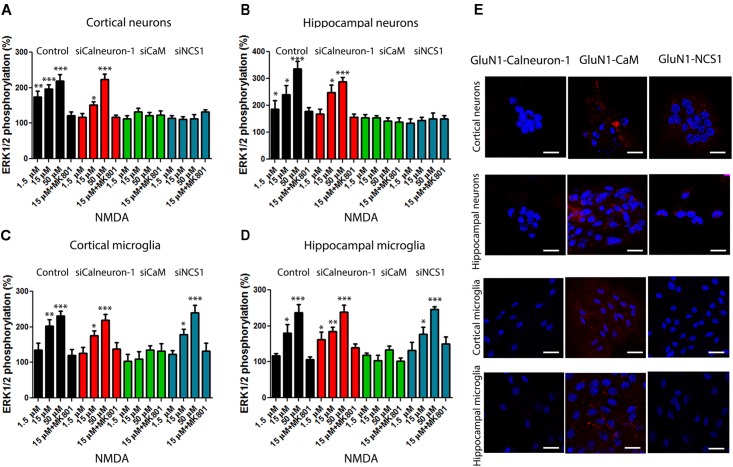
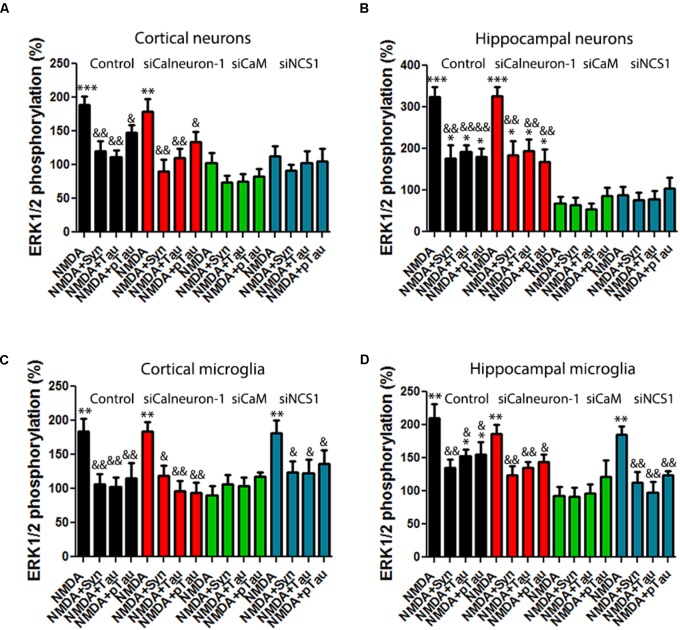
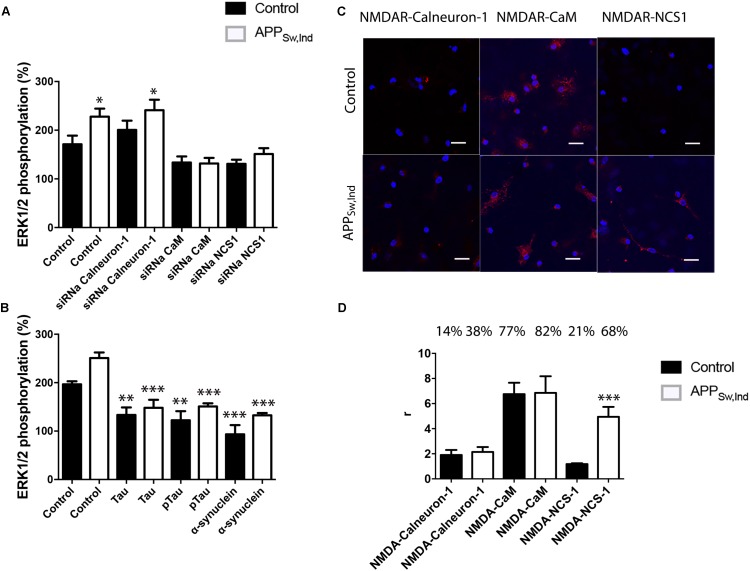
-methyl-D-aspartate receptors (NMDARs) respond to glutamate to allow the influx of calcium ions and the signaling to the mitogen-activated protein kinase (MAPK) cascade. Both MAPK- and Ca-mediated events are important for both neurotransmission and neural cell function and fate. Using a heterologous expression system, we demonstrate that NMDAR may interact with the EF-hand calcium-binding proteins calmodulin, calneuron-1, and NCS1 but not with caldendrin. NMDARs were present in primary cultures of both neurons and microglia from cortex and hippocampus. Calmodulin in microglia, and calmodulin and NCS1 in neurons, are necessary for NMDA-induced MAP kinase pathway activation. Remarkably, signaling to the MAP kinase pathway was blunted in primary cultures of cortical and hippocampal neurons and microglia from wild-type animals by proteins involved in neurodegenerative diseases: α-synuclein, Tau, and p-Tau. A similar blockade by pathogenic proteins was found using samples from the APP transgenic Alzheimer's disease model. Interestingly, a very marked increase in NMDAR-NCS1 complexes was identified in neurons and a marked increase of both NMDAR-NCS1 and NMDAR-CaM complexes was identified in microglia from the transgenic mice. The results show that α-synuclein, Tau, and p-Tau disrupt the signaling of NMDAR to the MAPK pathway and that calcium sensors are important for NMDAR function both in neurons and microglia. Finally, it should be noted that the expression of receptor-calcium sensor complexes, specially those involving NCS1, is altered in neural cells from APP mouse embryos/pups.
N-甲基-D-天冬氨酸受体(NMDARs)对谷氨酸作出反应,使钙离子内流,并向丝裂原活化蛋白激酶(MAPK)级联发出信号。MAPK介导的事件和钙介导的事件对于神经传递以及神经细胞功能和命运都很重要。利用异源表达系统,我们证明NMDAR可能与EF手型钙结合蛋白钙调蛋白、钙神经元-1和NCS1相互作用,但不与钙树突蛋白相互作用。NMDARs存在于来自皮质和海马体的神经元和小胶质细胞的原代培养物中。小胶质细胞中的钙调蛋白以及神经元中的钙调蛋白和NCS1是NMDA诱导的MAP激酶途径激活所必需的。值得注意的是,在野生型动物的皮质和海马体神经元及小胶质细胞的原代培养物中,参与神经退行性疾病的蛋白质:α-突触核蛋白、Tau和p-Tau使向MAP激酶途径的信号传导减弱。使用来自APP转基因阿尔茨海默病模型的样本也发现了致病性蛋白质的类似阻断作用。有趣的是,在转基因小鼠的神经元中发现NMDAR-NCS1复合物显著增加,在小胶质细胞中发现NMDAR-NCS1和NMDAR-CaM复合物均显著增加。结果表明,α-突触核蛋白、Tau和p-Tau破坏了NMDAR向MAPK途径的信号传导,并且钙传感器对于神经元和小胶质细胞中的NMDAR功能都很重要。最后,应该注意的是,受体-钙传感器复合物的表达,特别是那些涉及NCS1的复合物,在APP小鼠胚胎/幼崽的神经细胞中发生了改变。