Institute of Biotechnology, Faculty Environment and Natural Sciences, Brandenburg University of Technology Cottbus-Senftenberg, Senftenberg, Germany.
Department of Biochemistry and Molecular Biology, Faculty of Veterinary Medicine, University of Environmental and Life Sciences, Wroclaw, Poland.
Front Immunol. 2018 Aug 28;9:1959. doi: 10.3389/fimmu.2018.01959. eCollection 2018.
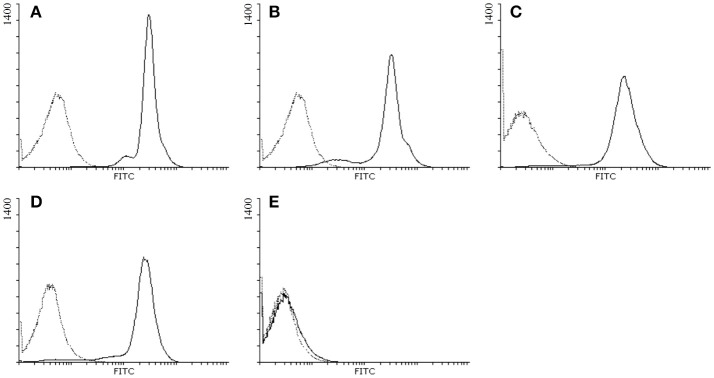
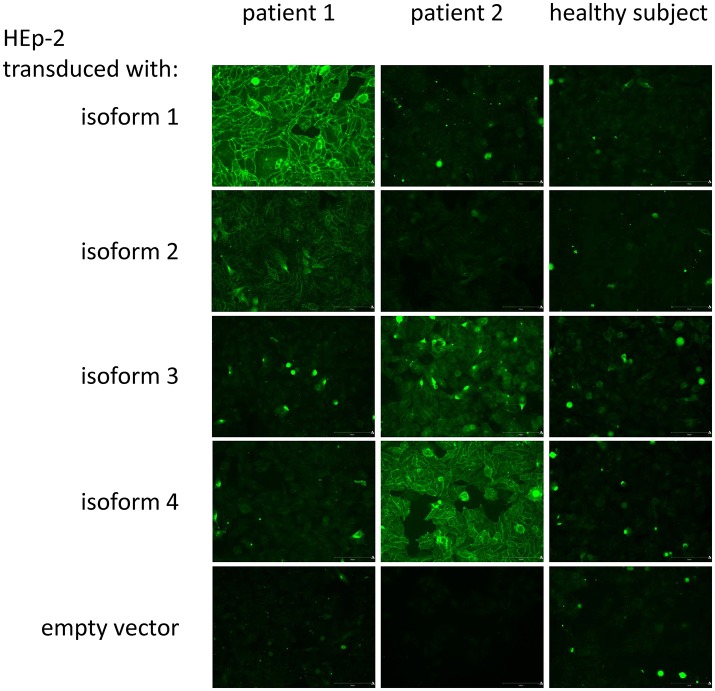
Zymogen granule glycoprotein 2 (GP2) was demonstrated as first autoimmune mucosal target in primary sclerosing cholangitis (PSC) associated with disease severity. Autoantibodies to four GP2 isoforms (aGP2) were found in patients with inflammatory bowel diseases but reactivity against specific GP2 epitopes has not been investigated in PSC yet. Hence, the prevalence of aGP2 and their association with the PSC phenotype for risk prediction were examined. GP2 isoforms were stably expressed as glycosylphosphatidyl - inositol-anchored molecules in the membrane of HEp-2 cells and used as autoantigenic targets in indirect immunofluorescence assay (IFA). aGP2 IgA and IgG were detected by IFA in 212 PSC patients of four European university hospitals and 145 controls comprising 95 patients with cystic fibrosis and 50 healthy subjects. Combined aGP2 and aGP2 IgA testing with a sensitivity of 66.0% and a specificity of 97.9% resulted in the best diagnostic performance (Youden index: 0.64) regarding all aGP2 and combinations thereof. aGP2 IgA positivity is significantly associated with the presence of cirrhosis in PSC ( = 0.0056). Logistic regression revealed the occurrence of aGP2 IgA (odds ratio [OR] 1.38, 95% confidence interval [CI]: 1.03-1.86) and aGP2 IgA (OR 1.52, 95%CI: 1.07-2.15) along with male gender (OR 0.51, 95%CI: 0.27-0.97) and older age (OR 1.03 95%CI: 1.01-1.05) as significant risks for the concomitant presence of cirrhosis in PSC. Combined aGP2 and aGP2 IgA analysis is preferred to single aGP2 isoform analysis for sensitive PSC autoantibody testing. Positivity for aGP2 and aGP2 IgA is associated with cirrhosis in PSC and could be used for risk stratification.
酶原颗粒糖蛋白 2 (GP2) 被证明是原发性硬化性胆管炎 (PSC) 的首个自身免疫性黏膜靶标,与疾病严重程度有关。在炎症性肠病患者中发现了针对四种 GP2 同工型 (aGP2) 的自身抗体,但尚未在 PSC 中研究针对特定 GP2 表位的反应性。因此,本研究检查了 aGP2 的患病率及其与 PSC 表型的关联,以预测风险。GP2 同工型在 HEp-2 细胞的膜中作为糖基磷脂酰肌醇锚定分子稳定表达,并在间接免疫荧光测定 (IFA) 中用作自身抗原靶标。在来自四家欧洲大学医院的 212 名 PSC 患者和 145 名对照者(包括 95 名囊性纤维化患者和 50 名健康受试者)中,通过 IFA 检测到 aGP2 IgA 和 IgG。aGP2 和 aGP2 IgA 的联合检测,敏感性为 66.0%,特异性为 97.9%,对所有 aGP2 和组合的诊断性能最佳(Youden 指数:0.64)。aGP2 IgA 阳性与 PSC 中肝硬化的存在显著相关(= 0.0056)。Logistic 回归显示,aGP2 IgA 的发生(比值比 [OR] 1.38,95%置信区间 [CI]:1.03-1.86)和 aGP2 IgA(OR 1.52,95%CI:1.07-2.15)以及男性(OR 0.51,95%CI:0.27-0.97)和年龄较大(OR 1.03 95%CI:1.01-1.05)是 PSC 中肝硬化同时存在的显著风险因素。与单一的 aGP2 同工型分析相比,联合分析 aGP2 和 aGP2 IgA 更适合用于敏感的 PSC 自身抗体检测。aGP2 和 aGP2 IgA 的阳性与 PSC 中的肝硬化相关,可用于风险分层。