School of Mathematical Sciences and Chemical Engineering, Changzhou Institute of Technology, Changzhou, 213032, China.
Division of Physical Biology and CAS Key Laboratory of Interfacial Physics and Technology, Shanghai Institute of Applied Physics, Chinese Academy of Science, Shanghai, 201800, China.
Sci Rep. 2018 Sep 20;8(1):14093. doi: 10.1038/s41598-018-32322-4.
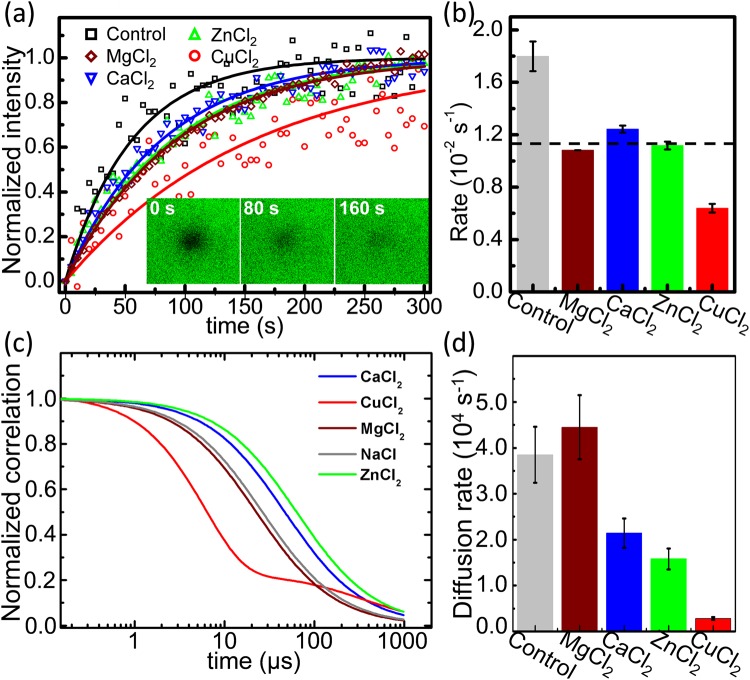
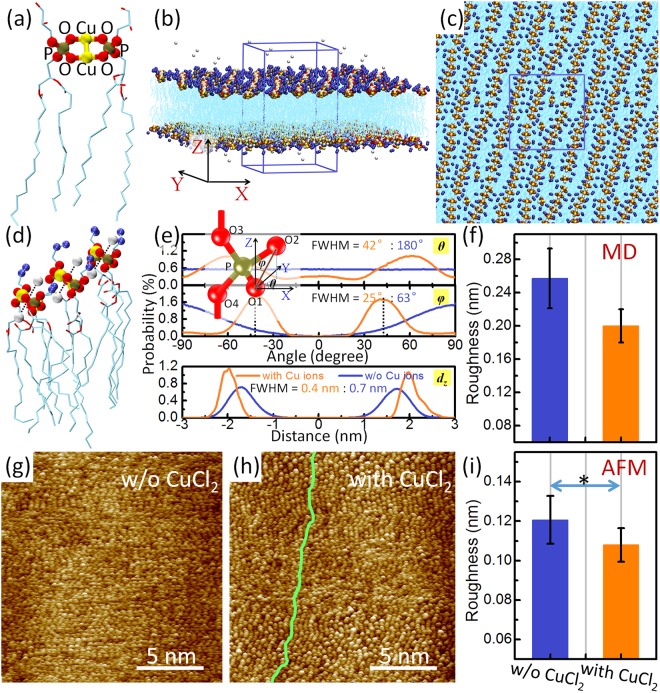
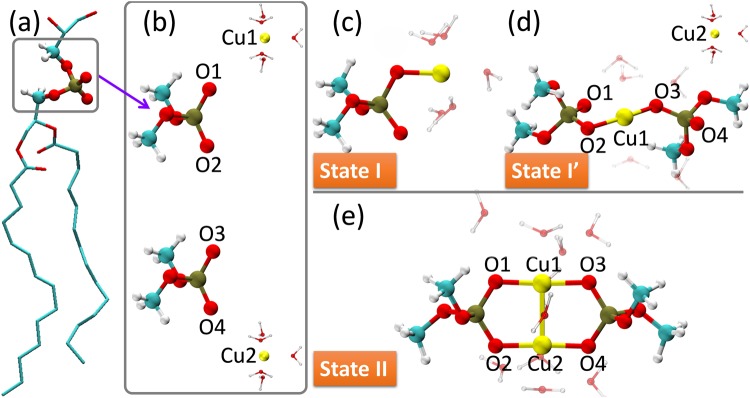
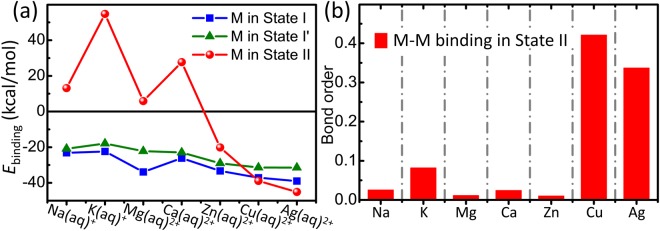
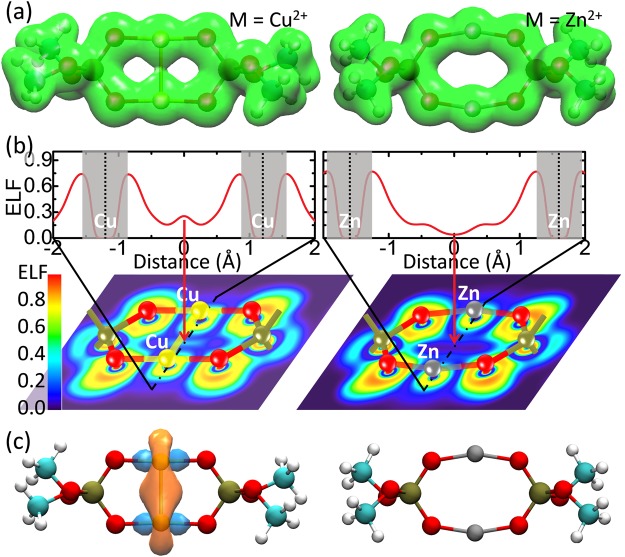
Membrane fluidity, essential for cell functions, is obviously affected by copper, but the molecular mechanism is poorly understood. Here, we unexpectedly observed that a decrease in phospholipid (PL) bilayer fluidity caused by Cu was more significant than those by Zn and Ca, while a comparable reduction occurred in the last two ions. This finding disagrees with the placement in the periodic table of Cu just next to Zn and far from Ca. The physical nature was revealed to be an anomalous attraction between Cu cations, as well as the induced motif of two phospholipids coupled by Cu-Cu bond (PL-diCu-PL). Namely, upon Cu ion binding to a negatively charged phosphate group of lipid, Cu was reduced to Cu. The attraction of the cations then caused one Cu ion simultaneously binding to two lipids and another Cu, resulting in the formation of PL-diCu-PL structure. In contrast, this attraction cannot occur in the cases of Zn and Ca ions. Remarkably, besides lipids, the phosphate group also widely exists in other biological molecules, including DNA, RNA, ADP and ATP. Our findings thus provide a new view for understanding the biological functions of copper and the mechanism underlying copper-related diseases, as well as lipid assembly.
膜流动性对于细胞功能至关重要,显然会受到铜的影响,但分子机制尚不清楚。在这里,我们出人意料地观察到,铜引起的磷脂(PL)双层流动性降低比锌和钙更为显著,而后两种离子则发生了相当程度的降低。这一发现与铜在元素周期表中的位置不符,铜紧邻锌而远离钙。物理性质被揭示为铜阳离子之间的异常吸引力,以及由 Cu-Cu 键(PL-diCu-PL)偶联的两个磷脂的诱导模体。也就是说,当 Cu 离子与脂质的带负电荷的磷酸基团结合时,Cu 被还原为 Cu。然后,阳离子的吸引力导致一个 Cu 离子同时与两个脂质结合,以及另一个 Cu,从而形成 PL-diCu-PL 结构。相比之下,这种吸引力在锌和钙离子的情况下不会发生。值得注意的是,除了脂质,磷酸基团还广泛存在于其他生物分子中,包括 DNA、RNA、ADP 和 ATP。因此,我们的发现为理解铜的生物学功能以及铜相关疾病的机制和脂质组装提供了一个新的视角。