The Division of Critical Care Medicine, Cohen Children's Medical Center, Northwell Health, New Hyde Park, NY, United States.
Department of Pediatrics, Zucker School of Medicine at Hofstra/Northwell, Hempstead, NY, United States.
Front Immunol. 2020 Aug 12;11:1946. doi: 10.3389/fimmu.2020.01946. eCollection 2020.
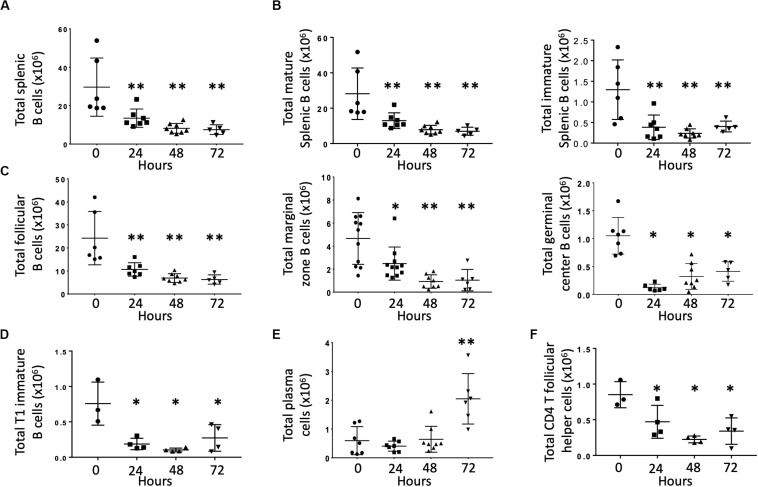
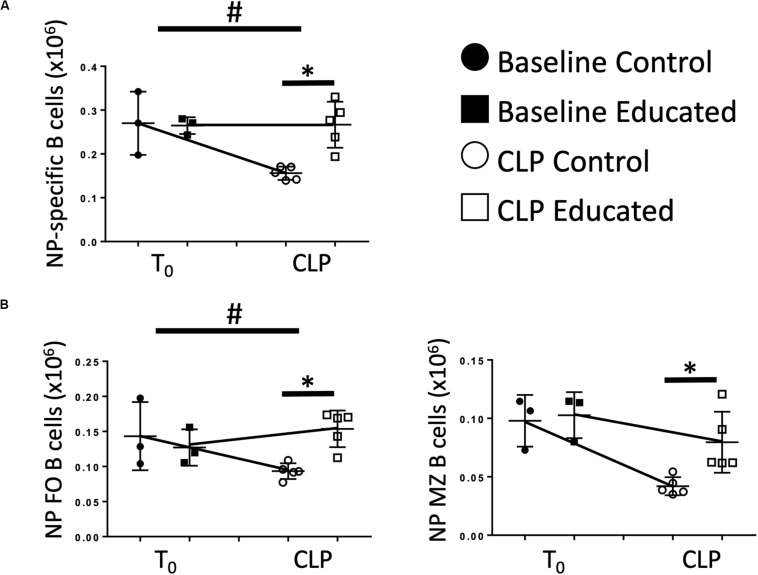
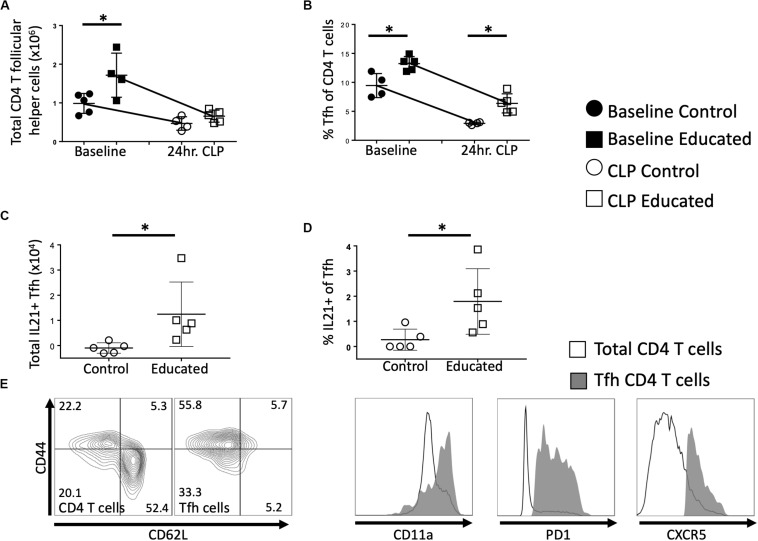
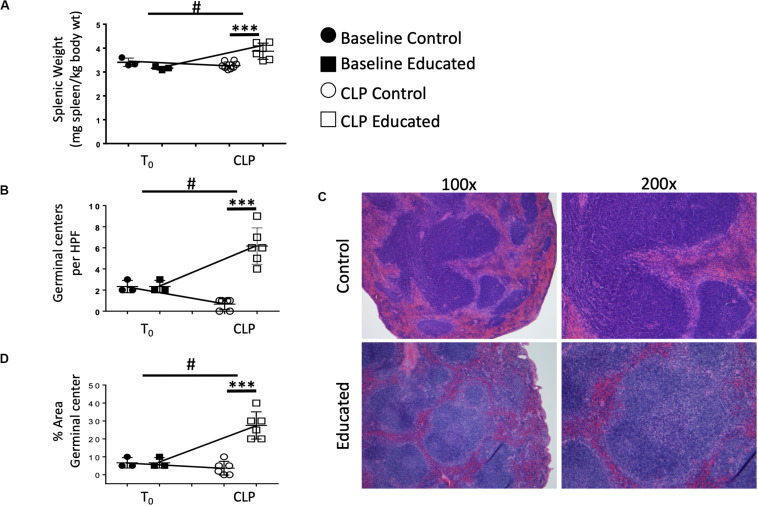
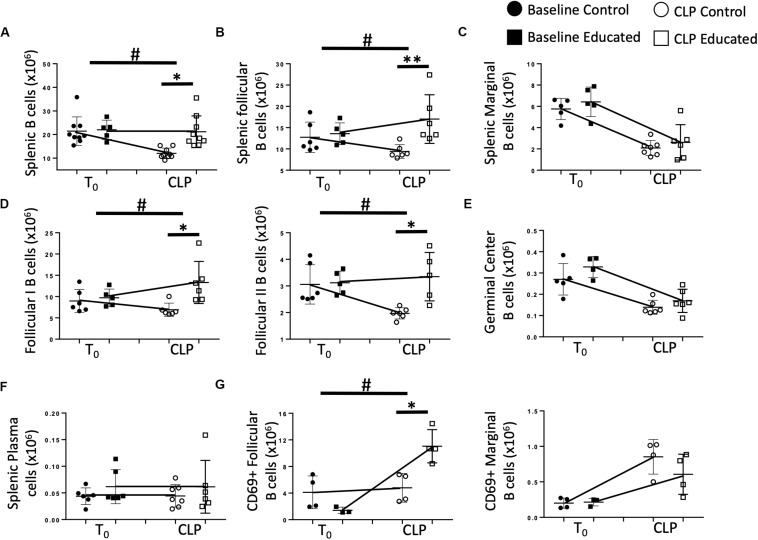
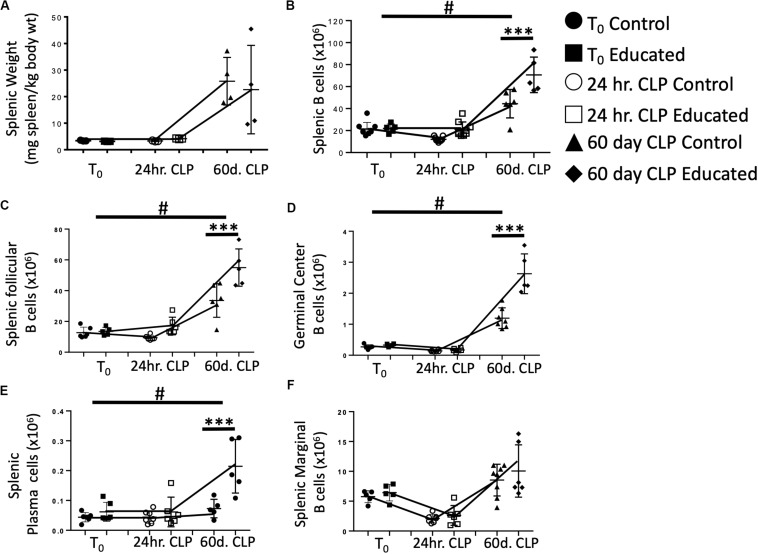
Recent studies have demonstrated that induction of a diverse repertoire of memory T cells ("immune education") affects responses to murine cecal ligation and puncture (CLP), the most widely - used animal model of sepsis. Among the documented effects of immune education on CLP are changes in T cell, macrophage and neutrophil activity, more pronounced organ dysfunction and reduced survival. Little is known, however, about the effects of CLP on B cell responses, and how these responses might be altered by immune education. Importantly, effective B cell responses are modulated by IL21 produced by CD4/CXCR5/PD1 T follicular helper (Tfh) cells. We examined the B cell population in control and immune educated mice 24 h and 60 days after CLP. Education alone increased Tfh cells. Twenty-four hours after CLP, Tfh cells were depleted. However, this reduction was less pronounced in immune educated mice than in controls and the percentage of CD4 T cells expressing a Tfh phenotype increased in the animals. CLP did not alter splenic architecture and decreased numbers of follicular, marginal, and germinal center B cells. CLP induced changes were not, however, noted following CLP in immune educated mice. At 60 days post - CLP, numbers of follicular, germinal center and marginal zone B cells were increased; this increase was more pronounced in immune educated mice. Finally, while CLP reduced the induction of antigen specific B cells in controls, this response was maintained following CLP in immune educated mice. Our data suggest that preexisting Tfh assists in rescuing the B cell response to CLP.
最近的研究表明,诱导多样化的记忆 T 细胞(“免疫教育”)会影响对盲肠结扎和穿刺(CLP)的反应,CLP 是最广泛使用的败血症动物模型。免疫教育对 CLP 的影响包括 T 细胞、巨噬细胞和中性粒细胞活性的变化、更明显的器官功能障碍和存活率降低。然而,关于 CLP 对 B 细胞反应的影响以及免疫教育如何改变这些反应知之甚少。重要的是,由 CD4/CXCR5/PD1 T 滤泡辅助(Tfh)细胞产生的 IL21 调节有效的 B 细胞反应。我们在 CLP 后 24 小时和 60 天检查了对照和免疫教育小鼠中的 B 细胞群。单独的教育会增加 Tfh 细胞。CLP 后 24 小时,Tfh 细胞被耗尽。然而,在免疫教育小鼠中,这种减少不如对照小鼠明显,并且表达 Tfh 表型的 CD4 T 细胞的百分比在动物中增加。CLP 不会改变脾脏结构,并且滤泡、边缘和生发中心 B 细胞的数量减少。然而,在免疫教育小鼠中,CLP 不会引起这些变化。在 CLP 后 60 天,滤泡、生发中心和边缘区 B 细胞的数量增加;在免疫教育小鼠中,这种增加更为明显。最后,虽然 CLP 降低了对照中抗原特异性 B 细胞的诱导,但在免疫教育小鼠中,这种反应在 CLP 后仍能维持。我们的数据表明,预先存在的 Tfh 有助于挽救 CLP 对 B 细胞反应的影响。