State Key Laboratory of Crop Stress Biology for Arid Areas/Shaanxi Key Laboratory of Apple, College of Horticulture, Northwest A & F University, Yangling, 712100, Shaanxi, China.
BMC Genomics. 2018 Sep 25;19(1):707. doi: 10.1186/s12864-018-5097-8.
The FK506-binding proteins (FKBPs) play diverse roles in numerous critical processes for plant growth, development, and abiotic stress responses. However, the FKBP gene family in the important fruit crop apple (Malus × domestica Borkh.) has not been studied as thoroughly as in other species. Our research objective was to investigate the mechanisms by which apple FKBPs enable apple plants to tolerate the effects of abiotic stresses.
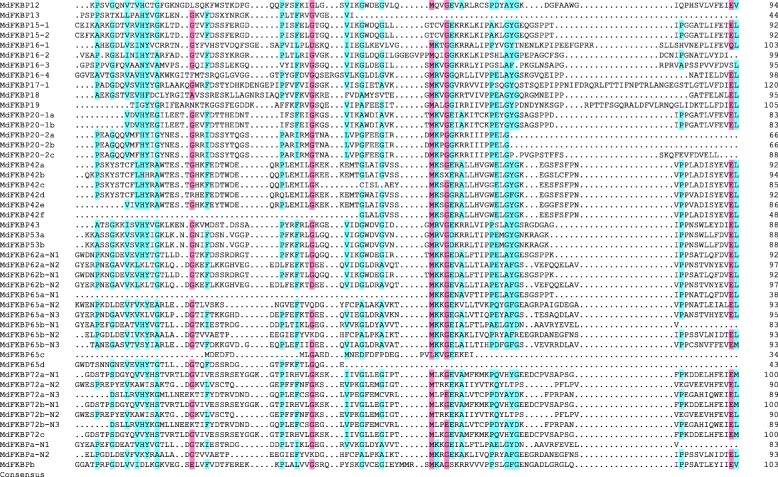
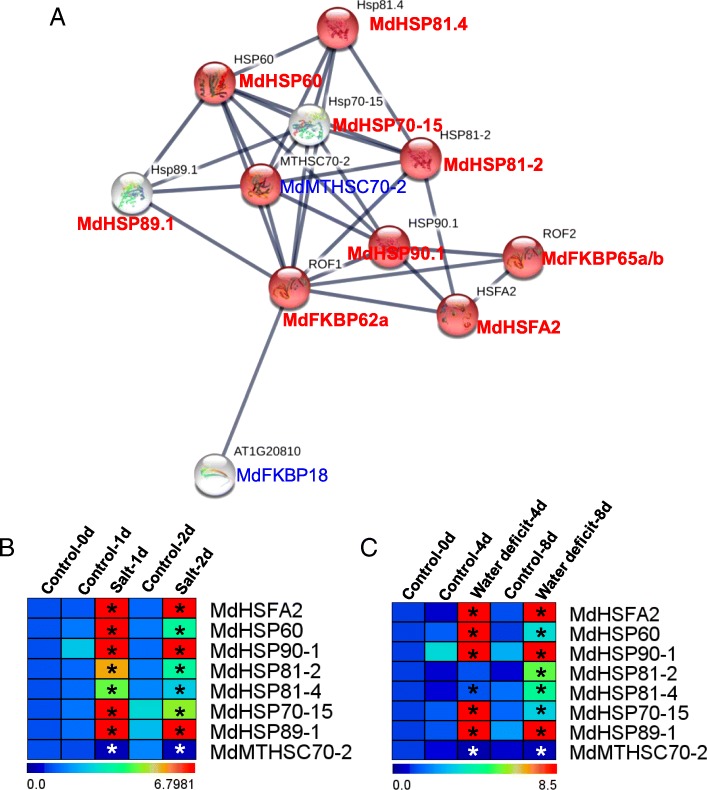
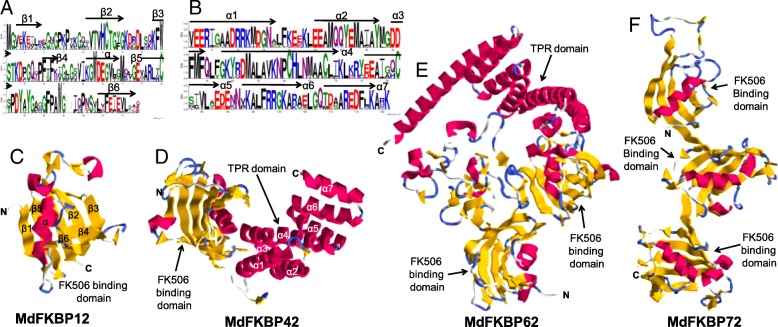
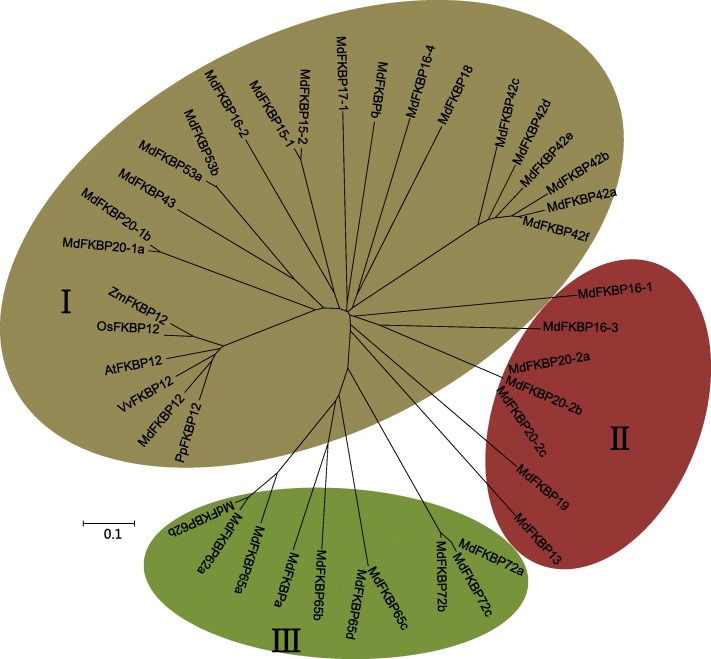
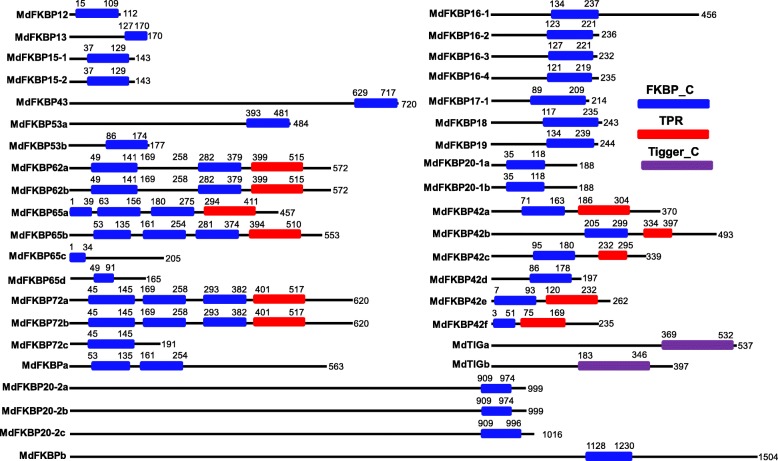
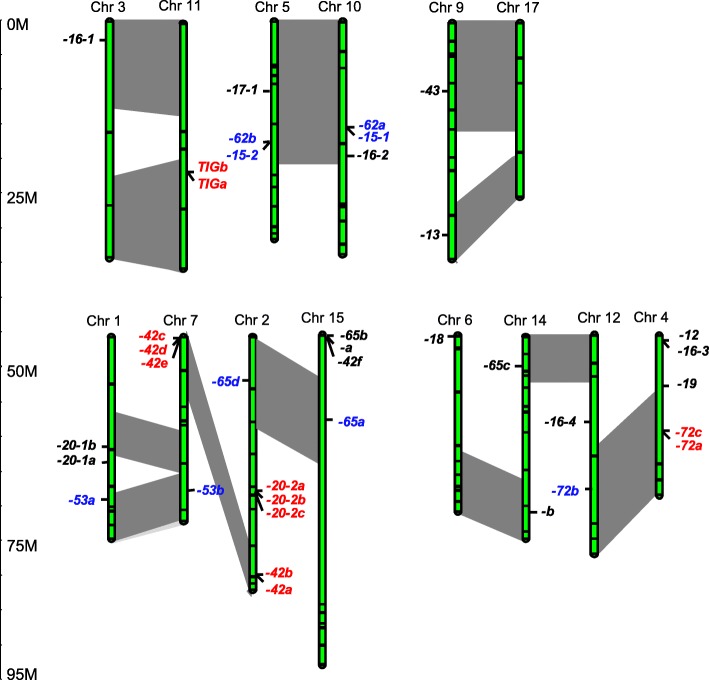
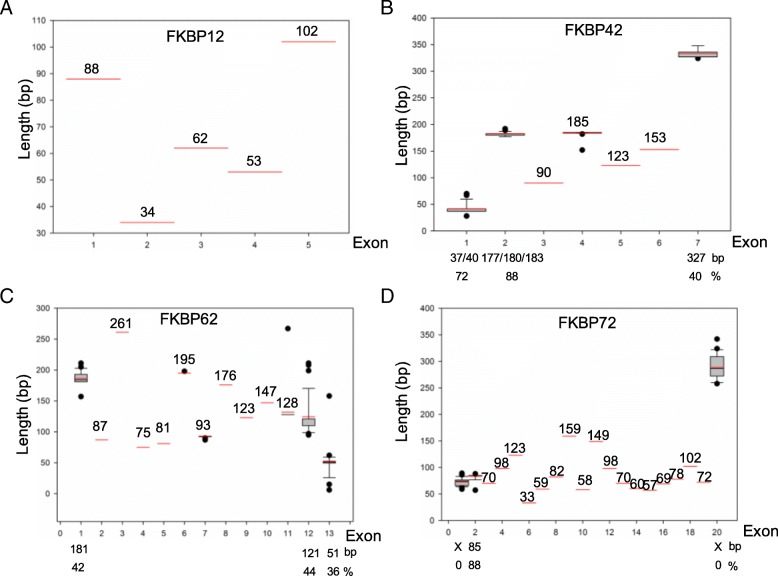
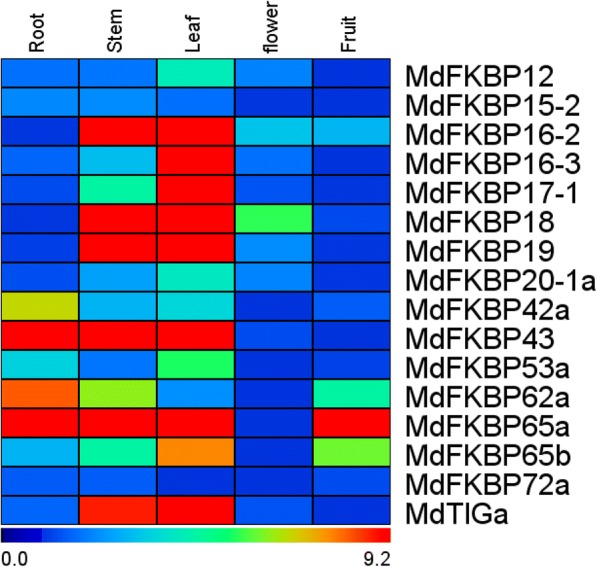
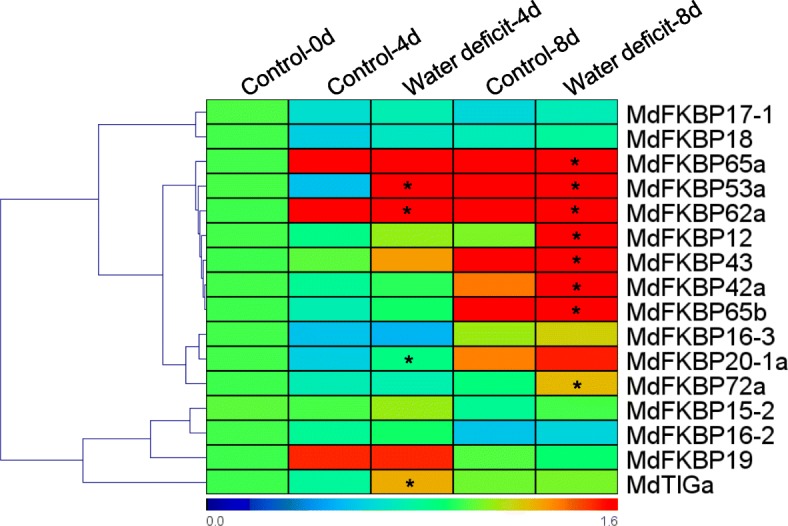
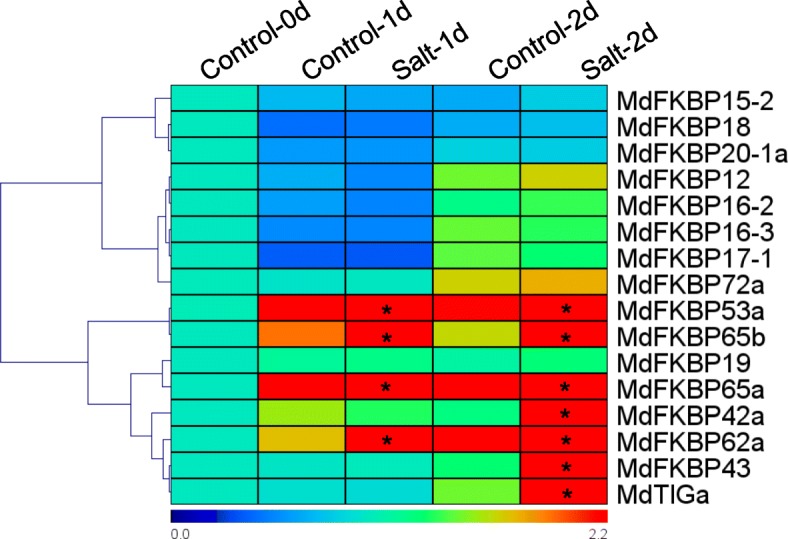
Using bioinformatics-based methods, RT-PCR, and qRT-PCR technologies, we identified 38 FKBP genes and cloned 16 of them in the apple genome. The phylogenetic analysis revealed three major groups within that family. The results from sequence alignments, 3-D structures, phylogenetics, and analyses of conserved domains indicated that apple FKBPs are highly and structurally conserved. Furthermore, genomics structure analysis showed that those genes are also highly and structurally conserved in several other species. Comprehensive qRT-PCR analysis found various expression patterns for MdFKBPs in different tissues and in plant responses to water-deficit and salt stresses. Based on the results from interaction network and co-expression analyses, we determined that the pairing in the MdFKBP62a/MdFKBP65a/b-mediated network is involved in water-deficit and salt-stress signaling, both of which are uniformly up-regulated through interactions with heat shock proteins in apple.
These results provide new insight for further study of FKBP genes and their functions in abiotic stress response and multiple metabolic and physiological processes in apple.
FK506 结合蛋白(FKBP)在植物生长、发育和非生物胁迫反应的众多关键过程中发挥着多样化的作用。然而,在重要的水果作物苹果(Malus × domestica Borkh.)中,FKBP 基因家族的研究还不如其他物种那样深入。我们的研究目的是探讨苹果 FKBP 基因使苹果植物能够耐受非生物胁迫影响的机制。
我们使用基于生物信息学的方法、RT-PCR 和 qRT-PCR 技术,在苹果基因组中鉴定了 38 个 FKBP 基因,并克隆了其中的 16 个。系统发育分析显示该家族中有三个主要的分支。序列比对、3-D 结构、系统发生和保守结构域分析的结果表明,苹果 FKBP 高度且结构上保守。此外,基因组结构分析表明,这些基因在其他几个物种中也高度且结构上保守。综合 qRT-PCR 分析发现,MdFKBPs 在不同组织中的表达模式以及在植物对水分亏缺和盐胁迫的响应中存在各种差异。基于互作网络和共表达分析的结果,我们确定 MdFKBP62a/MdFKBP65a/b 介导的网络中的配对参与了水分亏缺和盐胁迫信号转导,这两个过程都通过与苹果中的热休克蛋白相互作用而均匀地上调。
这些结果为进一步研究 FKBP 基因及其在苹果非生物胁迫响应和多种代谢及生理过程中的功能提供了新的见解。