Huang Yue, Yang Xiao-Lin, Ni Yi-Hua, Xu Zheng-Min
Department of Otolaryngology-Head and Neck Surgery, Children's Hospital of Fudan University, Shanghai, China,
Drug Des Devel Ther. 2018 Sep 11;12:2897-2903. doi: 10.2147/DDDT.S145702. eCollection 2018.
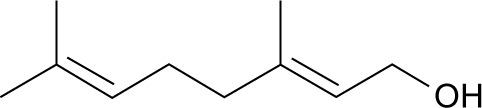
Geraniol is a monoterpene alcohol that has anti-fungal, anti-cancer and anti-nociceptive properties, but its anti-allergic rhinitis (AR) property is unclear.
In this study, the anti-inflammatory role and its possible mechanisms of geraniol in human mast cell line (HMC-1) cells stimulated by inflammatory trigger phorbol 12-myristate 13-acetate plus A23187 (PMACI), as well as in ovalbumin (OVA)-induced AR mice models were investigated.
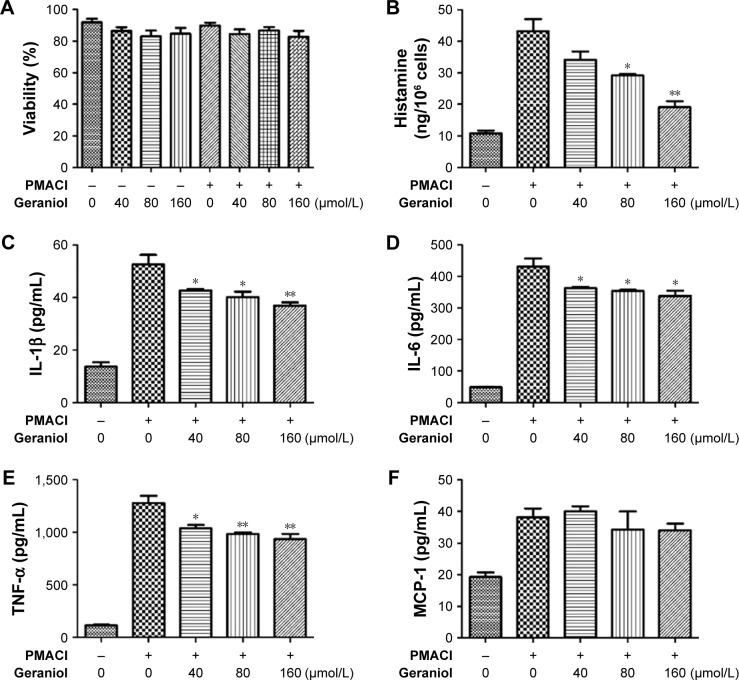
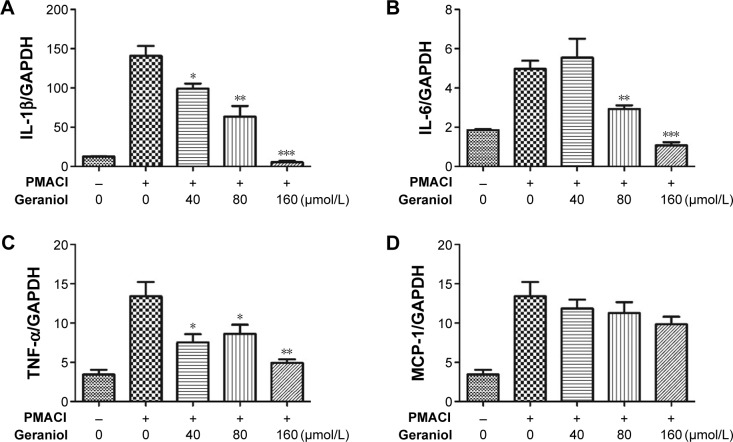
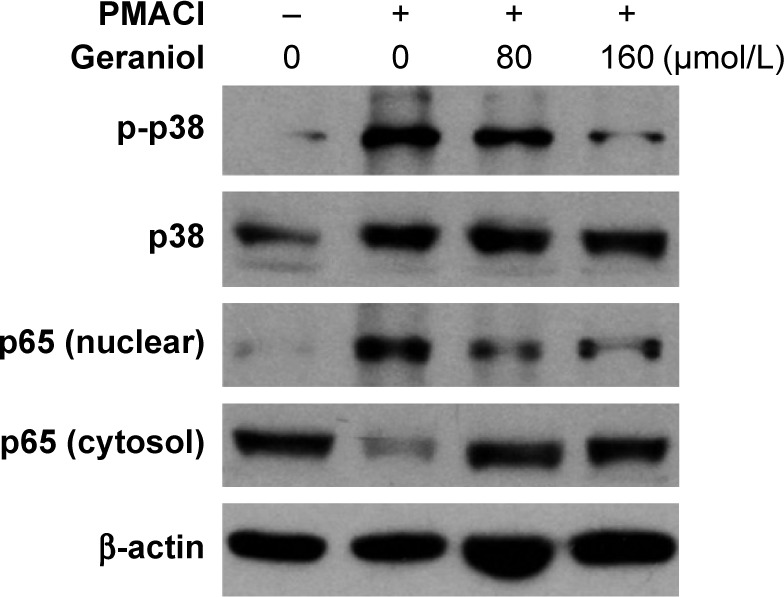
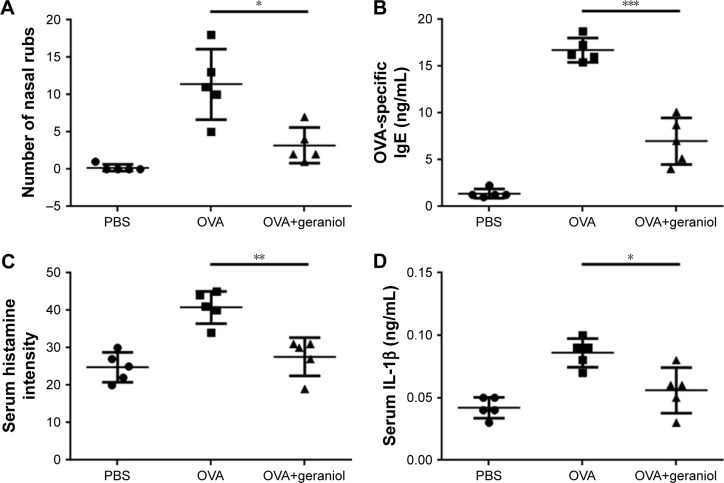
PMACI results in a significant increase in the production of proinflammatory cytokines, such as TNF-α, IL-1β, MCP-1, IL-6 and as well as histamine. Geraniol was found to inhibit both TNF-α, IL-1β and IL-6 protein and mRNA expressions at concentrations of 40, 80, 160 μM. In OVA-induced AR models, geraniol treatment was able to suppress AR biomarkers (OVA-specific IgE and IL-1β as well as histamine) and nasal rub scores. Interestingly, p38, a member of the mitogen-activated protein kinase (MAPK) signaling family, was found to be increasingly hypophosphorylated as geraniol dose was increased. Similar decreases in the nuclear level of p65, a member of the nuclear factor kappa B (NF-κB) signaling pathway, were also observed.
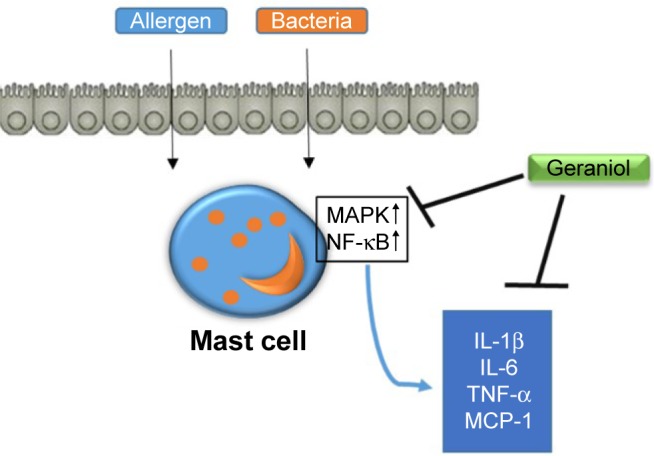
Our data highlights that the anti-inflammatory properties of geraniol on AR-related markers in activated HCM-1 cells and OVA-induced AR models may be mediated through the regulation of the MAPK/NF-κB signaling pathway.
香叶醇是一种单萜醇,具有抗真菌、抗癌和抗伤害感受特性,但其抗过敏性鼻炎(AR)特性尚不清楚。
在本研究中,研究了香叶醇在由炎症触发剂佛波醇12-肉豆蔻酸酯13-乙酸酯加A23187(PMACI)刺激的人肥大细胞系(HMC-1)细胞中以及在卵清蛋白(OVA)诱导的AR小鼠模型中的抗炎作用及其可能机制。
PMACI导致促炎细胞因子如TNF-α、IL-1β、MCP-1、IL-6以及组胺的产生显著增加。发现香叶醇在浓度为40、80、160μM时可抑制TNF-α、IL-1β和IL-6的蛋白质和mRNA表达。在OVA诱导的AR模型中,香叶醇治疗能够抑制AR生物标志物(OVA特异性IgE、IL-1β以及组胺)和鼻擦得分。有趣的是,发现丝裂原活化蛋白激酶(MAPK)信号家族成员p38随着香叶醇剂量增加而磷酸化程度降低。在核因子κB(NF-κB)信号通路成员p65的核水平上也观察到类似的降低。
我们的数据表明,香叶醇对活化的HCM-1细胞和OVA诱导的AR模型中AR相关标志物的抗炎特性可能通过调节MAPK/NF-κB信号通路介导。