Xourgia Eleni, Papazafiropoulou Athanasia, Melidonis Andreas
1 Department of Internal Medicine and Diabetes Center, Tzaneio General Hospital of Piraeus, Athens 18536, Greece.
World J Diabetes. 2018 Sep 15;9(9):141-148. doi: 10.4239/wjd.v9.i9.141.
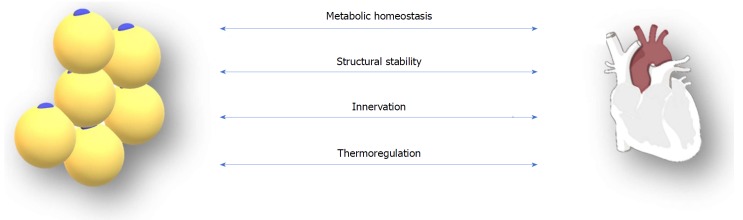
Epicardial adipose tissue is defined as a deposit of adipocytes with pathophysiological properties similar to those of visceral fat, located in the space between the myocardial muscle and the pericardial sac. When compared with subcutaneous adipose tissue, visceral adipocytes show higher metabolic activity, lipolysis rates, increased insulin resistance along with more steroid hormone receptors. The epicardial adipose tissue interacts with numerous cardiovascular pathways vasocrine and paracrine signalling comprised of pro- and anti-inflammatory cytokines excretion. Both the physiological differences between the two tissue types, as well as the fact that fat distribution and phenotype, rather than quantity, affect cardiovascular function and metabolic processes, establish epicardial fat as a biomarker for cardiovascular and metabolic syndrome. Numerous studies have underlined an association of altered epicardial fat morphology, type 2 diabetes mellitus (T2DM) and adverse cardiovascular events. In this review, we explore the prospect of using the epicardial adipose tissue as a therapeutic target in T2DM and describe the underlying mechanisms by which the antidiabetic drugs affect the pathophysiological processes induced from adipose tissue accumulation and possibly allow for more favourable cardiovascular outcomes though epicardial fat manipulation.
心外膜脂肪组织被定义为位于心肌与心包囊之间间隙的、具有与内脏脂肪相似病理生理特性的脂肪细胞沉积物。与皮下脂肪组织相比,内脏脂肪细胞表现出更高的代谢活性、脂肪分解率、更高的胰岛素抵抗以及更多的类固醇激素受体。心外膜脂肪组织通过由促炎和抗炎细胞因子分泌组成的多种心血管途径(血管分泌和旁分泌信号传导)相互作用。两种组织类型之间的生理差异,以及脂肪分布和表型而非数量影响心血管功能和代谢过程这一事实,使心外膜脂肪成为心血管和代谢综合征的生物标志物。大量研究强调了心外膜脂肪形态改变、2型糖尿病(T2DM)与不良心血管事件之间的关联。在本综述中,我们探讨了将心外膜脂肪组织用作T2DM治疗靶点的前景,并描述了抗糖尿病药物影响脂肪组织堆积所诱导的病理生理过程的潜在机制,以及通过心外膜脂肪操纵可能实现更有利的心血管结局的机制。