Rheumatology Research Group, Institute of Inflammation and Ageing, University of Birmingham, Birmingham, United Kingdom.
Experimental Medicine Unit, Immuno-Inflammation Therapeutic Area, GSK Medicines Research Centre, Stevenage, United Kingdom.
Front Immunol. 2018 Sep 12;9:1952. doi: 10.3389/fimmu.2018.01952. eCollection 2018.
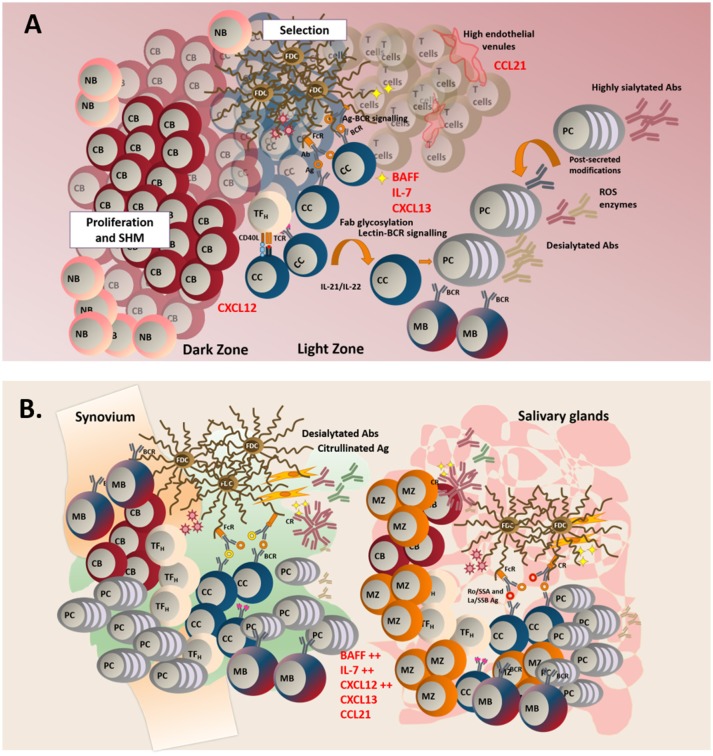
Tertiary lymphoid structures (TLS) are frequently observed in target organs of autoimmune diseases. TLS present features of secondary lymphoid organs such as segregated T and B cell zones, presence of follicular dendritic cell networks, high endothelial venules and specialized lymphoid fibroblasts and display the mechanisms to support local adaptive immune responses toward locally displayed antigens. TLS detection in the tissue is often associated with poor prognosis of disease, auto-antibody production and malignancy development. This review focuses on the contribution of TLS toward the persistence of the inflammatory drive, the survival of autoreactive lymphocyte clones and post-translational modifications, responsible for the pathogenicity of locally formed autoantibodies, during autoimmune disease development.
三级淋巴结构(TLS)在自身免疫性疾病的靶器官中经常被观察到。TLS 呈现出次级淋巴器官的特征,如分隔的 T 和 B 细胞区、滤泡树突状细胞网络的存在、高内皮静脉和专门的淋巴成纤维细胞,并显示出支持针对局部表达抗原的局部适应性免疫反应的机制。TLS 在组织中的检测常与疾病的不良预后、自身抗体的产生和恶性肿瘤的发展相关。本综述重点关注 TLS 在自身免疫性疾病发展过程中对炎症驱动的持续存在、自身反应性淋巴细胞克隆的存活以及负责局部形成的自身抗体致病性的翻译后修饰的贡献。