Institute of Psychology, Leiden University, Wassenaarseweg 52, 2333 AK Leiden, The Netherlands; Department of Psychiatry, Leiden University Medical Center, Albinusdreef 2, 2333 ZA Leiden, The Netherlands; Leiden Institute for Brain and Cognition, Leiden, The Netherlands.
Institute of Psychology, Leiden University, Wassenaarseweg 52, 2333 AK Leiden, The Netherlands; Leiden Institute for Brain and Cognition, Leiden, The Netherlands.
EBioMedicine. 2018 Oct;36:410-428. doi: 10.1016/j.ebiom.2018.08.048. Epub 2018 Sep 25.
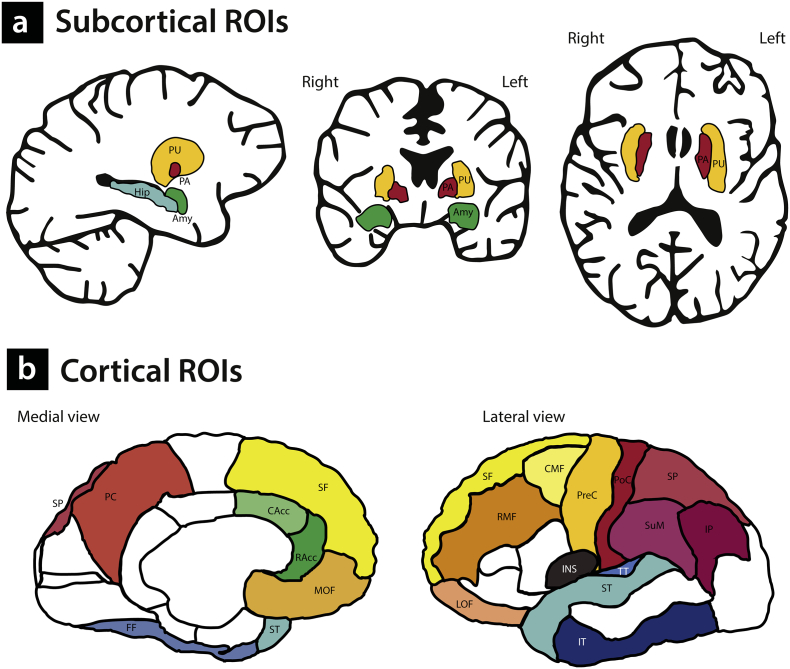
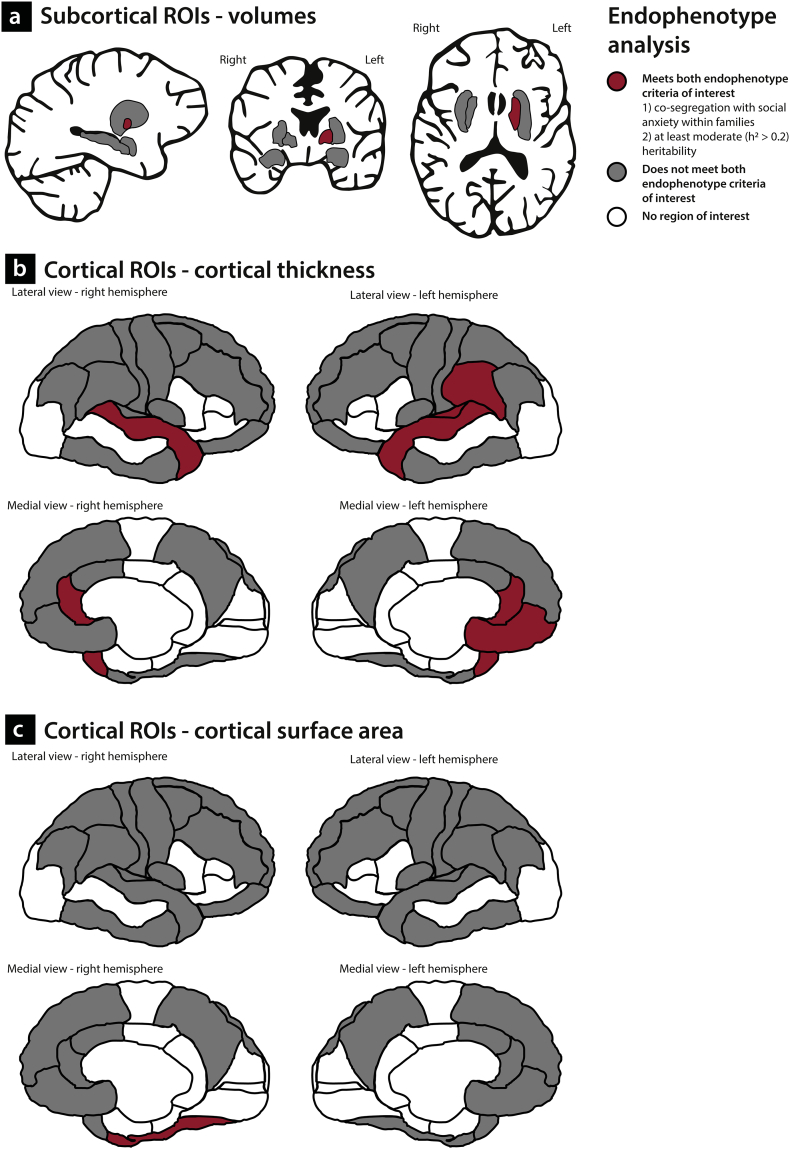
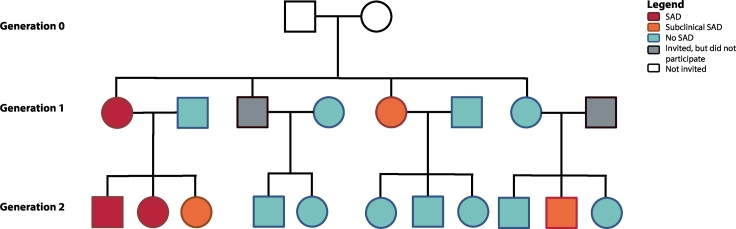
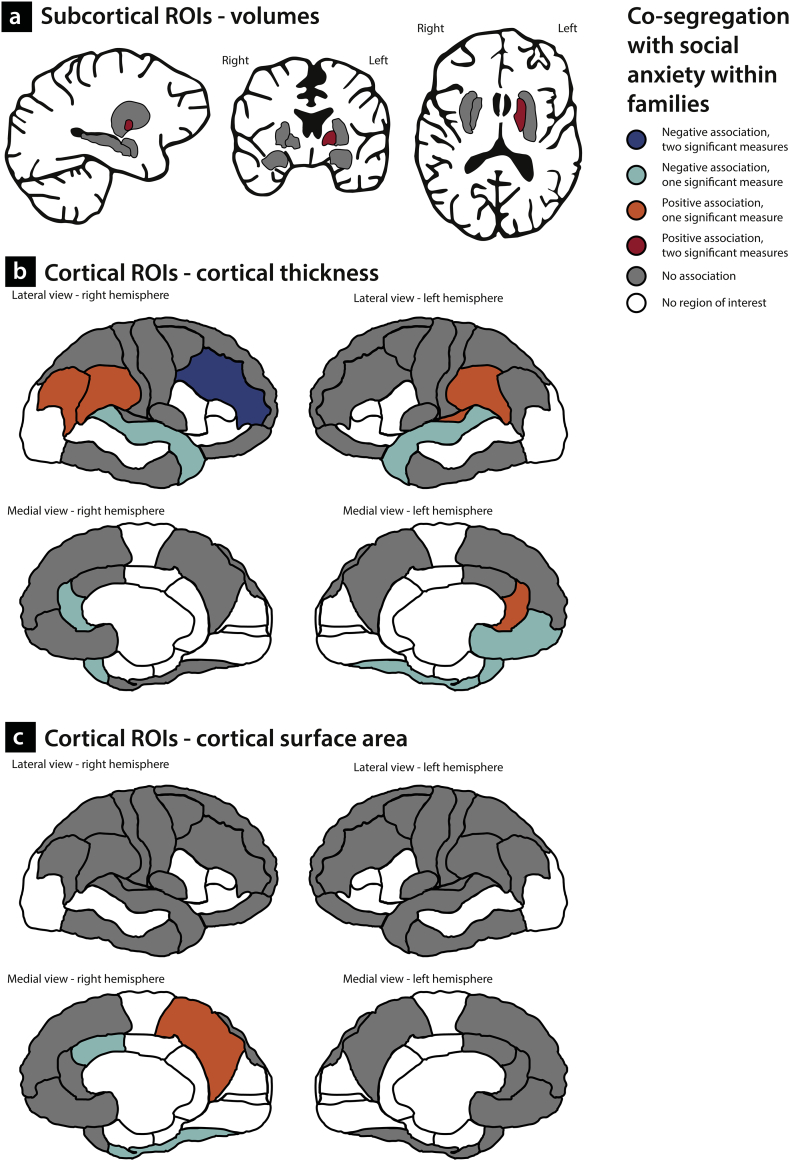
Social anxiety disorder (SAD) is a disabling psychiatric condition with a genetic background. Brain alterations in gray matter (GM) related to SAD have been previously reported, but it remains to be elucidated whether GM measures are candidate endophenotypes of SAD. Endophenotypes are measurable characteristics on the causal pathway from genotype to phenotype, providing insight in genetically-based disease mechanisms. Based on a review of existing evidence, we examined whether GM characteristics meet two endophenotype criteria, using data from a unique sample of SAD-patients and their family-members of two generations. First, we investigated whether GM characteristics co-segregate with social anxiety within families genetically enriched for SAD. Secondly, heritability of the GM characteristics was estimated.
Families with a genetic predisposition for SAD participated in the Leiden Family Lab study on SAD; T1-weighted MRI brain scans were acquired (n = 110, 8 families). Subcortical volumes, cortical thickness and cortical surface area were determined for a-priori determined regions of interest (ROIs). Next, associations with social anxiety and heritabilities were estimated.
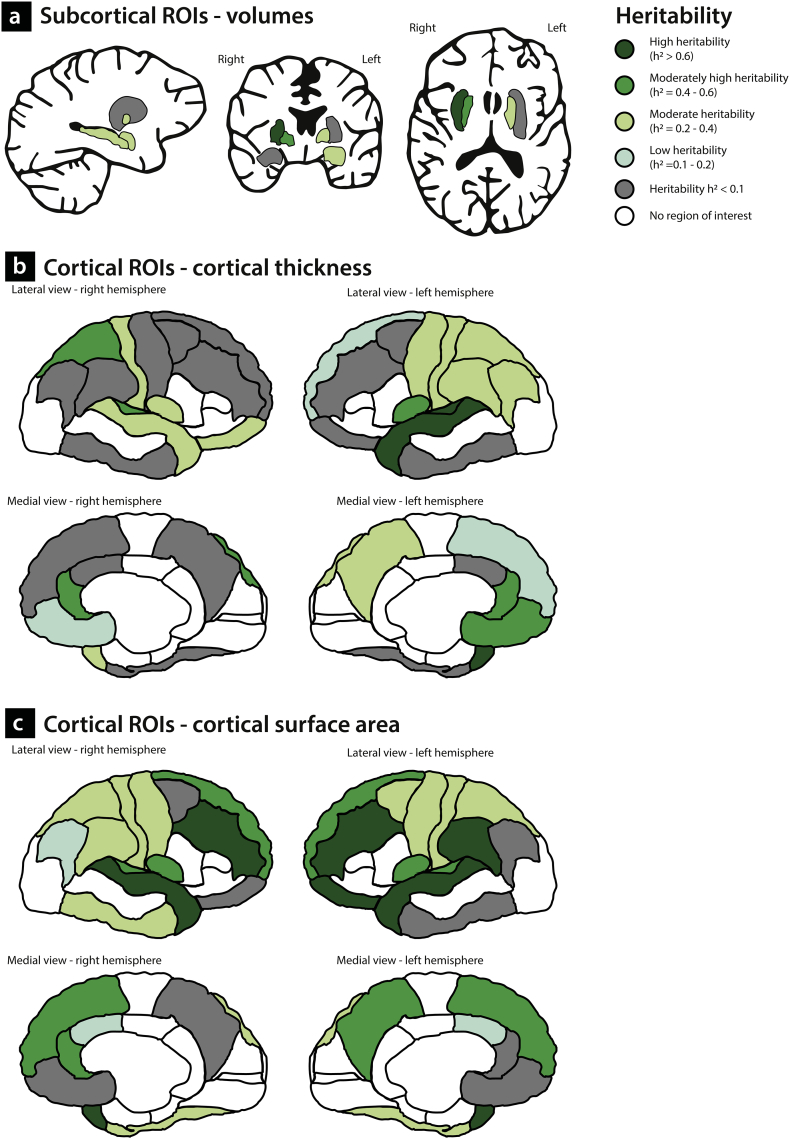
Several subcortical and cortical GM characteristics, derived from frontal, parietal and temporal ROIs, co-segregated with social anxiety within families (uncorrected p-level) and showed moderate to high heritability.
These findings provide preliminary evidence that GM characteristics of multiple ROIs, which are distributed over the brain, are candidate endophenotypes of SAD. Thereby, they shed light on the genetic vulnerability for SAD. Future research is needed to confirm these results and to link them to functional brain alterations and to genetic variations underlying these GM changes. FUND: Leiden University Research Profile 'Health, Prevention and the Human Life Cycle'.
社交焦虑障碍(SAD)是一种具有遗传背景的致残性精神疾病。先前已有研究报道与 SAD 相关的大脑灰质(GM)改变,但仍需阐明 GM 测量是否是 SAD 的候选内表型。内表型是从基因型到表型的因果途径上可测量的特征,可深入了解基于遗传的疾病机制。基于对现有证据的回顾,我们使用来自 SAD 患者及其两代家族成员的独特样本数据,检查了 GM 特征是否符合两个内表型标准。首先,我们研究了 GM 特征是否与遗传上富含 SAD 的家庭中的社交焦虑共分离。其次,估计了 GM 特征的遗传性。
具有 SAD 遗传易感性的家庭参加了莱顿家族 SAD 实验室研究;获得了 T1 加权 MRI 脑扫描(n=110,8 个家庭)。从前定的感兴趣区(ROI)确定了皮质下体积、皮质厚度和皮质表面积。接下来,估计了与社交焦虑的关联和遗传性。
几个来自额叶、顶叶和颞叶 ROI 的皮质下和皮质 GM 特征与家庭内的社交焦虑共分离(未校正的 p 值),并显示出中度到高度的遗传性。
这些发现初步表明,分布在大脑中的多个 ROI 的 GM 特征是 SAD 的候选内表型。从而,它们揭示了 SAD 的遗传易感性。需要进一步的研究来证实这些结果,并将其与功能脑改变以及这些 GM 变化背后的遗传变异联系起来。基金:莱顿大学研究项目“健康、预防和人类生命周期”。