Department of Theoretical Foundations of Bio-Medical Science and Medical Informatics, Collegium Medicum, Nicolaus Copernicus University, 85-067, Bydgoszcz, Poland.
Department and Clinic of Emergency Medicine, Wroclaw Medical University, Wroclaw, 50-556, Poland.
Sci Rep. 2018 Sep 28;8(1):14554. doi: 10.1038/s41598-018-32718-2.
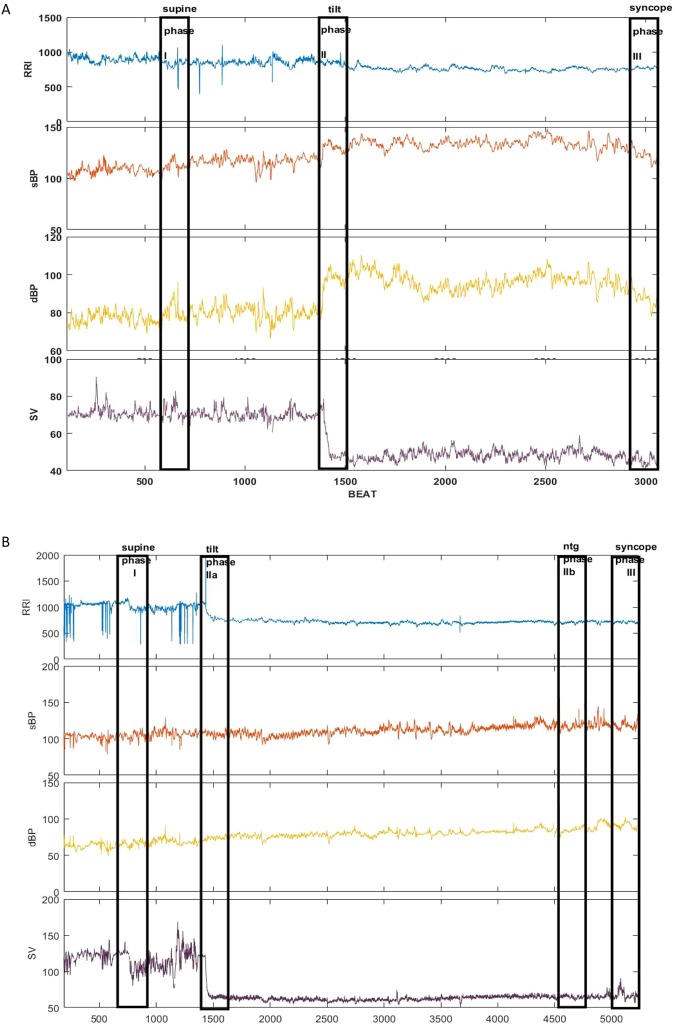
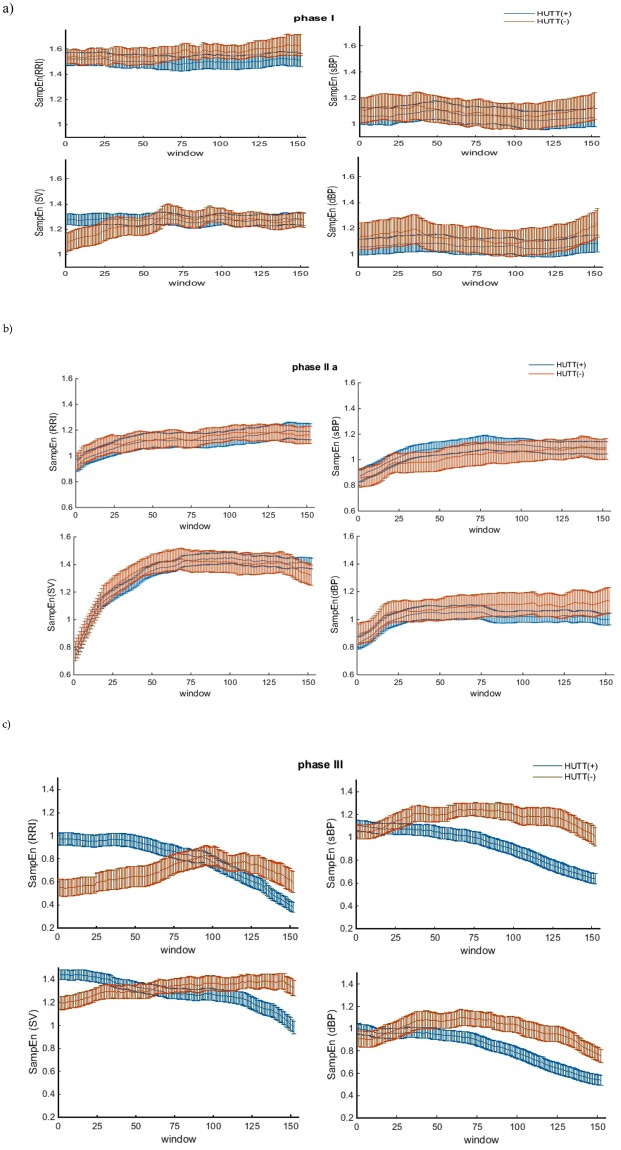
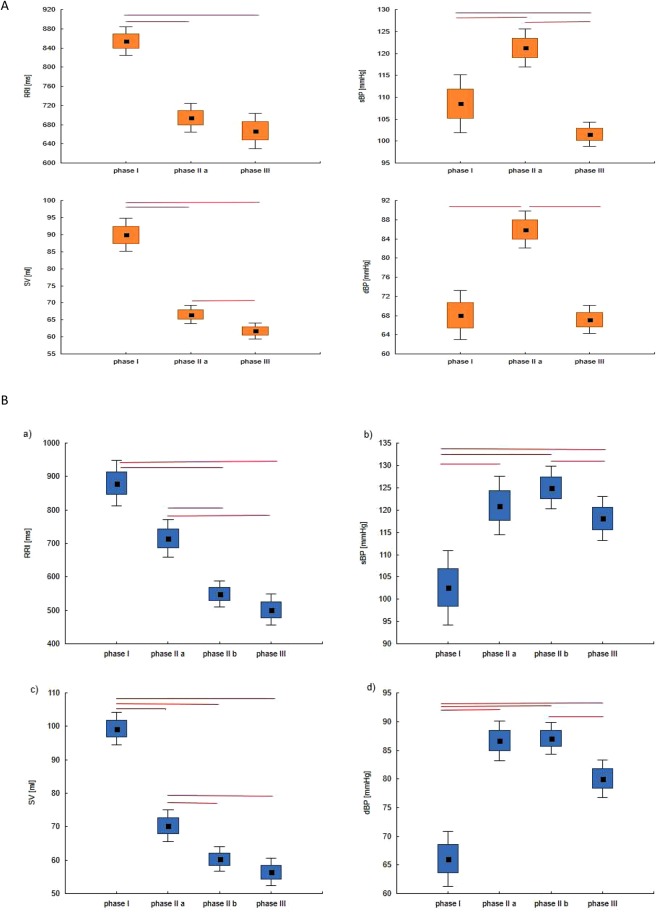
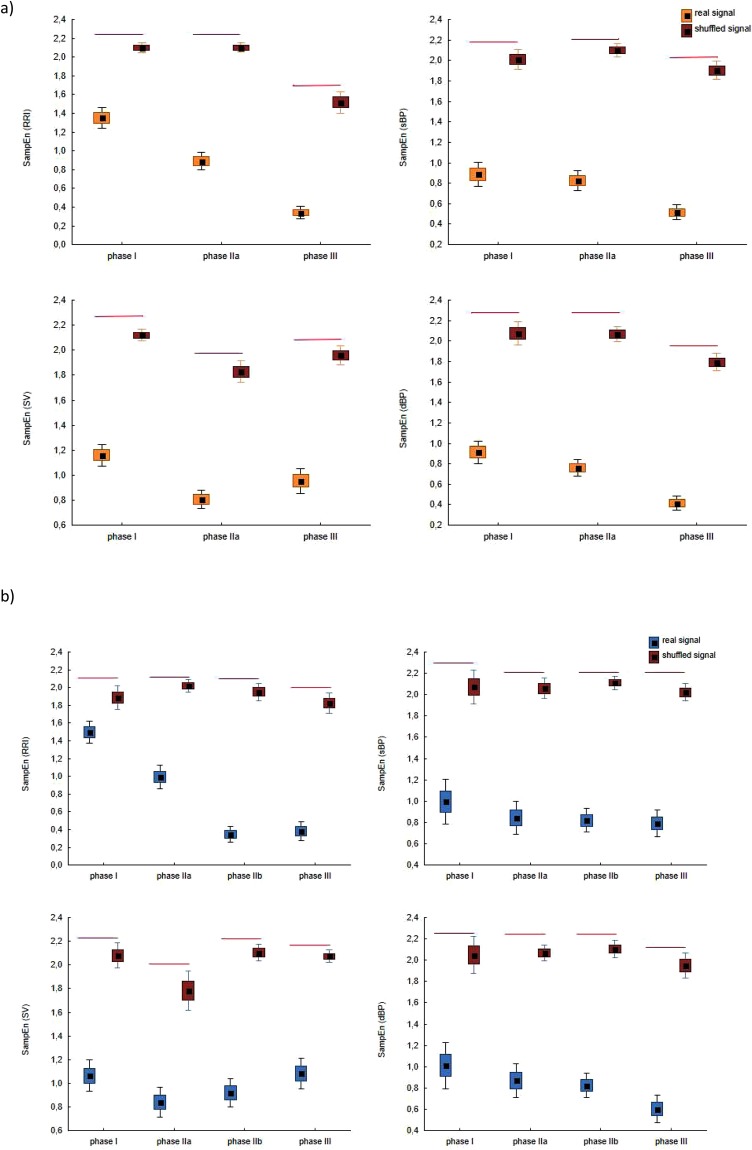
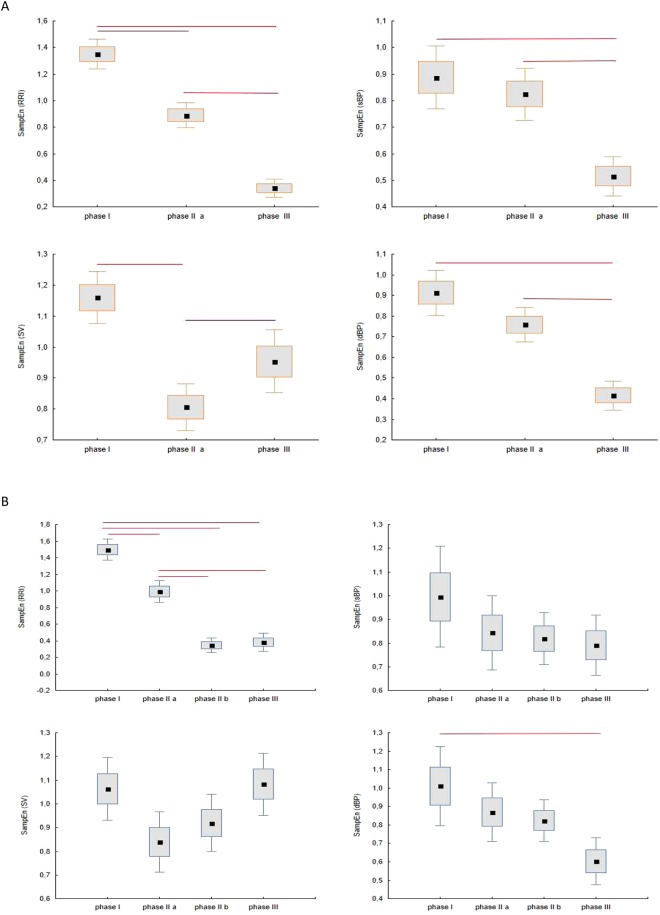
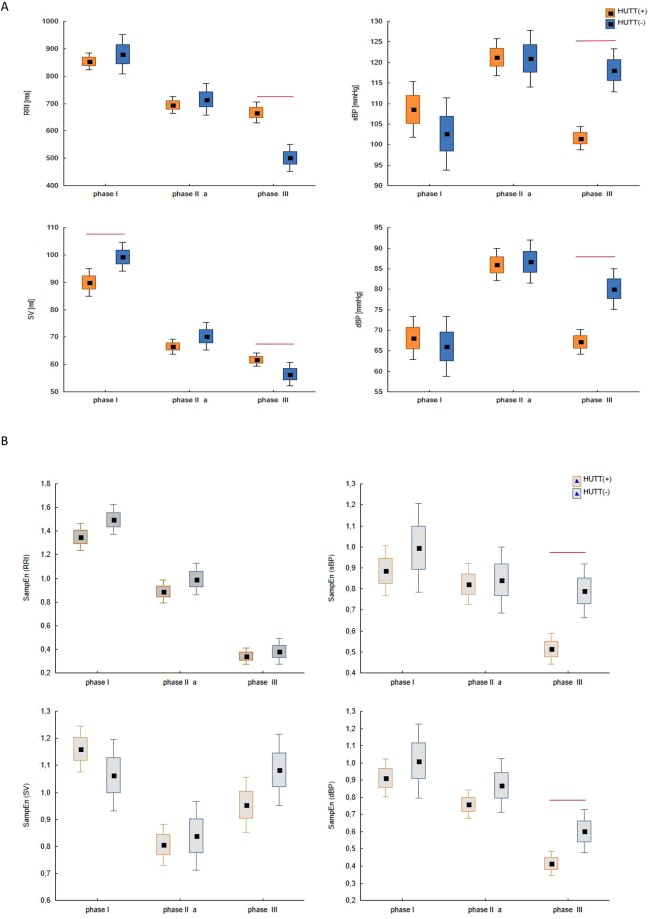
The paper presents a comparison of vasovagal syndrome occurrence in a head up tilt table test between patients with a positive result of passive tilt test and those with a positive result after pharmacological provocation. The study group consisted of 80 patients: 57 patients who experienced syncope in the passive phase of the test (43 women (aged: 35.6 ± 16.2) and 14 men (aged: 41.7 ± 15.6) and 23 patients who experienced syncope after pharmacological provocation (17 women (age: 32.3 ± 12) and 6 men (age: 43 ± 15). The main investigation was based on the assessment of monitored signals complexity: heart rate, blood pressure and stroke volume. The analysis of complexity in chosen measurement phases was performed with Sample Entropy. The investigation showed that the reactions of autonomic nervous system during tilt test and before syncope are similar for positive result of passive tilt test and positive result of tilt test with provocation. The differences in supine position occurred only in analysis based on impedance measurement (SV: p = 0.01). Significant differences were denoted for all signals just before the syncope (RRI, sBP, dBP: p = 0,00001 and SV: p = 0.01). In analysis of signals complexity the significant differences occurred just before the syncope for Sample Entropy of blood pressure (SampEn (sBP): p = 0.0008, SampEn (dBP): p = 0,0001).
本文比较了在头高位倾斜试验中,血管迷走性晕厥综合征在被动倾斜试验阳性和药物激发后阳性的患者中的发生率。研究组包括 80 例患者:57 例在被动阶段出现晕厥的患者(43 名女性(年龄:35.6±16.2)和 14 名男性(年龄:41.7±15.6),23 例在药物激发后出现晕厥的患者(17 名女性(年龄:32.3±12)和 6 名男性(年龄:43±15)。主要的研究是基于对监测信号复杂性的评估:心率、血压和每搏量。在选择的测量阶段,复杂性的分析是使用样本熵进行的。研究表明,在倾斜试验和晕厥前,自主神经系统的反应在被动倾斜试验阳性和药物激发倾斜试验阳性时是相似的。仰卧位的差异仅出现在基于阻抗测量的分析中(SV:p=0.01)。所有信号在晕厥前均有显著差异(RRI、sBP、dBP:p=0.00001 和 SV:p=0.01)。在信号复杂性分析中,在晕厥前,血压的样本熵(SampEn(sBP):p=0.0008,SampEn(dBP):p=0.0001)出现显著差异。