NCBI/NLM/NIH/DHHS, 8600 Rockville Pike, Bethesda, 20894, MD, USA.
Impossible Foods, impossiblefoods.com, Redwood City, 94063, CA, USA.
Genome Biol. 2018 Oct 4;19(1):153. doi: 10.1186/s13059-018-1540-z.
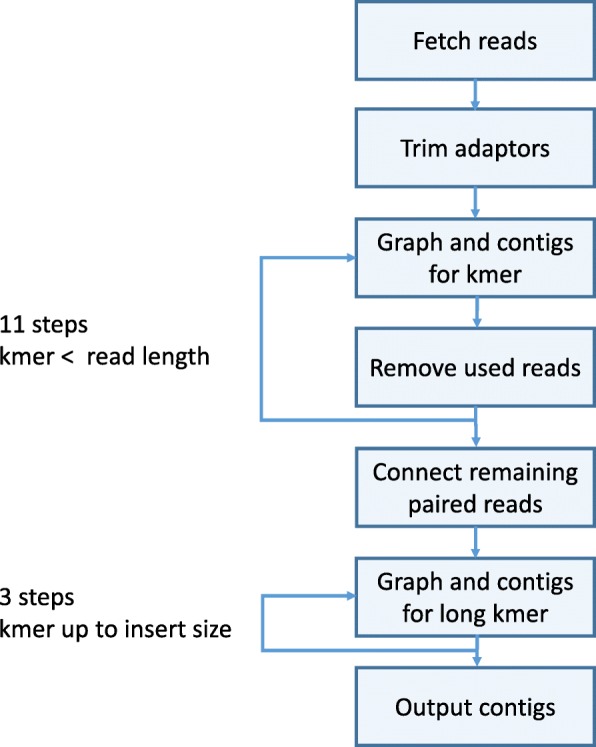
SKESA is a DeBruijn graph-based de-novo assembler designed for assembling reads of microbial genomes sequenced using Illumina. Comparison with SPAdes and MegaHit shows that SKESA produces assemblies that have high sequence quality and contiguity, handles low-level contamination in reads, is fast, and produces an identical assembly for the same input when assembled multiple times with the same or different compute resources. SKESA has been used for assembling over 272,000 read sets in the Sequence Read Archive at NCBI and for real-time pathogen detection. Source code for SKESA is freely available at https://github.com/ncbi/SKESA/releases .
SKESA 是一种基于 DeBruijn 图的从头组装程序,专为使用 Illumina 测序的微生物基因组读取进行组装而设计。与 SPAdes 和 MegaHit 的比较表明,SKESA 生成的组装具有高质量和连续性,能够处理读取中的低水平污染,速度快,并且在使用相同或不同计算资源多次组装相同输入时生成相同的组装。SKESA 已用于在 NCBI 的 Sequence Read Archive 中组装超过 272,000 个读取集,并用于实时病原体检测。SKESA 的源代码可在 https://github.com/ncbi/SKESA/releases 上免费获得。