Koch Vasco, Otte Marianne, Beye Martin
Institute of Evolutionary Genetics, Heinrich Heine University Duesseldorf, Universitaetsstrasse 1, 40225 Duesseldorf, Germany
Institute of Evolutionary Genetics, Heinrich Heine University Duesseldorf, Universitaetsstrasse 1, 40225 Duesseldorf, Germany.
G3 (Bethesda). 2018 Dec 10;8(12):3803-3812. doi: 10.1534/g3.118.200527.
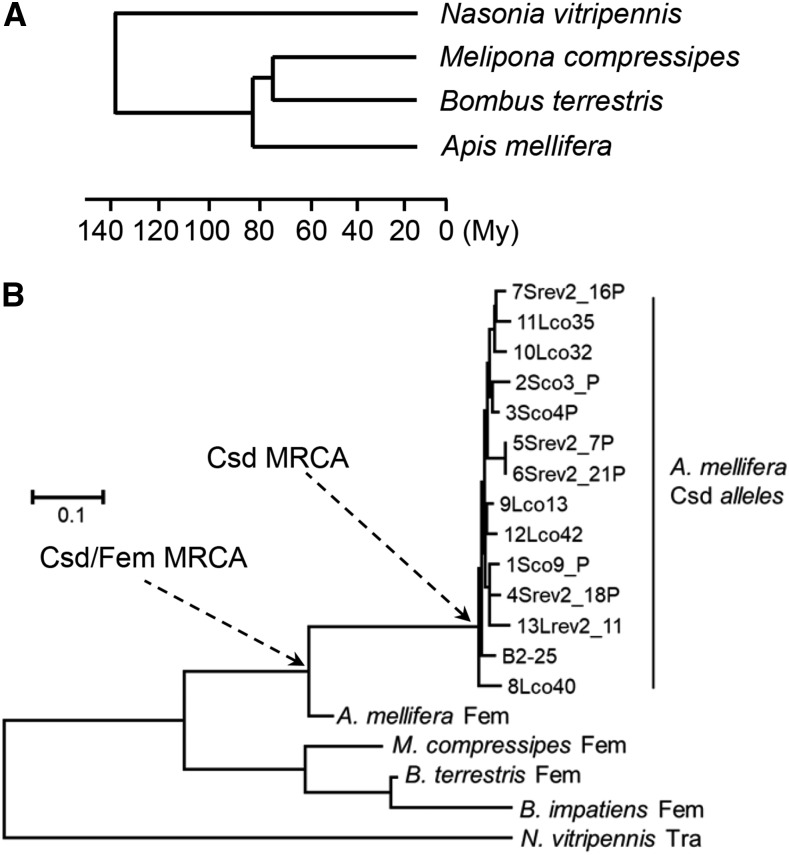
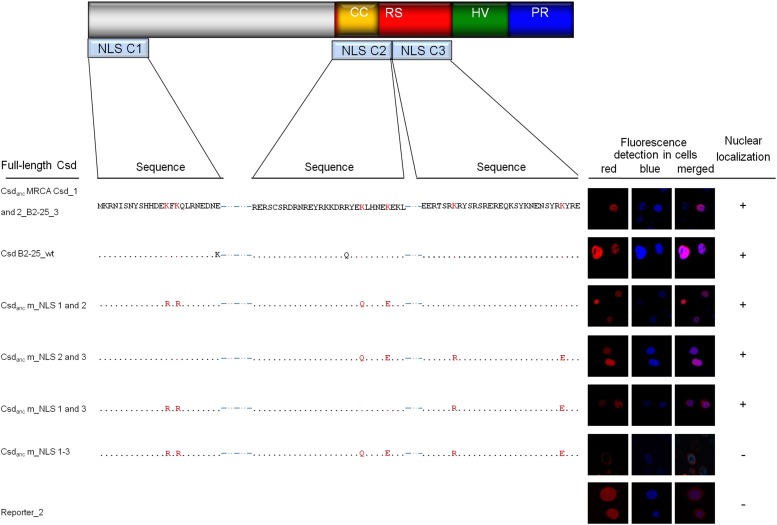
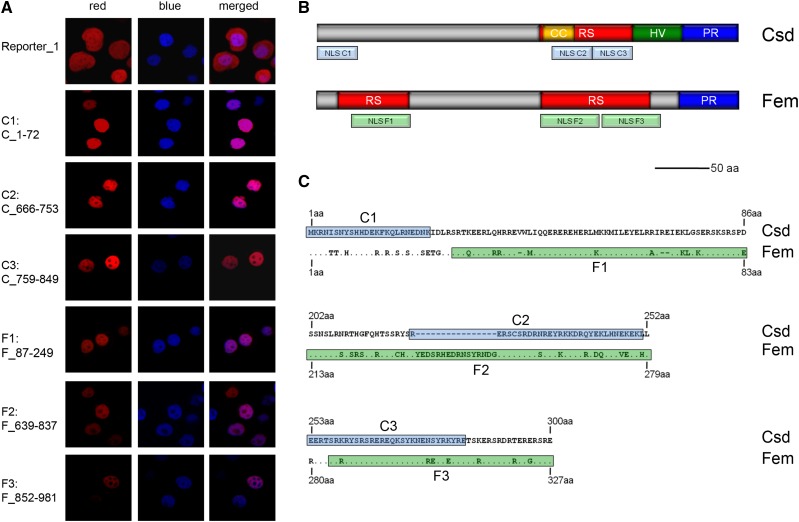
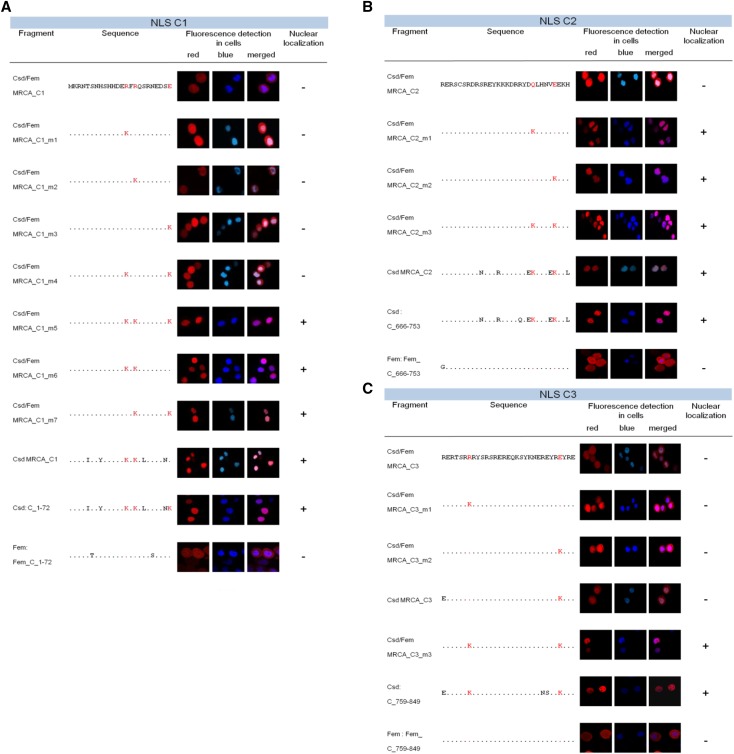
Short linear motifs (SLiMs) can play pivotal functional roles in proteins, such as targeting proteins to specific subcellular localizations, modulating the efficiency of translation and tagging proteins for degradation. Until recently we had little knowledge about SLiM evolution. Only a few amino acids in these motifs are functionally important, making them likely to evolve and suggesting that they can play key roles in protein evolution. Several reports now suggest that these motifs can appear and disappear while their function in the protein is preserved, a process sometimes referred to as "turnover". However, there has been a lack of specific experiments to determine whether independently evolved motifs do indeed have the same function, which would conclusively determine whether the process of turnover actually occurs. In this study, we experimentally detected evidence for such a mutational turnover process for nuclear localization signals (NLS) during the post-duplication divergence of the Complementary sex determiner (Csd) and Feminizer (Fem) proteins in the honeybee () lineage. Experiments on the nuclear transport activity of protein segments and those of the most recent common ancestor (MRCA) sequences revealed that three new NLS motifs evolved in the Csd protein during the post-duplication divergence while other NLS motifs were lost that existed before duplication. A screen for essential and newly evolved amino acids revealed that new motifs in the Csd protein evolved by one or two missense mutations coding for lysine. Amino acids that were predating the duplication were also essential in the acquisition of the C1 motif suggesting that the origin was constrained by preexisting amino acids in the physical proximity. Our data support a model in which stabilizing selection maintains the constancy of nuclear transport function but allowed mutational turnover of the encoding NLS motifs.
短线性基序(SLiMs)在蛋白质中可发挥关键的功能作用,比如将蛋白质靶向特定的亚细胞定位、调节翻译效率以及标记蛋白质以便降解。直到最近,我们对SLiMs的进化了解甚少。这些基序中只有少数几个氨基酸具有功能重要性,这使得它们有可能发生进化,并表明它们在蛋白质进化中可能发挥关键作用。现在有几份报告表明,这些基序在保留其在蛋白质中的功能的同时可以出现和消失,这一过程有时被称为“更替”。然而,缺乏具体实验来确定独立进化的基序是否确实具有相同的功能,而这将最终确定更替过程是否真的发生。在本研究中,我们通过实验检测到在蜜蜂()谱系中互补性别决定因子(Csd)和雌性化因子(Fem)蛋白复制后分化期间核定位信号(NLS)存在这种突变更替过程的证据。对蛋白质片段和最近共同祖先(MRCA)序列的核转运活性进行的实验表明,在复制后分化期间,Csd蛋白中进化出了三个新的NLS基序,而复制前存在的其他NLS基序则丢失了。对必需氨基酸和新进化氨基酸的筛选表明,Csd蛋白中的新基序是由一两个编码赖氨酸的错义突变进化而来的。在复制之前就存在的氨基酸对于C1基序的获得也很重要,这表明其起源受到物理邻近区域中预先存在的氨基酸的限制。我们的数据支持一种模型,即稳定选择维持核转运功能的恒定性,但允许编码NLS基序发生突变更替。