Departamento de Física Teórica, Universidad de Zaragoza, Zaragoza, 50009, Spain.
Department of Biomolecular Sciences, University of Urbino "Carlo Bo", Urbino, Italy.
Sci Rep. 2018 Oct 4;8(1):14820. doi: 10.1038/s41598-018-32986-y.
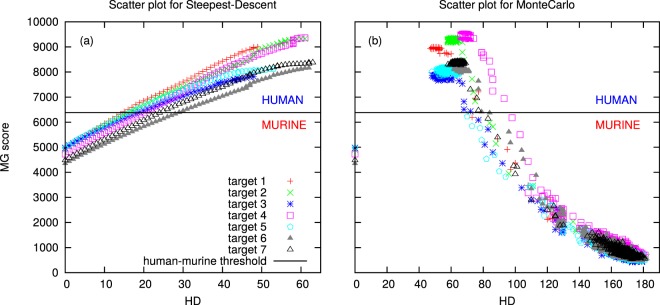
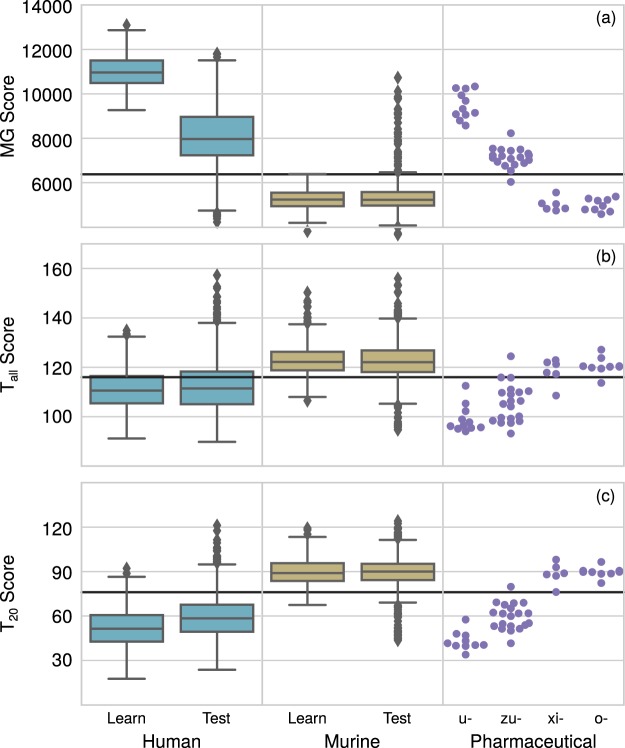
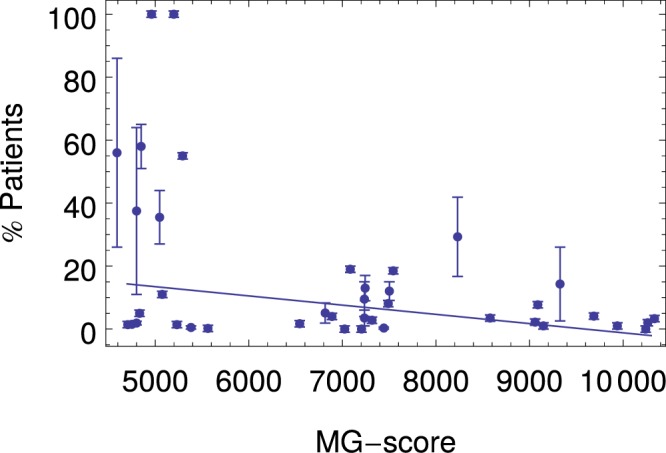
Antibody humanization is a key step in the preclinical phase of the development of therapeutic antibodies, originally developed and tested in non-human models (most typically, in mouse). The standard technique of Complementarity-Determining Regions (CDR) grafting into human Framework Regions of germline sequences has some important drawbacks, in that the resulting sequences often need further back-mutations to ensure functionality and/or stability. Here we propose a new method to characterize the statistical distribution of the sequences of the variable regions of human antibodies, that takes into account phenotypical correlations between pairs of residues, both within and between chains. We define a "humanness score" of a sequence, comparing its performance in distinguishing human from murine sequences, with that of some alternative scores in the literature. We also compare the score with the experimental immunogenicity of clinically used antibodies. Finally, we use the humanness score as an optimization function and perform a search in the sequence space, starting from different murine sequences and keeping the CDR regions unchanged. Our results show that our humanness score outperforms other methods in sequence classification, and the optimization protocol is able to generate humanized sequences that are recognized as human by standard homology modelling tools.
抗体人源化是治疗性抗体临床前开发阶段的关键步骤,最初是在非人类模型(最典型的是小鼠)中开发和测试的。将互补决定区(CDR)移植到种系序列的人类框架区的标准技术有一些重要的缺点,因为产生的序列通常需要进一步的反向突变以确保功能和/或稳定性。在这里,我们提出了一种新的方法来描述人抗体可变区序列的统计分布,该方法考虑了链内和链间残基对之间的表型相关性。我们定义了一个序列的“人源化评分”,将其在区分人源和鼠源序列方面的性能与文献中一些替代评分进行比较。我们还将该评分与临床使用的抗体的实验免疫原性进行了比较。最后,我们使用人源化评分作为优化函数,并从不同的鼠源序列开始,在序列空间中进行搜索,同时保持 CDR 区域不变。我们的结果表明,我们的人源化评分在序列分类方面优于其他方法,并且优化方案能够生成被标准同源建模工具识别为人源的人源化序列。