Gignac Monique A M, Kristman Vicki, Smith Peter M, Beaton Dorcas E, Badley Elizabeth M, Ibrahim Selahadin, Mustard Cameron A
Institute for Work & Health, Toronto, Ontario, Canada.
Dalla Lana School of Public Health, University of Toronto, Toronto, Ontario, Canada.
Work Aging Retire. 2018 Sep;4(4):381-398. doi: 10.1093/workar/way004. Epub 2018 Apr 18.
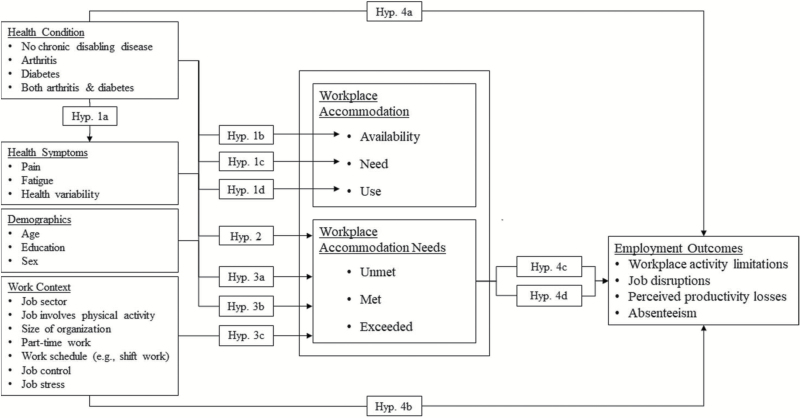
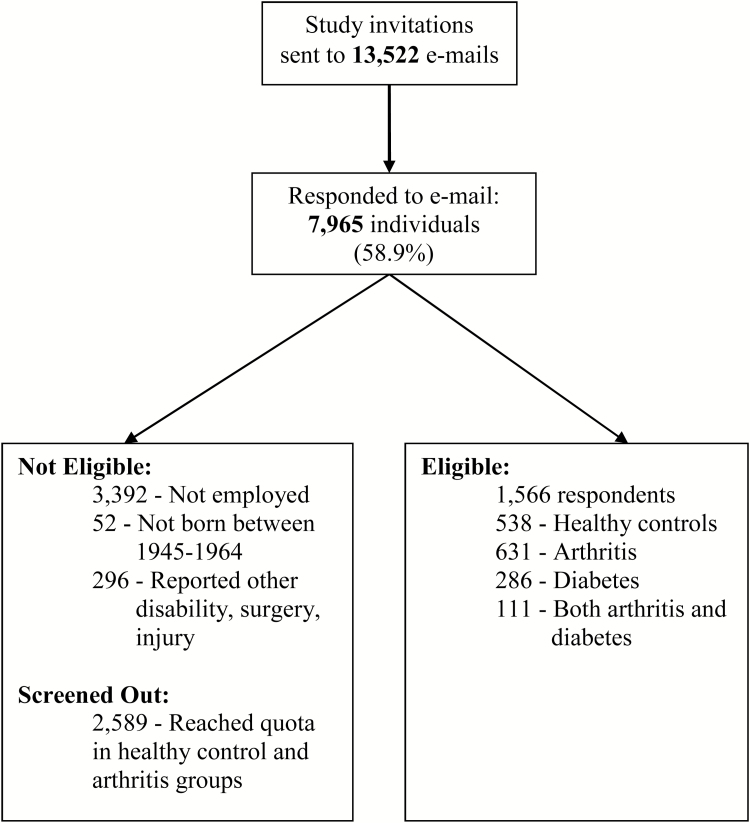
The aging of workforces combined with the prevalence of age-related chronic diseases has generated interest in whether large numbers of older workers will need workplace accommodations. This research applied work functioning theory to examine accommodation availability, need and use in workers with arthritis, diabetes, or no chronic disabling diseases; factors associated with accommodation needs; and the relationship of accommodation needs met, unmet or exceeded to job outcomes. Participants were aged 50-67 years, employed, and had arthritis ( = 631), diabetes ( = 286), both arthritis/diabetes ( = 111) or no chronic disabling conditions (healthy controls = 538). They were recruited from a national panel of 80,000 individuals and a cross-sectional survey was administered online or by telephone. Questionnaires assessed demographics, health, work context, workplace accommodations, and job outcomes. Chi-square analyses, analyses of variance, and regression analyses compared groups. Respondents were similar in many demographic and work context factors. As expected, workers with arthritis and/or diabetes often reported poorer health and employment outcomes. Yet, there were few differences across health conditions in need for or use of accommodations with most participants reporting accommodations needs met. In keeping with work functioning theory, unmet accommodation needs were largely related to work context, not health. Workers whose accommodation needs were exceeded reported better job outcomes than those with accommodation needs met. Findings highlight both work context and health in understanding workplace accommodations and suggest that many older workers can meet accommodation needs with existing workplace practices. However, additional research aimed at workplace support and the timing of accommodation use is needed.
劳动力老龄化加上与年龄相关的慢性病的普遍存在,引发了人们对于大量老年工人是否需要工作场所便利设施的关注。本研究应用工作功能理论,以检验患有关节炎、糖尿病或无慢性致残疾病的工人的便利设施可用性、需求和使用情况;与便利设施需求相关的因素;以及便利设施需求得到满足、未得到满足或超出需求与工作成果之间的关系。参与者年龄在50 - 67岁之间,为在职人员,患有关节炎(n = 631)、糖尿病(n = 286)、同时患有关节炎/糖尿病(n = 111)或无慢性致残疾病(健康对照组n = 538)。他们是从一个80000人的全国性样本中招募的,并通过在线或电话方式进行了横断面调查。问卷评估了人口统计学、健康状况、工作环境、工作场所便利设施和工作成果。采用卡方分析、方差分析和回归分析对各组进行比较。受访者在许多人口统计学和工作环境因素方面相似。正如预期的那样,患有关节炎和/或糖尿病的工人通常报告健康状况和就业成果较差。然而,在便利设施需求或使用方面,不同健康状况之间几乎没有差异,大多数参与者报告其便利设施需求得到了满足。与工作功能理论一致,未得到满足的便利设施需求在很大程度上与工作环境有关,而非健康状况。便利设施需求超出的工人比需求得到满足的工人报告的工作成果更好。研究结果突出了在理解工作场所便利设施时工作环境和健康状况的重要性,并表明许多老年工人可以通过现有的工作场所做法满足便利设施需求。然而,还需要针对工作场所支持和便利设施使用时机进行更多研究。