Cipriano Lauren E, Goldhaber-Fiebert Jeremy D
Ivey Business School and the Department of Biostatistics and Epidemiology, Western University, London, Ontario, Canada.
Center for Health Policy and Center for Primary Care and Outcomes Research, Department of Medicine, Stanford University, Stanford, California.
MDM Policy Pract. 2018 May 24;3(1):2381468318776634. doi: 10.1177/2381468318776634. eCollection 2018 Jan-Jun.
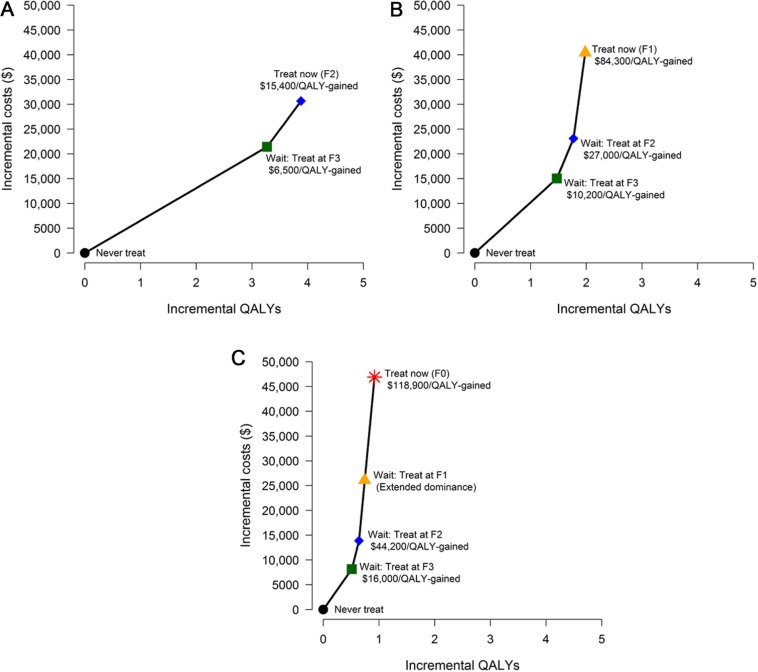
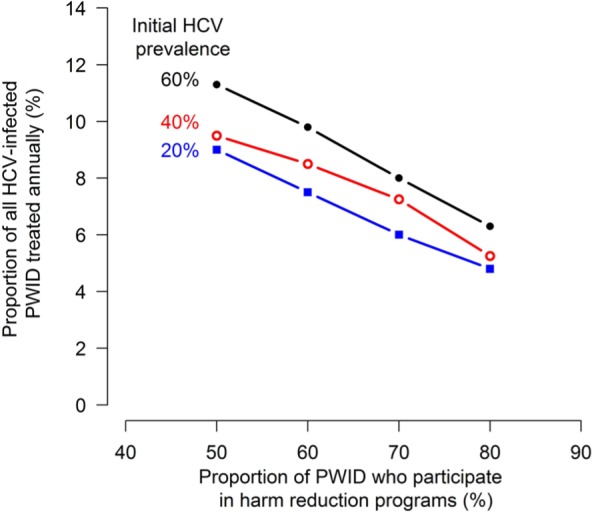
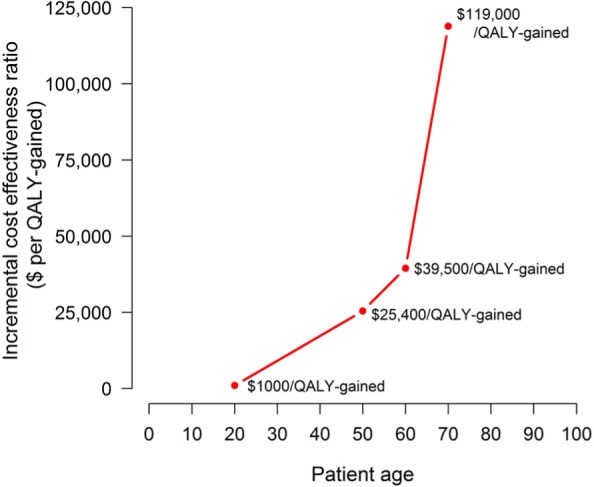
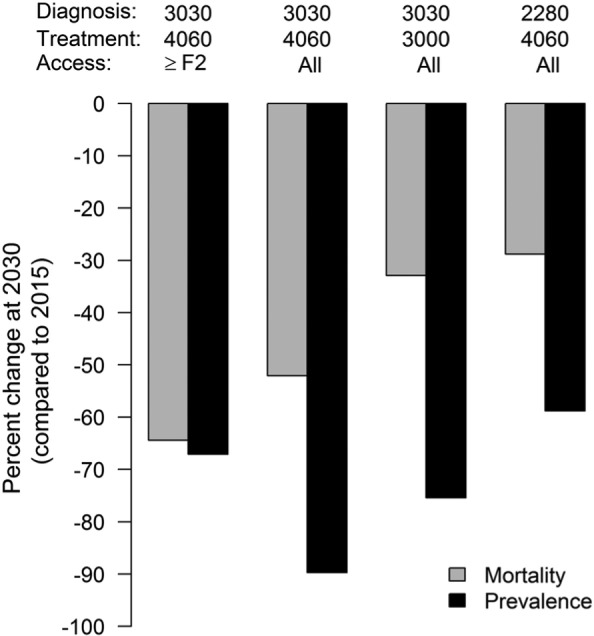
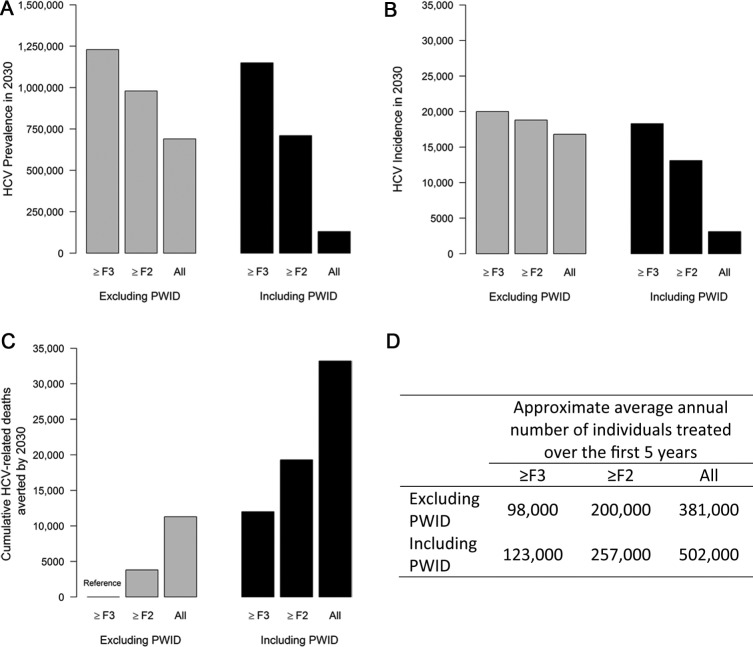
The World Health Organization HCV Guideline Development Group is considering a "treat all" recommendation for persons infected with hepatitis C virus (HCV). We reviewed the model-based evidence of cost-effectiveness and population health impacts comparing expanded treatment policies to more limited treatment access policies, focusing primarily on evaluations of all-oral directly acting antivirals published after 2012. Searching PubMed, we identified 2,917 unique titles. Sequentially reviewing titles and abstracts identified 226 potentially relevant articles for full-text review. Sixty-nine articles met all inclusion criteria-42 cost-effectiveness analyses and 30 models of population-health impacts, with 3 articles presenting both types of analysis. Cost-effectiveness studies for many countries concluded that expanding treatment to people with mild liver fibrosis, who inject drugs (PWID), or who are incarcerated is generally cost-effective compared to more restrictive treatment access policies at country-specific prices. For certain patient subpopulations in some countries-for example, elderly individuals without fibrosis-treatment is only cost-effective at lower prices. A frequent limitation is the omission of benefits and consequences of HCV transmission (i.e., treatment as prevention; risks of reinfection), which may underestimate or overestimate the cost-effectiveness of a "treat all" policy. Epidemiologic modeling studies project that through a combination of prevention, aggressive screening and diagnosis, and prompt treatment for all fibrosis stages, it may be possible to virtually eliminate HCV in many countries. Studies show that if resources are not available to diagnose and treat all HCV-infected individuals, treatment prioritization may be needed, with alternative prioritization strategies resulting in tradeoffs between reducing mortality or reducing incidence. Notably, because most new HCV infections are among PWID in many settings, HCV elimination requires unrestricted treatment access combined with injection transmission disruption strategies. The model-based evidence suggests that a properly constructed strategy that substantially expands HCV treatment could achieve cost-effective improvements in population health in many countries.
世界卫生组织丙型肝炎病毒(HCV)指南制定小组正在考虑对丙型肝炎病毒感染者提出“全面治疗”的建议。我们回顾了基于模型的成本效益和人群健康影响证据,比较了扩大治疗政策与更有限的治疗准入政策,主要关注2012年后发表的关于全口服直接抗病毒药物的评估。通过检索PubMed,我们识别出2917个独特的标题。依次审查标题和摘要后,确定了226篇可能相关的文章进行全文审查。69篇文章符合所有纳入标准——42项成本效益分析和30项人群健康影响模型,其中3篇文章同时呈现了这两种类型的分析。许多国家的成本效益研究得出结论,与在各国特定价格下更具限制性的治疗准入政策相比,将治疗扩大到轻度肝纤维化患者、注射吸毒者(PWID)或被监禁者通常具有成本效益。对于某些国家的特定患者亚群,例如无纤维化的老年人,只有在较低价格下治疗才具有成本效益。一个常见的局限性是遗漏了丙型肝炎病毒传播的益处和后果(即治疗即预防;再感染风险),这可能低估或高估“全面治疗”政策的成本效益。流行病学建模研究预测,通过预防、积极筛查和诊断以及对所有纤维化阶段进行及时治疗相结合,在许多国家几乎有可能消除丙型肝炎病毒。研究表明,如果没有资源诊断和治疗所有丙型肝炎病毒感染者,可能需要进行治疗优先级排序,不同的优先级排序策略会在降低死亡率或降低发病率之间进行权衡。值得注意的是,由于在许多情况下大多数新的丙型肝炎病毒感染发生在注射吸毒者中,消除丙型肝炎病毒需要不受限制的治疗准入以及注射传播中断策略。基于模型的证据表明,一个精心构建的大幅扩大丙型肝炎病毒治疗的策略可以在许多国家实现具有成本效益的人群健康改善。