Palermo Sara, Lopiano Leonardo, Morese Rosalba, Zibetti Maurizio, Romagnolo Alberto, Stanziano Mario, Rizzone Mario Giorgio, Geminiani Giuliano Carlo, Valentini Maria Consuelo, Amanzio Martina
Department of Psychology, University of Turin, Turin, Italy.
Department of Neuroscience, University of Turin, Turin, Italy.
Front Psychol. 2018 Sep 20;9:1765. doi: 10.3389/fpsyg.2018.01765. eCollection 2018.
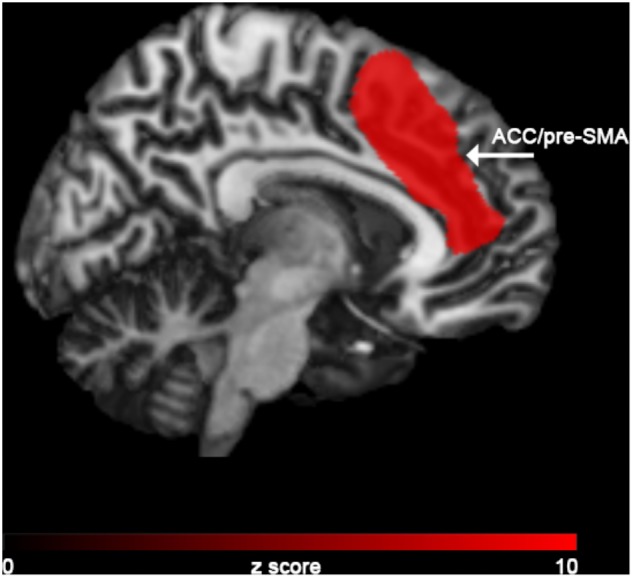
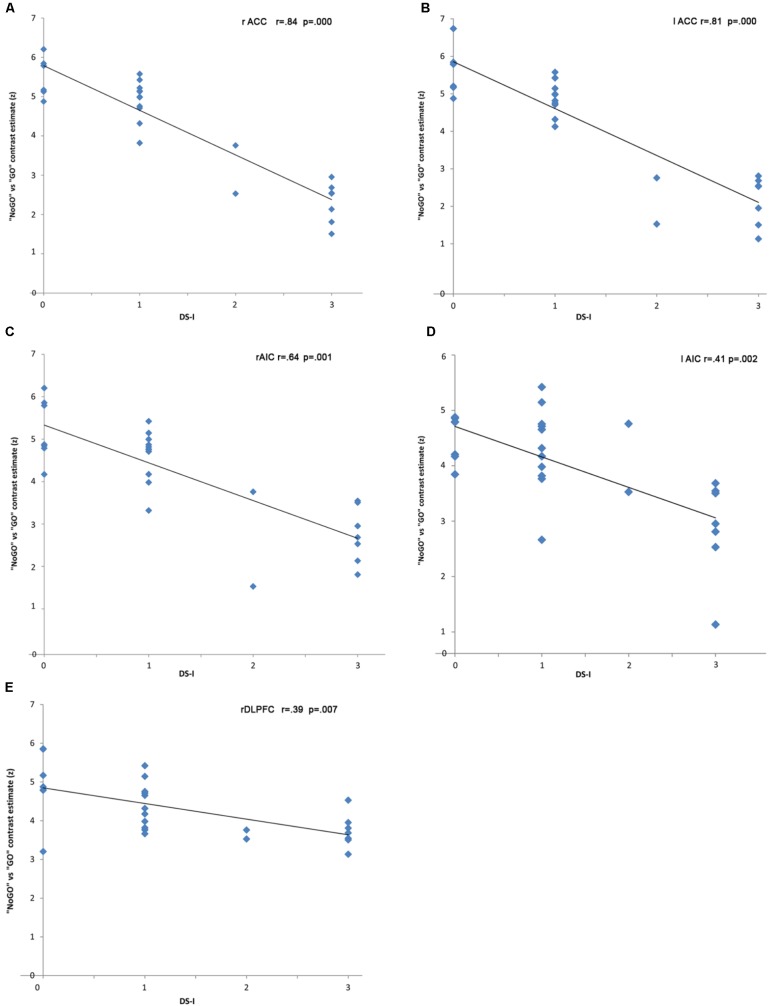
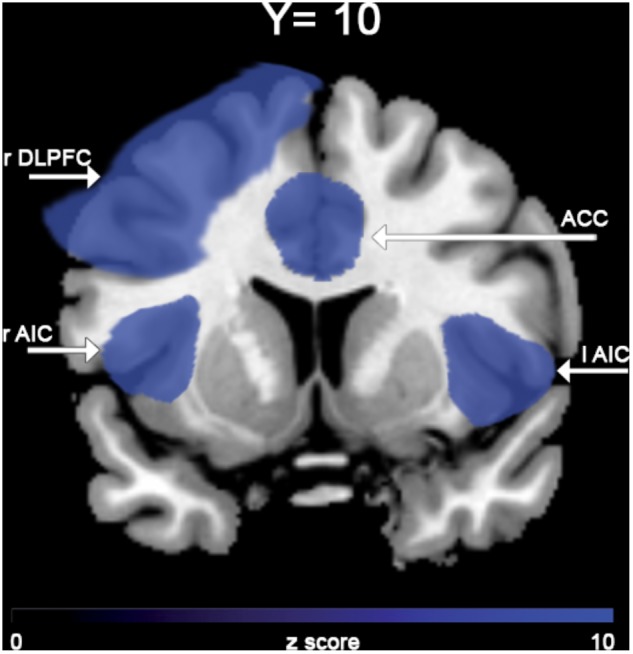
The detection of dyskinesias-reduced-self-awareness (DRSA), in Parkinson's disease (PD), was previously associated to executive and metacognitive deficits mainly due to dopaminergic overstimulation of mesocorticolimbic circuits. Response-inhibition dysfunction is often observed in PD. Apart from being engaged in response-inhibition tasks, the anterior cingulate cortex (ACC), is part of a functional system based on self-awareness and engaged across cognitive, affective and behavioural contexts. The purpose of the study was to examine the relationship between response-inhibition disabilities and DRSA using whole-brain event-related functional magnetic resonance imaging (fMRI), over the course of a specific executive task. Twenty-seven cognitively preserved idiopathic PD patients - presenting motor fluctuations and dyskinesias - were studied. They underwent a neurological and neuropsychological evaluation. The presence of DRSA was assessed using the Dyskinesias Subtracted-Index (DS-I). Cingulate functionality was evaluated with fMRI, while patients performed an ACC-sensitive GO-NoGO task. Association between blood oxygenation level dependent response over the whole-brain during the response-inhibition task and DS-I scores was investigated by regression analysis. The presence of DRSA was associated with reduced functional recruitment in the bilateral ACC, bilateral anterior insular cortex and right dorsolateral prefrontal cortex ( <0.05). Moreover, DS-I scores significantly correlated with percent errors on the NoGO condition ( = 0.491, = 0.009). These preliminary findings add evidence to the relevant role of executive dysfunctions in DRSA pathogenesis beyond the effects of chronic dopaminergic treatment, with a key leading role played by ACC as part of a functionally impaired response-inhibition network. Imaging biomarkers for DRSA are important to be studied, especially when the neuropsychological assessment seems to be normal.
在帕金森病(PD)中,运动障碍性自我意识降低(DRSA)的检测先前与执行和元认知缺陷有关,主要是由于中脑皮质边缘回路的多巴胺能过度刺激。PD患者常出现反应抑制功能障碍。除了参与反应抑制任务外,前扣带回皮质(ACC)还是基于自我意识的功能系统的一部分,并参与认知、情感和行为情境。本研究的目的是在一项特定的执行任务过程中,使用全脑事件相关功能磁共振成像(fMRI)来检查反应抑制障碍与DRSA之间的关系。研究了27名认知功能保留的特发性PD患者,这些患者存在运动波动和运动障碍。他们接受了神经学和神经心理学评估。使用运动障碍减法指数(DS-I)评估DRSA的存在。在患者执行ACC敏感的停止信号任务时,用fMRI评估扣带回功能。通过回归分析研究反应抑制任务期间全脑血氧水平依赖反应与DS-I评分之间的关联。DRSA的存在与双侧ACC、双侧前岛叶皮质和右侧背外侧前额叶皮质的功能募集减少有关(<0.05)。此外,DS-I评分与停止信号条件下的错误百分比显著相关(=0.491,=0.009)。这些初步发现为执行功能障碍在DRSA发病机制中的相关作用提供了证据,超越了慢性多巴胺能治疗的影响,ACC作为功能受损的反应抑制网络的一部分发挥了关键主导作用。研究DRSA的成像生物标志物很重要,尤其是当神经心理学评估似乎正常时。