Hallgren Jenny, Aslan Anna K Dahl
Institute of Gerontology, School of Health and Welfare, Jönköping University, 551 11, Jönköping, Sweden.
Department of Medical Epidemiology and Biostatistics, Karolinska Institutet, Stockholm, Sweden.
Eur Geriatr Med. 2018;9(5):603-611. doi: 10.1007/s41999-018-0101-z. Epub 2018 Sep 6.
Hospital readmissions of older persons are common and often associated with complex health problems. The objectives were to analyze risk factors for readmission within 30 days from hospital discharge.
A prospective study with a multifactorial approach based on the population-based longitudinal Swedish Adoption/Twin Study of Aging (SATSA) was conducted. During 9 years of follow-up, information on hospitalizations, readmissions and associated diagnoses were obtained from national registers. Logistic regression models controlling for age and sex were conducted to analyze risk factors for readmissions.
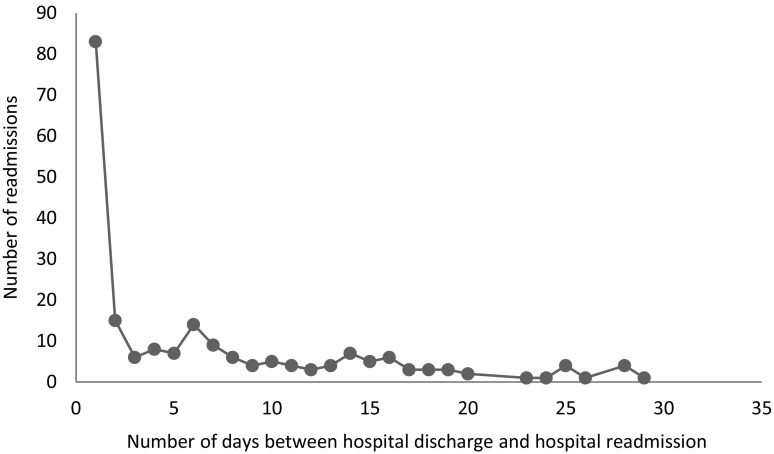
Of the 772 participants, [mean age 69.7 (± 11.1), 84 (63%)] were hospitalized and among these 208 (43%) had one or several readmissions within 30 days during the follow-up period. Most of the readmissions (57%) occurred within the first week; mean days from hospital discharge to readmission was 7.9 (± 6.2). The most common causes of admission and readmission were cardiovascular diseases and tumors. Only 8% of the readmissions were regarded as avoidable admissions. In a multivariate logistic regression, falling within the last 12 months (OR 0.57, = 0.039) and being a male (OR 1.84, = 0.006) increased the risk of readmission.
Most older persons that are readmitted return to hospital within the first week after discharge. Experiencing a fall was a particular risk factor of readmission. Preventive actions should preferably take place already at the hospital to reduce the numbers of readmission. Still, it should be remembered that most readmissions were considered to be necessary.
老年人再次入院情况常见,且常与复杂的健康问题相关。目的是分析出院后30天内再次入院的风险因素。
基于瑞典全国性纵向老龄化收养/双胞胎研究(SATSA)开展了一项采用多因素方法的前瞻性研究。在9年的随访期间,从国家登记处获取了住院、再次入院及相关诊断信息。进行了控制年龄和性别的逻辑回归模型分析以确定再次入院的风险因素。
772名参与者中,[平均年龄69.7(±11.1)岁,84人(63%)]曾住院治疗,其中208人(43%)在随访期间30天内有一次或多次再次入院。大多数再次入院(57%)发生在第一周;从出院到再次入院的平均天数为7.9(±6.2)天。入院和再次入院的最常见原因是心血管疾病和肿瘤。只有8%的再次入院被视为可避免的入院。在多变量逻辑回归中,过去12个月内跌倒(比值比0.57,P = 0.039)和男性(比值比1.84,P = 0.006)会增加再次入院风险。
大多数再次入院的老年人在出院后第一周内回到医院。经历跌倒尤其会增加再次入院风险。预防性措施最好在医院就开始实施,以减少再次入院人数。不过,应记住大多数再次入院被认为是必要的。