Texas A&M University, College Station, USA.
Hum Factors. 2019 Aug;61(5):816-824. doi: 10.1177/0018720818807043. Epub 2018 Oct 8.
To determine the effectiveness of a computer-based intervention designed to increase sit-stand desk usage and help reverse workplace physical inactivity.
Sit-stand desks have been successful in reducing workplace sedentary behavior, but the challenge remains for an effective method to increase the usage in order to experience the health and productivity benefits.
Data collection (1-year field study with 194 workers) used a novel method of computer software that continuously recorded objective electric sit-stand desk usage, while taking into account the time a worker spends away from their desk (breaks, meetings). During the baseline period, all workers' desk usage was recorded by the software, and the intervention period consisted of software reminders and real-time feedback to all workers to change desk positions. Pooled means were calculated to determine desk usage patterns, and effect sizes and pairwise mean differences were analyzed to test for intervention significance.
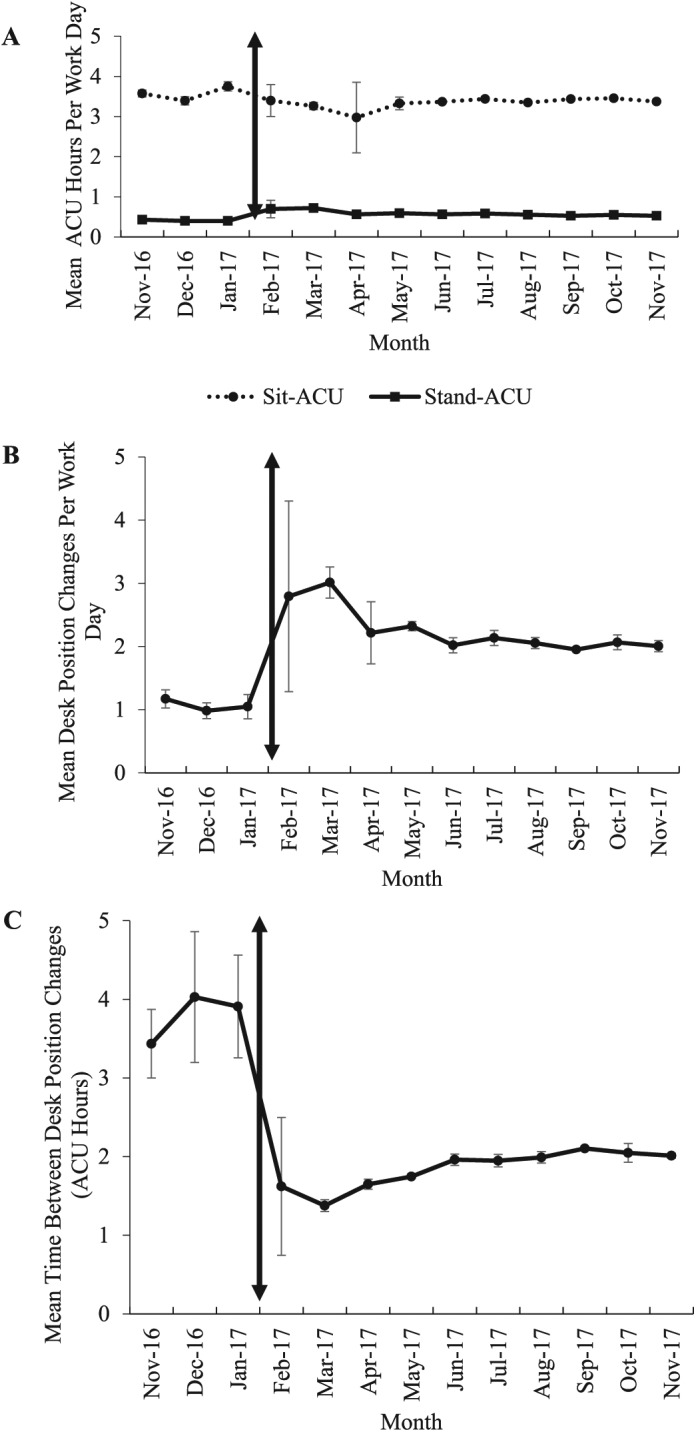
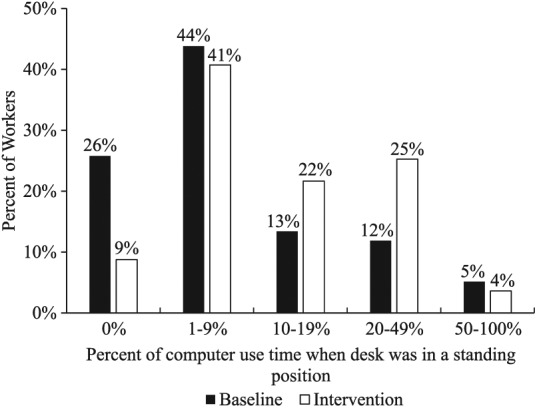
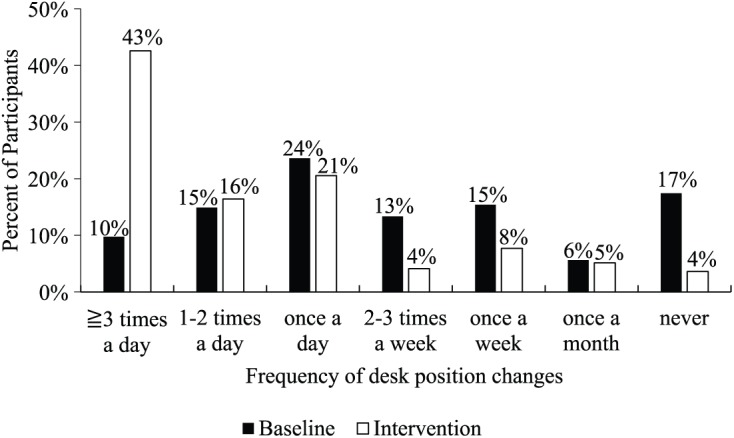
The intervention doubled desk usage by increasing ~1 change to ~2 changes per work day. There was a 76% reduction in workers who never used the sit-stand function of the desk. Medium to large effect sizes from the intervention were observed in all three primary outcome measures (desk in sitting/standing position and desk position changes per work day).
These findings demonstrate an effective intervention that increased postural transitioning and interrupted prolonged inactivity while remaining at the workstation.
The methods and results in this research study show that we can quantify an increase in desk usage and collect aggregate data continuously.
确定一种基于计算机的干预措施的有效性,该措施旨在增加站立式办公桌的使用并帮助扭转工作场所的身体不活动状态。
站立式办公桌已成功减少了工作场所的久坐行为,但仍面临挑战,需要一种有效的方法来增加使用频率,以体验健康和生产力方面的益处。
数据收集(为期 1 年的现场研究,涉及 194 名工人)采用了一种新颖的计算机软件方法,该方法连续记录客观的电动站立式办公桌使用情况,同时考虑了工人离开办公桌的时间(休息、会议)。在基线期,所有工人的办公桌使用情况均由软件记录,干预期包括向所有工人发送软件提醒和实时反馈,以改变办公桌位置。计算汇总平均值以确定办公桌使用模式,并分析效应大小和成对均值差异,以检验干预的显著性。
干预措施将办公桌的使用次数增加了一倍,从平均每天约 1 次增加到约 2 次。从未使用过办公桌站立功能的工人比例降低了 76%。在所有三个主要结果测量指标(办公桌的坐立姿势和每天的办公桌位置变化)中,都观察到了中等至较大的干预效应大小。
这些发现表明,该干预措施有效增加了姿势转换,打断了长时间的不活动状态,同时保持在工作站上。
本研究中的方法和结果表明,我们可以定量增加办公桌的使用频率并连续收集总体数据。