Hammond Stuart I, Brownell Celia A
School of Psychology, University of Ottawa, Ottawa, ON, Canada.
Department of Psychology, University of Pittsburgh, Pittsburgh, PA, United States.
Front Psychol. 2018 Sep 21;9:1770. doi: 10.3389/fpsyg.2018.01770. eCollection 2018.
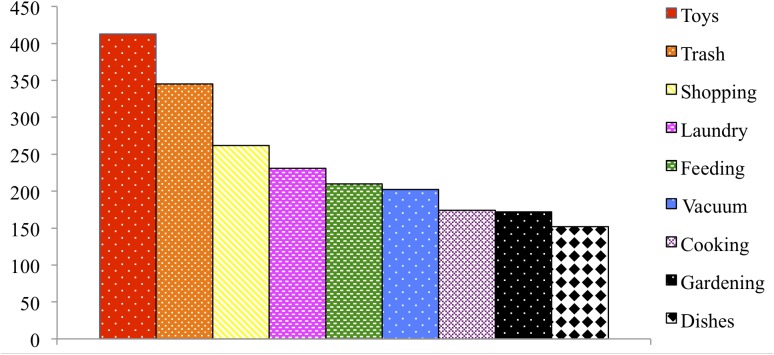
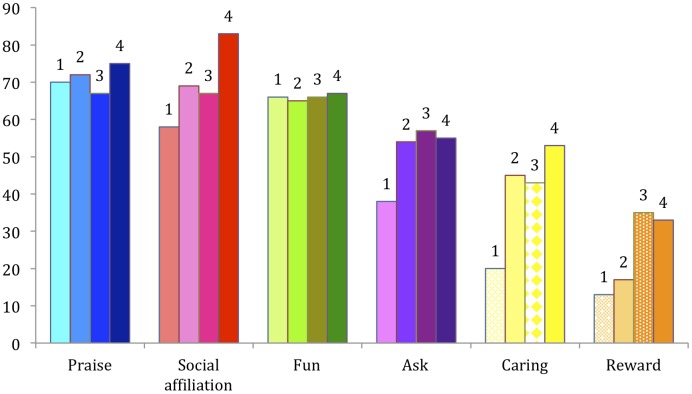
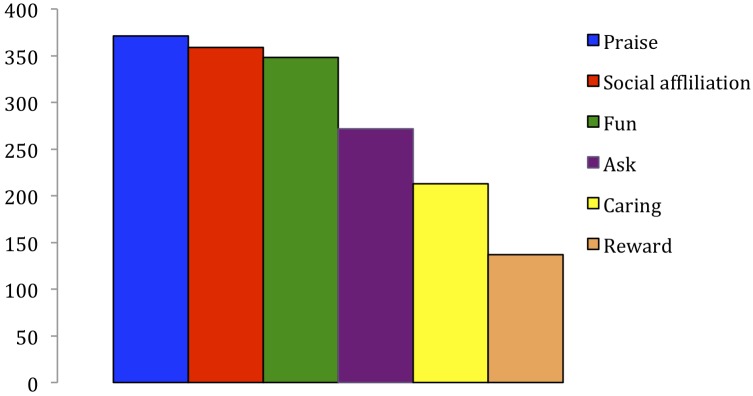
Young children's everyday helping in the home has received relatively little attention in research on prosocial behavior. Nevertheless, key features such as young children's cheerful participation in chores around the home, including in ways that make accomplishing these chores more difficult for parents, can reveal important facets of early prosocial development. The present study reports the results of an Internet (MTurk) survey of over 500 families with children aged 1-4 years about their children's prosocial tendencies, participation in nine common chores, whether children's helping attempts were helpful or not, and attributions about children's motives for helping. Consistent with much prior research, parents reported that children became more prosocial with age. The majority of parents reported children's participation in everyday helping is at times unhelpful. Parents attributed children's helping to a variety of motives and these too, changed with age. Fathers had somewhat different perceptions of children's everyday helping than mothers. Results are discussed in terms of how understanding everyday helping can contribute to ongoing debates in the literature about the roots of prosocial behavior.
在亲社会行为的研究中,幼儿在家中的日常帮助行为相对较少受到关注。然而,一些关键特征,比如幼儿积极愉快地参与家务,甚至以让父母完成家务变得更困难的方式参与,都能揭示早期亲社会发展的重要方面。本研究报告了一项针对500多个有1至4岁孩子家庭的互联网(MTurk)调查结果,内容涉及孩子的亲社会倾向、参与九项常见家务的情况、孩子的帮助尝试是否有帮助,以及对孩子帮助动机的归因。与之前的许多研究一致,家长们报告说孩子随着年龄增长变得更具亲社会性。大多数家长表示孩子参与日常帮助有时并无助益。家长们将孩子的帮助归因于多种动机,这些动机也随年龄而变化。父亲对孩子日常帮助行为的看法与母亲略有不同。本文将根据对日常帮助行为的理解如何有助于文献中关于亲社会行为根源的持续辩论来讨论研究结果。